
Lieferung heute & morgen

Qualitätsgarantie

Willkommens-Angebote freischalten: KOSTENLOSE Lieferung | Bis zu 80 % RABATT | Kostenlose 30-Tage-JoyPlus-Testphase
App herunterladen
Long days at the desk place high demands on your seating. A standard office chair is often not designed for sustained heavy use or the needs of heavier individuals, which can lead to instability, premature wear and tear, and postural problems. Finding a model that offers both stability and ergonomic support is therefore crucial for comfort and well-being throughout the workday.
This article serves as a guide. We will introduce the essential features of a heavy-duty office chair and present a selection of models designed for specific requirements, such as a high weight capacity and advanced ergonomic functions.
Choosing the right chair depends on several technical factors. Three criteria are particularly important for making an informed decision.
The stated maximum weight capacity is a key indicator of a chair's robustness. An ergonomic office chair with a 200 kg capacity requires a construction made from particularly heavy-duty materials. Pay attention to the base: an aluminium alloy base generally offers superior strength and durability compared to plastic or basic steel. Certifications like BIFMA or SGS-certified gas lifts are also hallmarks of tested safety and durability. These standards ensure that the chair can withstand repeated stress cycles.
For comfortable and healthy sitting, especially during prolonged sitting, customisable adjustment options are essential. A high-quality executive chair with lumbar support should offer more than just a rigid curve. A 3D or 4D lumbar support, which can be adjusted in height, depth, and sometimes angle, allows for precise adaptation to the natural curvature of the spine. A swivel chair with a headrest provides additional relief for the neck and shoulder muscles, while height-adjustable armrests help maintain correct arm posture and prevent strain.
The material of the seat and backrest directly impacts comfort. A breathable office chair with a mesh backrest promotes air circulation and prevents heat build-up, which is particularly beneficial on warm days or in poorly air-conditioned rooms. The seat cushion should be made of shape-retaining foam. A combination of high-density foam and natural foam can effectively distribute pressure on the thighs and retain its shape even after many hours of use.
Based on the criteria mentioned, we have compiled a selection of chairs that stand out for their specific features.
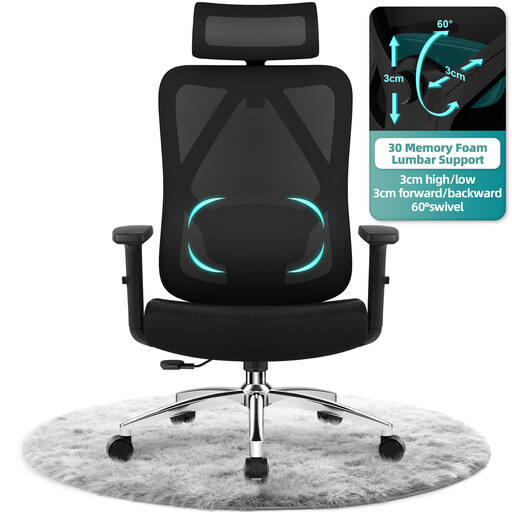
Why It Stands Out: This model is specifically designed as a heavy-duty desk chair. The combination of a maximum weight capacity of 200 kg, a robust aluminium alloy base, and comprehensive ergonomic adjustment options makes it a solid choice for demanding users.
Advantages:
Who It's For: This chair is ideal for heavier individuals and anyone who needs an extremely stable and versatile office chair for prolonged sitting in the office or at home.
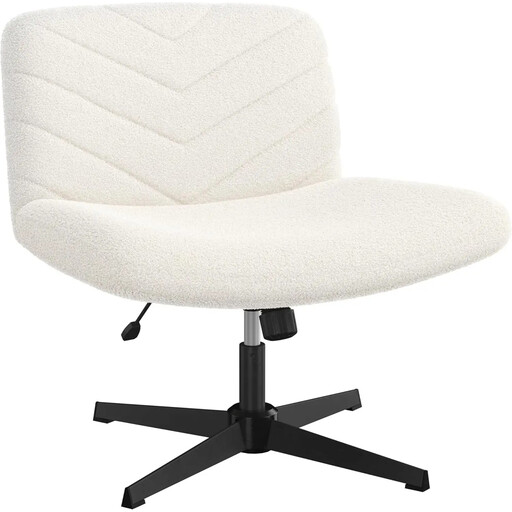
Why It Stands Out: The Yaheetech chair features an unconventional design with an extra-wide, armless seat and a stationary base. The ivory-coloured bouclé fabric gives it a modern aesthetic that sets it apart from classic office chairs.
Advantages:
Who It's For: This model is aimed at users who value design and flexible seating options and do not require a chair with castors. The recommended weight capacity is 125 kg.
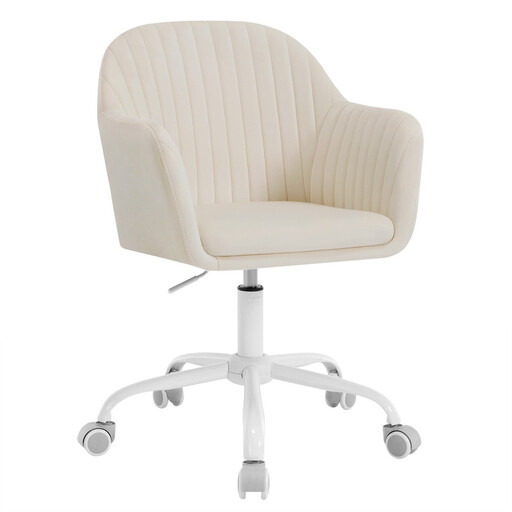
Why It Stands Out: The Woltu office chair combines a residential look with functional features. The soft velvet cover and the continuous backrest with integrated armrests offer high comfort, while the construction is designed for a weight capacity of up to 150 kg.
Advantages:
Who It's For: A great choice for the home office or bedroom, for users looking for a comfortable, stylish chair with an above-average weight capacity.
The requirements for an office chair are highly individual. If the models presented here don't fully meet your expectations, there are other options to explore.
Explore our full range of Adjustable Swivel Chairs for more models and configurations.
An ergonomic office chair is distinguished by its wide range of adjustment options. These include adjustable seat height and depth, a tiltable backrest, customisable lumbar support for the lower back, and height- and width-adjustable armrests. The goal is to adapt the chair to your body to promote a natural and healthy posture.
The maximum weight capacity is a direct indicator of the chair's safety, stability, and durability. A heavy-duty office chair for heavier individuals, e.g., with a 200 kg capacity, uses more robust components such as a reinforced base (often metal), a stronger gas lift, and more durable castors. This ensures that the chair remains stable even under intensive use and retains its functionality long-term, minimising the risk of material fatigue or breakage.
The choice of material depends on personal preference and environmental conditions. A breathable office chair with a mesh backrest is ideal for good air circulation and prevents sweating. High-quality padding made from shape-retaining cold foam offers excellent pressure distribution and high seating comfort. Fabric covers like velvet or bouclé are pleasantly soft, while leather or faux leather are considered particularly easy to clean.