
Lieferung heute & morgen

Qualitätsgarantie

Willkommens-Angebote freischalten: KOSTENLOSE Lieferung | Bis zu 80 % RABATT | Kostenlose 30-Tage-JoyPlus-Testphase
App herunterladen
By a Joybuy Product Recommendation Officer, July 05, 2026
For many people, long hours spent sitting at a desk are a daily reality, whether in the office, at home, or while gaming. This often leads to tension and discomfort in the back and neck. A suitable ergonomic office chair is not a luxury purchase, but a fundamental component of a functional workspace.
This article serves as a guide. It explains the objective features to look for when making your selection and presents several models with different specialisations. The goal is to provide you with an objective basis for your purchasing decision, free from marketing hype.
The choice of the right chair depends on individual needs and its intended use. Three criteria are particularly relevant.
An ergonomic desk chair should adapt to your body—not the other way around. Look for the following adjustment options:
The chair's material affects both comfort and durability.
The requirements for a chair vary depending on its use:
Based on the criteria mentioned, we have compiled a selection of models that cover different requirements.
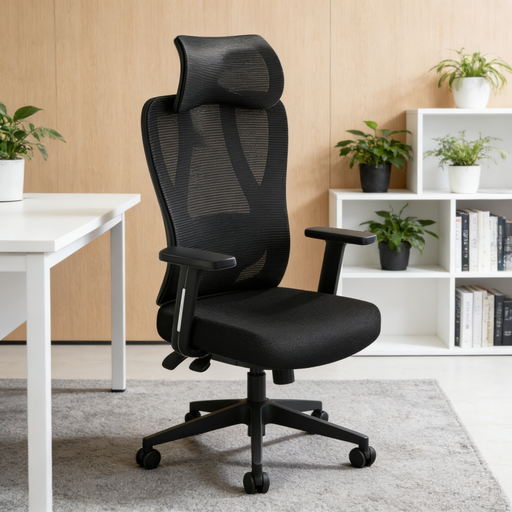
Why it stands out: This model combines the features of a professional office chair with those of a gaming chair. Its standout feature is the 4D pivoting lumbar support, which allows for highly precise adjustment to the lower back. The wide recline angle of 105° to 140° offers flexibility for both focused work and relaxing breaks.
Advantages:
Who it's for: For users seeking a versatile chair for long work and gaming sessions who value maximum adjustability, especially in the lumbar region.
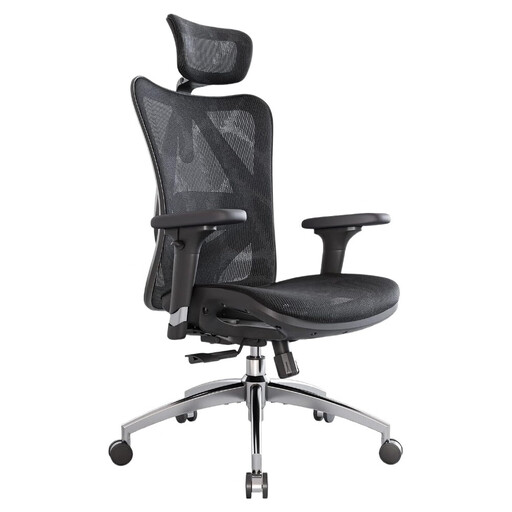
Why it stands out: The Sihoo M57S is distinguished by its robust construction and a high weight capacity of up to 150 kg. The S-shaped backrest is modelled on the natural curve of the spine. Combined with the adjustable lumbar support and 3D armrests, it provides a solid ergonomic foundation for the daily office routine.
Advantages:
Who it's for: For individuals who need a stable and high-capacity ergonomic desk chair for daily use in the office or at home and who appreciate comprehensive armrest adjustability.
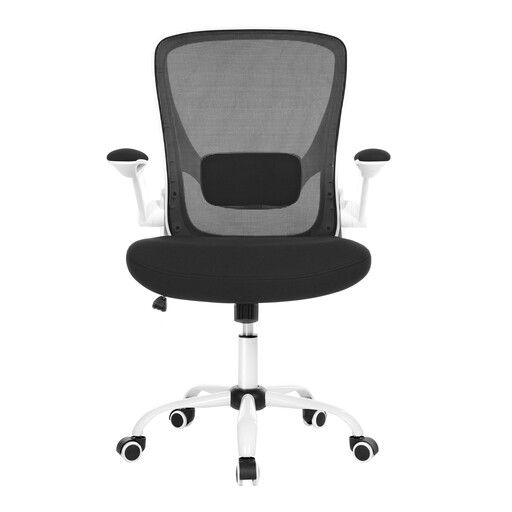
Why it stands out: This model is a practical solution for workspaces with limited room. The flip-up armrests allow the chair to be pushed completely under most desks, which saves space. Despite its slim design, it offers essential ergonomic features like height-adjustable lumbar support and a rocking function.
Advantages:
Who it's for: Ideal as a chair for a home office, for students, or for workspaces where flexibility and space-saving storage are important, without sacrificing essential ergonomic comfort.
Didn't find the perfect model for your specific needs among these recommendations? Every workspace and every body is different. Sometimes, it's the small details that make all the difference.
Explore our entire collection of ergonomic mesh chairs and find the perfect model for your needs.
An office chair is considered ergonomic if it can be adapted to the user's individual body measurements and sitting habits through a wide range of adjustment options. Key features include adjustable seat height and depth, an adaptable backrest with lumbar support, and adjustable armrests. A synchronous mechanism, where the seat and backrest move in a coordinated manner, also promotes dynamic sitting.
Lumbar support is very important because it supports the natural curve of the lumbar spine. Without this support, the lower back tends to flatten or curve outwards during long periods of sitting, which can lead to poor posture and increased stress on the spinal discs and back muscles. A well-adjusted support helps to reduce this strain.
A basic setup can be done in a few steps: