
Lieferung heute & morgen

Qualitätsgarantie

Willkommens-Angebote freischalten: KOSTENLOSE Lieferung | Bis zu 80 % RABATT | Kostenlose 30-Tage-JoyPlus-Testphase
App herunterladen
By: Joybuy Product Recommendation Officer
Long workdays in a home office or intense gaming sessions take their toll—often in the form of back and neck pain. An office chair with a footrest promises relief by enabling not only ergonomic seating but also relaxing breaks. However, the market is saturated with models of dramatically varying quality. Before you make a decision, it's crucial to understand the common pitfalls that often lead to disappointment and the need for a replacement.
Many buyers invest in a chair that looks impressive at first glance, only to find that critical features fail after just a few months. Here are the most common problems:
To avoid these issues, you should base your selection on objective criteria.
A high-quality office chair with a footrest is an investment in your well-being. Pay attention to the following three core parameters to ensure your chair remains functional for years to come.
A truly ergonomic office chair adapts to your body, not the other way around. Look for these essential adjustments:
The longevity of a chair depends directly on the materials used.
The footrest itself deserves special attention. A good design is characterised by a stable, smooth-gliding mechanism. It should extend and retract without snagging or requiring excessive force. The support surface should be wide enough to comfortably rest both legs and should ideally be padded. A model where the footrest disappears completely under the seat when retracted provides a clean look and doesn't interfere with daily work.
Based on these criteria, we have identified a few models suitable for different user profiles and requirements.
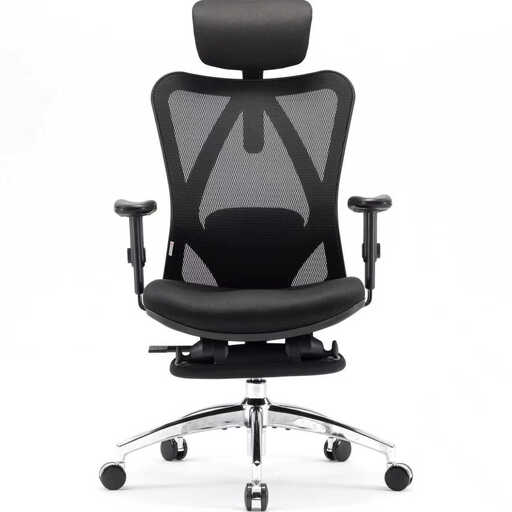
Why This Fits Their Persona: Ideal for long workdays. The design is professional and blends seamlessly into a home office, while providing full ergonomic functionality for focused work and relaxing breaks.
This chair bypasses the "ergonomics" trap with five specific adjustment points: headrest, lumbar support, seat height, armrests, and tilt. The footrest is cleanly integrated into the design, not just a tacked-on afterthought.
The breathable mesh backrest promotes air circulation and prevents heat buildup. The W-shaped seat design reduces pressure on the thighs.
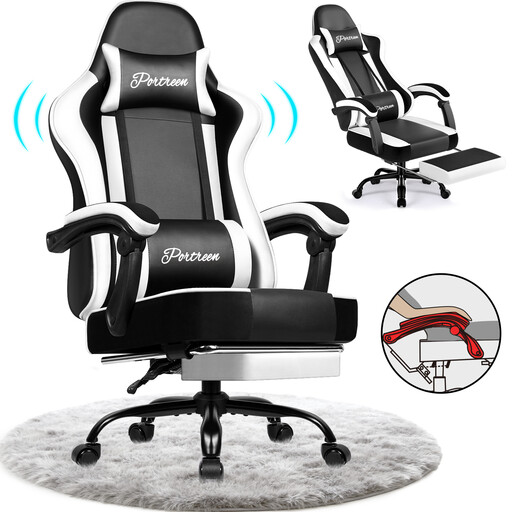
Why This Fits Their Persona: Designed for intense and long gaming marathons. Its high weight capacity and extreme recline function up to 170 degrees make it a true gaming chair with a footrest for users who need to switch between tension and relaxation.
The footrest is equipped with a rust-proof metal frame, avoiding the typical weak point of unstable plastic parts. The high-density foam retains its shape, preventing the cushion from "bottoming out" quickly.
The high weight capacity of 150 kg and the extensive recline function (up to 170°) offer stability and flexibility. BIFMA and SGS certifications confirm compliance with safety and durability standards.
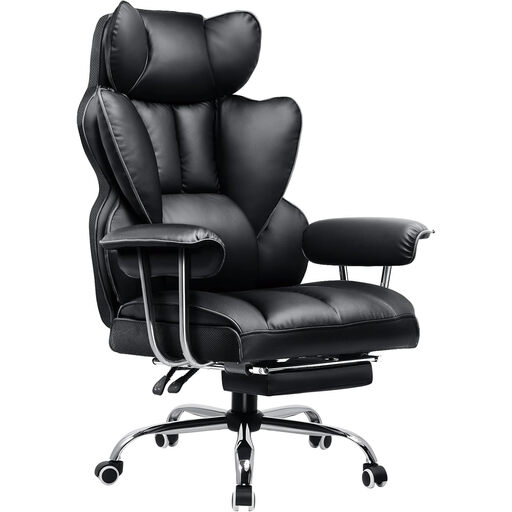
Why This Fits Their Persona: A solid choice for users who want to try the benefits of a footrest without a large initial investment. It offers the essential comfort features for occasional gaming or home office work.
Although budget-friendly, this model relies on a solid base with high-density foam and a sturdy backrest. It avoids the most common failure of the cheapest chairs: total breakdown after just a few weeks.
Offers a balanced price-to-performance ratio. All core features, such as an adjustable backrest, height adjustment, and a retractable footrest, are included.
We've compiled a complete, up-to-date list of products that fully meet these strict selection criteria and safety standards.
The weight capacity of a footrest is not designed to support your entire body weight. It is intended solely for resting your legs while reclining or in a relaxed sitting position. Avoid sitting or standing on the footrest, as this can lead to material failure. On models with metal rails, stability is generally higher than on those with all-plastic constructions.
Both materials have their pros and cons. Faux leather (PU) is very easy to clean, as liquids and dirt can be simply wiped away. However, it is less breathable. Fabric covers offer better air circulation and often feel warmer and softer, but they are more susceptible to stains. For users who eat at their desk or have pets, faux leather is often the more practical choice. Those who tend to sweat will benefit from a fabric or mesh cover.
While universal, separate footstools are available, retrofitting an integrated, retractable footrest onto an existing chair is generally not possible or safe. The chair's structure must be designed from the outset to accommodate the mechanism and the altered weight distribution. A chair designed from the factory with an integrated footrest offers far greater stability and ergonomic cohesion.