Joybuy Insights

Office Chair Buyer's Guide 2026: A Guide to Choosing the Right Model

Choosing the right office chair is a practical decision, driven by your daily usage and individual physical needs. A suitable desk chair promotes a neutral posture and can help reduce strain during long periods of sitting. This guide breaks down the technical criteria that are crucial when selecting a model for the office or your home office.

What to Look for When Choosing an Office Chair

Your choice of office chair should be based on an analysis of its adjustability, materials, and construction. The following parameters are essential for making an informed decision.

Ergonomics and Adjustability

An ergonomic office chair is defined by its ability to adapt to the user. Key mechanisms and adjustment options include:

  • Seat Height: Seamless height adjustment is a standard feature. Your feet should be able to rest flat on the floor, with your thighs forming a horizontal or slightly downward-sloping line.
  • Seat Depth: Adjustable seat depth ensures a gap of about three to four fingers' width remains between the back of your knees and the front edge of the seat. This promotes healthy circulation in your legs.
  • Backrest and Synchronous Mechanism: The backrest should support the natural S-curve of the spine. A synchronous mechanism links the backrest's recline with the seat pan's tilt, encouraging your body to engage in dynamic sitting.
  • Lumbar Support: A chair with lumbar support offers targeted reinforcement for the lower back region. Ideally, this support is adjustable in height and depth to perfectly match the individual curvature of your spine.
  • Armrests: Height-adjustable armrests relieve strain on the shoulder and neck muscles. 3D or 4D armrests offer additional adjustments for depth and width.

Materials and Weight Capacity

The choice of material affects comfort, durability, and maintenance.

  • Upholstery: Mesh fabric is breathable and ideal for extended periods of sitting. PU leather is easy to clean and water-resistant, while fabric covers offer a wide variety of textures.
  • Cushioning: High-density cold foam retains its shape and provides consistent support even after prolonged use. Less expensive foams can lose their supportive properties over time.
  • Frame and Gas Lift: The base (usually made of steel, aluminium, or durable plastic) and the gas lift determine the maximum weight capacity. Models certified to BIFMA or SGS standards have proven stability and durability. An office chair with a 150 kg weight capacity features a reinforced frame and a heavy-duty gas lift.

Castors and Bases

The chair's mobility is another key factor.

  • Swivel Chair with Castors: Most office chairs are designed as swivel chairs. Hard floor castors (softer) are suitable for parquet or tiles, while soft floor castors (harder) are designed for carpeted floors.
  • Desk Chair without Castors: Stationary models with a fixed base offer excellent stability and protect delicate floors. They are suitable for workstations where high mobility is not required, or for design-focused living spaces.

Our Top Office Chair Picks for 2026

The following models have been selected for their specific technical features and ideal use cases.
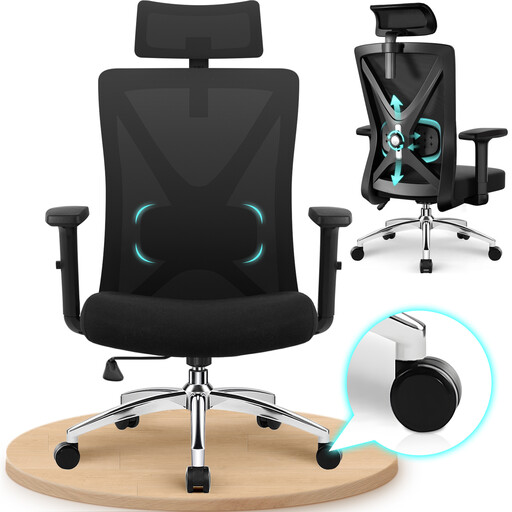
GTIMEX Ergonomic office chair

GTIMEX Ergonomic office chair

Why this model is worth considering: This ergonomic office chair focuses on providing precisely adjustable spinal support. Its S-shaped backrest, combined with a lumbar cushion that is adjustable in height (6 cm) and depth (3 cm), allows for a highly personalised fit to your body's contours.

Technical Specifications at a Glance:

  • Weight Capacity: Up to 150 kg
  • Backrest: Reclines up to 135°, breathable nylon mesh
  • Lumbar Support: Adjustable in height and depth
  • Seat Cushion: 8 cm thick, medium-firm natural sponge cushion
  • Adjustability: Seat height (10 cm), armrest height (10 cm), headrest angle (120°)

Best for: Users who spend most of their workday seated and are looking for an executive chair with a focus on highly customisable lumbar support. Its high weight capacity also makes it suitable for heavier individuals.
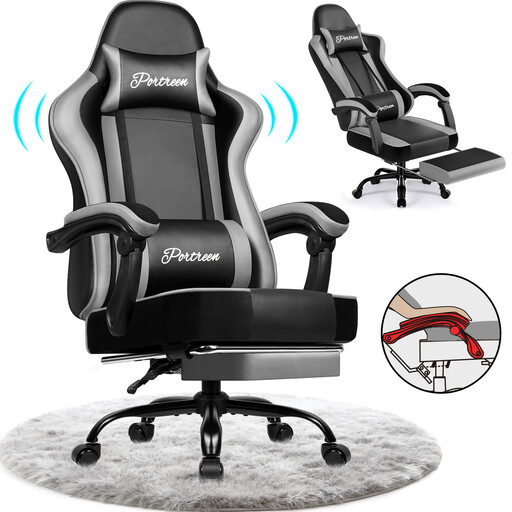
GTIMEX Gaming chair

GTIMEX Gaming chair

Why this model is worth considering: This gaming chair combines a classic racing-style seat aesthetic with advanced comfort features. The backrest, which reclines up to 170 degrees, and the retractable footrest allow you to switch between a focused work posture and a relaxed reclining position.

Technical Specifications at a Glance:

  • Weight Capacity: Up to 150 kg
  • Backrest: Reclines from 90° to 170°
  • Special Feature: Integrated office chair with a footrest (telescopic)
  • Material: Water- and stain-resistant PU leather, high-density moulded foam
  • Extra Cushions: Detachable head and lumbar pillows

Best for: Gamers and home office users who need a chair for long sessions and value flexible resting positions. The durable PU leather is also easy to maintain and resilient.
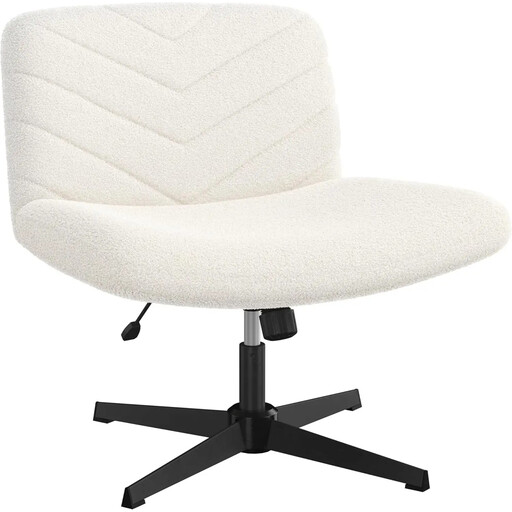
Yaheetech Office Chair

Yaheetech Office Chair

Why this model is worth considering: This model is a desk chair without castors that prioritises stability and design. Its wide seat (67.5 cm) and armless construction allow for unconventional sitting positions, such as sitting cross-legged. The Bouclé fabric cover gives it a cosy, residential aesthetic.

Technical Specifications at a Glance:

  • Weight Capacity: Recommended up to 125 kg
  • Base: Stationary X-shaped metal base with floor protectors
  • Functions: Height-adjustable office chair (41 cm to 50.5 cm), 360° swivel, rocking function
  • Design: Wide seat, armless, Bouclé fabric upholstery
  • Dimensions: 67.5 x 54 x 80 cm (W x D x H)

Best for: Design-conscious users in living or creative spaces who are looking for a stable and visually appealing chair. It is ideal for individuals who like to vary their sitting position and do not need a mobile swivel chair.

Other Options and Alternatives

The models presented here cover specific user profiles. If you are looking for other designs, materials, or specialised functions, you can find a wider selection in our main category for Office Chairs and Furniture.

Frequently Asked Questions (FAQ)

1. How do you correctly adjust an ergonomic office chair? The correct adjustment process involves these steps:

  1. Seat Height: Adjust the height so your feet are flat on the floor and your knees are at an approximately 90-degree angle.
  2. Seat Depth: Adjust the depth so there is a gap of 3-4 fingers' width between the back of your knees and the edge of the seat.
  3. Backrest/Lumbar Support: Position the lumbar support at the level of your waistband, so it supports the natural curve of your lower spine.
  4. Armrests: Set the armrests so your forearms rest comfortably with your shoulders relaxed, forming a 90-degree angle.

2. What is the difference between a gaming chair and an office chair? An ergonomic office chair is primarily designed for a neutral and dynamic sitting posture for work, often featuring a synchronous mechanism and an understated design. A gaming chair is visually inspired by racing seats, often offering high side bolsters for support, a deeply reclining backrest, and extra features like a footrest. The focus here is on comfort during long, often reclined, gaming sessions.

3. How important is lumbar support in a desk chair? Lumbar support is a key ergonomic feature. It fills the gap in the lower back (lumbar lordosis) and supports the spine. This helps prevent unhealthy slouching and relieves pressure on the intervertebral discs, which is especially important when sitting for several hours. Support that is adjustable in height and depth offers the greatest benefit, as it can be customised to your individual needs.