
Lieferung heute & morgen

Qualitätsgarantie

Willkommens-Angebote freischalten: KOSTENLOSE Lieferung | Bis zu 80 % RABATT | Kostenlose 30-Tage-JoyPlus-Testphase
App herunterladen
Long hours at a desk, whether in a corporate office or a home office, have become the norm for many professionals, students, and creatives. The wrong chair can quickly lead to muscle tension and difficulty concentrating. An ergonomic office chair isn't a luxury—it's a foundational investment in a productive and healthy workspace.
This article serves as your guide. We will outline the objective criteria to consider when choosing the right chair and present a curated selection of models with distinct features to simplify your decision.
Selecting the right model depends on your individual needs. Three key aspects will help you evaluate the features of different chairs and make an informed decision.
An ergonomic desk chair is defined by its wide range of adjustment options. An adjustable computer chair with lumbar support is crucial for supporting the natural curve of the lower spine and preventing poor posture. Look for support that is adjustable in height and, ideally, in depth as well.
Equally important is an office chair with armrests that can be adjusted in height. The armrests should allow your forearms to rest at a 90-degree angle on your desk without forcing your shoulders to rise. This relieves strain on the shoulder and neck area. The seat height should be adjustable so that your feet can rest flat on the floor with your knees at an approximate 90-degree angle.
A chair's material affects both comfort and longevity. A mesh office chair offers excellent breathability. The airflow prevents heat buildup, ensuring a comfortable experience, especially during long workdays. Padded seats made from high-quality foam provide good pressure distribution and retain their shape even with intensive use.
The maximum weight capacity is a critical safety and quality feature. Standard chairs are often rated for up to 120 kg. For taller or heavier individuals, there are models like an office chair for up to 150 kg or more, which feature a reinforced base and a more robust gas lift. Certifications like BIFMA or SGS can indicate tested stability and durability.
The height of the backrest is another key factor. A high-back office chair supports the entire back up to the shoulder area and often includes an integrated or adjustable headrest. This is especially beneficial for those who like to recline periodically to relieve tension in the neck and upper spine.
Also, pay attention to the chair's mechanism. A basic tilt mechanism allows the entire chair to rock back, while a synchronous mechanism tilts the backrest and seat at an ergonomically optimised ratio. The latter promotes "dynamic sitting," which keeps the body in motion and improves circulation to the spinal discs.
Based on the criteria mentioned, we have compiled a selection of ergonomic office chairs that cater to different needs and use cases.
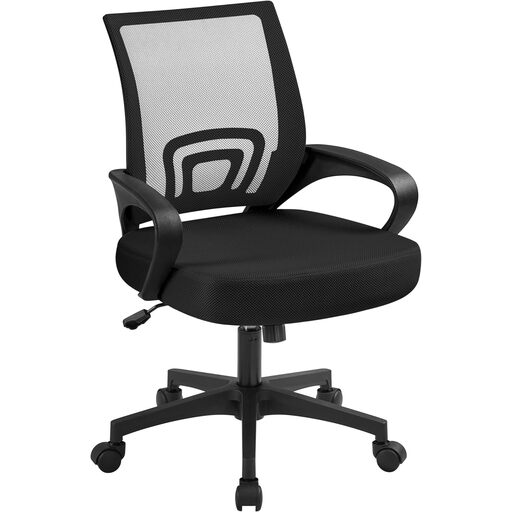
Why it stands out: This model combines fundamental ergonomic features with a focus on certified materials. The use of FSC-certified panels for the seat and its SGS and BIFMA standard certifications underscore a commitment to quality and responsible manufacturing.
Pros:
Who it's for: This chair is a solid choice for the home office or workplace for those seeking a reliable chair with essential ergonomic functions. It is well-suited for users with standard comfort and stability requirements.
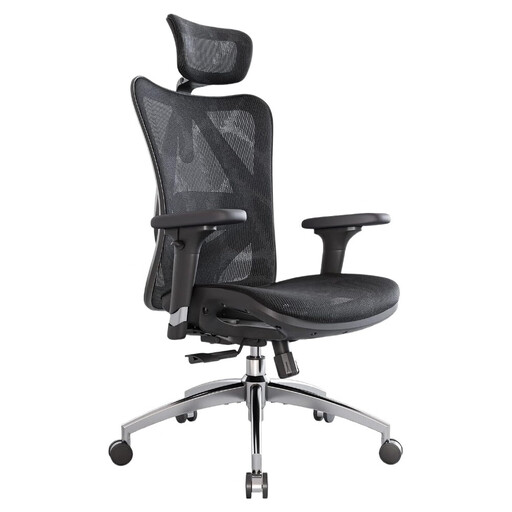
Why it stands out: The Sihoo M57S is distinguished by its advanced customisation options, particularly its 3D armrests and adjustable lumbar support. These features allow for precise fine-tuning to your individual body shape.
Pros:
Who it's for: Ideal for users who sit for long, continuous hours and value precise adjustment of the armrests and lumbar support. Its high back and weight capacity make it a great option for taller and heavier individuals.
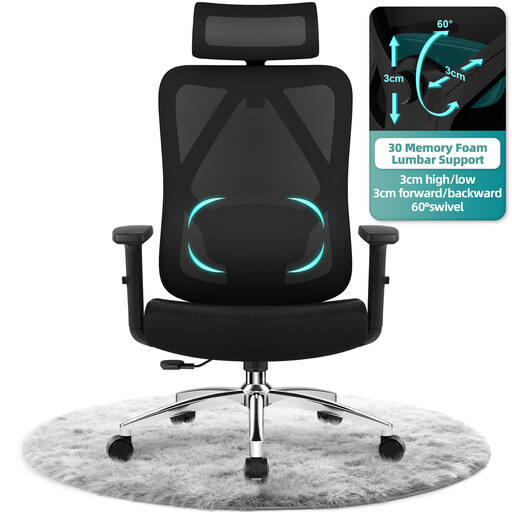
Why it stands out: This model is notable for its exceptionally high weight capacity of up to 200 kg and its innovative 3D memory foam lumbar support. The generous recline function of up to 135° also offers superior comfort for relaxation breaks.
Pros:
Who it's for: This chair is the premier choice for users who require maximum stability and weight capacity. The advanced lumbar support and deep recline function make it ideal for individuals who demand superior comfort and personalised support, especially during very long workdays.
An ergonomic chair for the home office or corporate setting is a highly personal decision. If you place a high value on breathability, a chair with mesh on both the backrest and the seat might be the right choice for you.
? Explore our full selection of breathable mesh chairs to compare more models.
An office chair is considered ergonomic if it can be adjusted to the user's body dimensions to promote a healthy sitting posture. Key features include adjustable seat height, seat depth, customisable armrests, and a supportive backrest with adjustable lumbar support. The goal is to provide optimal support to the body and minimise strain.
A basic adjustment follows these steps:
The stated maximum weight capacity is a crucial safety feature. Exceeding the recommended weight can compromise the chair's stability and lead to accelerated wear and tear on components like the gas lift and the base. Always choose a model with a weight capacity that is well above your own body weight to ensure long-term safety and durability.