
Lieferung heute & morgen

Qualitätsgarantie

Willkommens-Angebote freischalten: KOSTENLOSE Lieferung | Bis zu 80 % RABATT | Kostenlose 30-Tage-JoyPlus-Testphase
App herunterladen
By a Joybuy Product Recommendation Officer
The selection on the olive oil shelf can be overwhelming: "extra virgin," "cold-pressed," "for frying," or with a protected designation of origin. The labels often raise more questions than they answer. Which oil is best for salads, which for a hot pan, and which is a good all-rounder for daily use?
This guide is designed to provide clarity. We'll explain the key differences between olive oil types and present a selection of products for various applications. Our goal is to offer you an objective basis to help you find the perfect olive oil for your kitchen.
To make an informed decision, three criteria are particularly helpful: the quality grade, the origin, and the intended use, especially concerning its heat resistance.
The designation on the label provides the first important clue about quality and taste.
The origin of the olives significantly shapes the character of the oil.
Not every olive oil can withstand high temperatures. The smoke point is the temperature at which an oil begins to smoke and break down.
Based on these criteria, we have compiled a selection for different needs—from a budget-conscious everyday oil to a specialist for the hot pan.
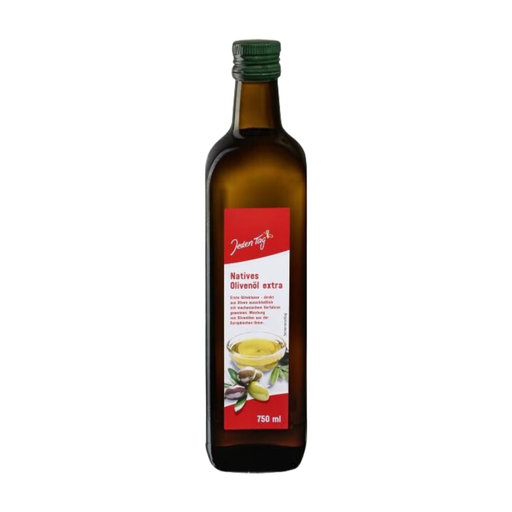
Why It Stands Out This "first cold pressing" grade extra virgin olive oil is a reliable all-rounder. As a blend of olive oils from the European Union, it offers consistent quality and a mild, fruity taste that complements many dishes without being overpowering.
Benefits
Who It's For For budget-conscious households looking for an affordable olive oil for everyday use that can be used for both cold and lightly heated dishes.
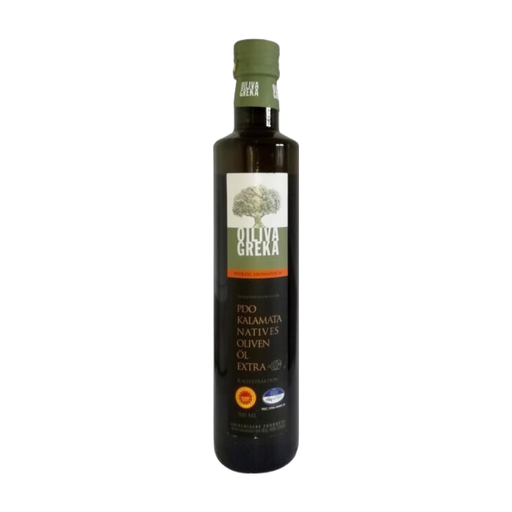
Why It Stands Out This oil bears the PDO Kalamata (Protected Designation of Origin) seal, confirming its origin from the renowned Greek region of Kalamata. It is made from select olives and delivers an authentic, fruity-spicy aroma typical of this terroir.
Benefits
Who It's For For quality-focused connoisseurs and home cooks seeking an authentic Greek olive oil with a distinct flavour profile to use as an olive oil for salads and for finishing dishes.

Why It Stands Out This product was specifically developed for high-heat cooking. It is a blend of refined and virgin olive oils that, according to the manufacturer, can be heated up to a temperature of 195°C. Its neutral flavour ensures that the aroma of the food remains the star.
Benefits
Who It's For For practical cooks who need a reliable and safe olive oil for frying and don't want to compromise on the fundamental properties of olive oil.
If our curated selection doesn't fully meet your needs, or if you're curious about other varieties, origins, or organic qualities, you can find additional alternatives in our broader collection.
Discover Our Entire Range of Olive Oil & Vinegar
Yes, but with limitations. Extra virgin olive oil is suitable for gentle sautéing at low to medium heat, up to about 180°C. For high-heat searing or deep-frying, a special olive oil for frying is the more appropriate choice. Its higher smoke point prevents the development of smoke and undesirable compounds.
The term "cold-pressed," or the more modern term "cold-extracted," describes the production method. It means the oil is extracted from the olives purely by mechanical means, without the addition of external heat. The processing temperature must not exceed 27°C. This gentle process is a quality mark for extra virgin olive oil, as it best preserves the aromas and nutrients.
Olive oil is sensitive to light, heat, and oxygen. Therefore, always store it in a cool, dark place—for example, in a kitchen cupboard that is not right next to the stove or oven. The bottle should always be tightly sealed after use to minimise oxidation and maintain its quality.