
Lieferung heute & morgen

Qualitätsgarantie

Willkommens-Angebote freischalten: KOSTENLOSE Lieferung | Bis zu 80 % RABATT | Kostenlose 30-Tage-JoyPlus-Testphase
App herunterladen
For professional tradespeople and discerning DIY enthusiasts, quick access to the right tool is crucial for efficient work. Disorganized gear not only costs time but also causes frustration. An open-tote tool bag offers a practical solution by combining clear organization with immediate accessibility to your most important instruments.
This guide introduces a selection of models and explains the key features that define a functional and durable tool tote. Our goal is to provide you with an informed basis for choosing your next professional tool bag.
The right bag depends on the specific demands of your daily work. Three key criteria will help guide your decision.
A heavy-duty tool bag must withstand the demanding conditions of job sites and assembly work. Pay attention to the material density, often specified in Denier (D). Fabrics like 600D or 900D polyester are resistant to abrasion and tears. Double-stitched seams, especially on handles and stress points, are an indicator of high durability. Another critical feature is a tool bag with a waterproof base. A molded plastic hard base protects the contents from moisture and dirt and prevents sharp tools from piercing the bottom.
The open-top design is the main advantage of this type of bag, allowing for a quick overview and direct access. However, a well-thought-out interior and exterior layout is still essential. Multiple external pockets are ideal for frequently used tools like screwdrivers or pliers, while internal loops and compartments keep everything organized. For specialized trades like electricians, there are models with compartments tailored for multimeters, wire strippers, and other specific instruments. Such a tool bag for electricians significantly streamlines workflows.
A fully loaded tool bag can reach a significant weight. Ergonomic handles with padding reduce strain on your hands. An adjustable and padded shoulder strap is a major advantage for carrying the bag over long distances or up stairs. A tool bag with a shoulder strap distributes the weight more evenly and keeps both of your hands free.
Based on the criteria mentioned, we have compiled a selection of models that stand out for their functionality and material quality.
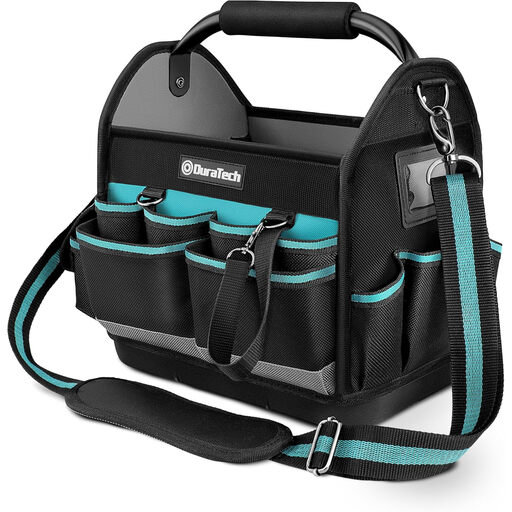
What sets this model apart This bag is designed for maximum durability. According to the manufacturer, it is made from a 5-layer fabric that includes a double layer of 900D Oxford fabric. The rotating steel handle with an EVA grip provides a sturdy and comfortable carrying option.
Pros:
Who is this model for? Ideal for tradespeople who need a compact yet extremely durable bag for daily, intensive use and value a sturdy construction.
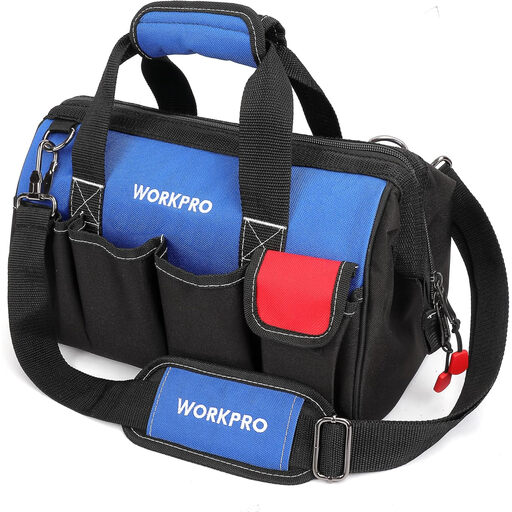
What sets this model apart This model combines a wide zipper opening for quick access with a well-designed compartment layout. The 500D x 500D polyester material is durable, while the PE base with non-slip feet ensures stability and protection from moisture.
Pros:
Who is this model for? Suitable for technicians, installers, and DIYers who prefer a medium-sized bag with good organization and quick access via a zippered opening.
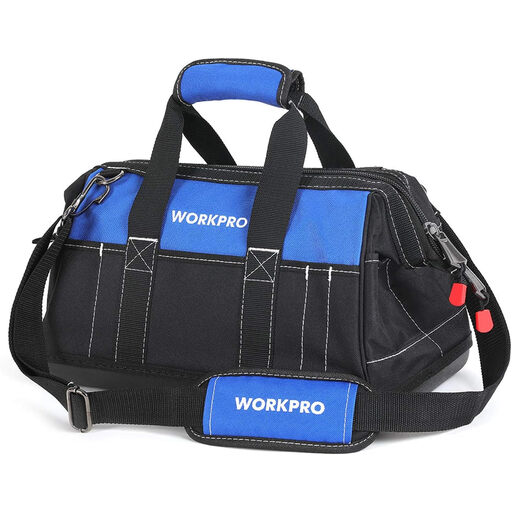
What sets this model apart At 16 inches (approx. 40 cm), this bag offers a large capacity. It features a multitude of pockets and holders. The hard, waterproof molded base reliably protects the contents. According to the manufacturer, the bag is rated for a load of up to 15 kg.
Pros:
Who is this model for? Perfect for professional users and DIY enthusiasts who need to transport a large number of tools and are looking for a bag with maximum storage space and a high load capacity.
If the models presented here don't exactly meet your needs or you'd like to compare more options, you can find a wider selection in our category.
? Discover more Heavy-Duty Bags for your needs.
The key advantage is quick and direct access to the contents. Unlike closed cases or backpacks, the tools are immediately visible and within reach, which increases work efficiency on the job site or in the workshop.
For electricians, good organization and the protection of sensitive measuring instruments are important. A tool bag for electricians should have numerous small compartments for screwdrivers, pliers, and test probes. A sturdy, waterproof base is also crucial to protect equipment from moisture.
A proven method is to group tools by type or task. Frequently used hand tools like pliers and screwdrivers belong in the easily accessible outer pockets. Larger power tools can be placed in the main compartment, while less frequently needed accessories can be stored in the inner pockets. This creates a clear structure and minimizes search time.