
Lieferung heute & morgen

Qualitätsgarantie

Willkommens-Angebote freischalten: KOSTENLOSE Lieferung | Bis zu 80 % RABATT | Kostenlose 30-Tage-JoyPlus-Testphase
App herunterladen
Outdoor solar lights promise a simple, cost-effective, and eco-friendly way to illuminate gardens, balconies, and pathways. However, the market is flooded with products whose real-world performance often fails to match the promises on the packaging. Many buyers are left disappointed when their lights quickly lose brightness, fail in the rain, or don't even come close to their advertised runtime.
As your Joybuy Product Recommendation Officer, I'm here to help you identify the common pitfalls and apply the right criteria for choosing durable and functional solar garden lighting.
Before you make a decision, you should be aware of the three most common issues that can lead to a bad purchase:
To avoid these pitfalls, you should check three key technical parameters before buying. These will give you an objective basis for evaluating product quality.
The performance of a solar light depends directly on the combination of its solar panel and battery.
The IP (Ingress Protection) rating indicates how well an electrical device is protected against the intrusion of foreign objects and water.
These two values determine the actual lighting effect.
Based on these objective criteria, we have curated a selection of models for different needs and user profiles.
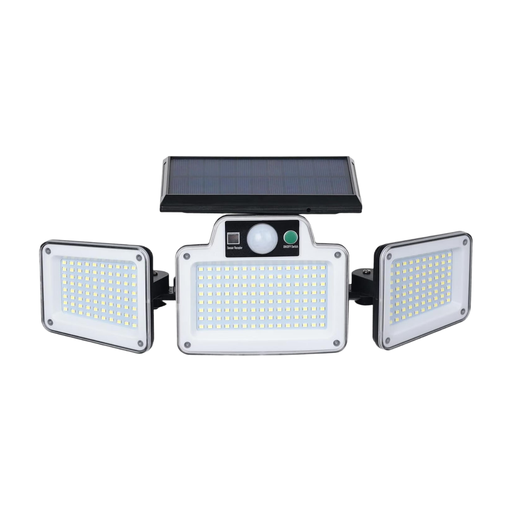
Why it's a great fit: Ideal for illuminating driveways, garages, or dark corners of your property. The three adjustable heads allow for flexible and wide light coverage, while the motion sensor provides on-demand brightness.
The clear specification of its IP65 rating guarantees true weather resistance. The three operating modes, controllable via remote, allow you to adjust for energy needs, thus avoiding the unrealistic runtime trap.
The combination of 280 LEDs, three adjustable light heads, and a separate solar panel with a long cable offers maximum installation flexibility and excellent illumination.
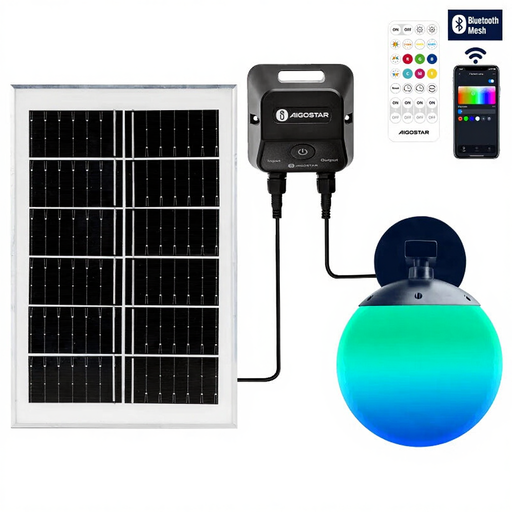
Why it's a great fit: For users who want more than just light. This smart solar light can be controlled via an app, offers a full colour spectrum (RGBCCT), and can be networked with other lights to create entire lighting scenes.
The high-efficiency monocrystalline solar panel and 4 Ah lithium battery ensure reliable performance. Its IP65 certification guarantees durability in all weather, sidestepping the pitfall of poor robustness.
The Bluetooth Mesh technology allows for the control of over 200 networked devices. Full control over light colour, brightness, and schedules via the app offers the ultimate in customisation.
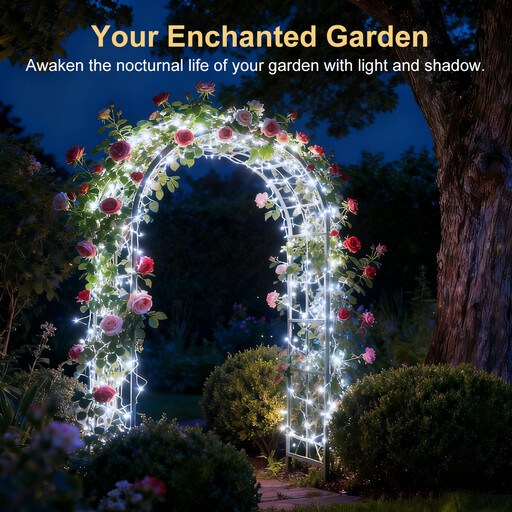
Why it's a great fit: These outdoor solar string lights are perfect for creating an atmospheric ambiance on a balcony, patio, or in the garden. The flexible copper wire can be easily wrapped around railings, plants, or other objects.
With an IP65 rating, these string lights are significantly more robust than many other decorative lights. The stated realistic runtime of 8-14 hours, depending on sun exposure, sets clear expectations.
Eight different lighting modes with a memory function provide variety for any occasion. The set includes two separate 8-metre string lights, representing excellent value for money.
We have compiled a complete, up-to-date list of products that fully meet these strict selection criteria and rigorous safety standards.
The lifespan of an LED solar light is determined by two main components: the light source (LED) and the battery. The LEDs themselves are very durable and can last for 30,000 hours or more. The battery is typically the component that loses performance first. Depending on its quality and the number of charge cycles, it may need to be replaced after about 1 to 3 years. Models with replaceable standard batteries (e.g., AA or 18650 types) are therefore a more sustainable choice.
Yes, but with reduced performance. Modern solar panels, especially monocrystalline ones, can generate energy even in diffuse light, such as on overcast days. However, the charging process is significantly slower than in direct sunlight. This results in a shorter runtime at night during winter and on gloomy days. For reliable year-round operation, models with large, efficient panels and high-capacity batteries are preferable.
That depends on the IP rating. Lights marked IP65 or higher are dust-tight and protected against water jets, making them resistant to rain, snow, and frost. These can generally be left outside all year round. However, it's important to clear snow off the solar panels so they can continue to charge. For lights with a lower IP rating (e.g., IP44), it is advisable to bring them inside during the harshest winter months to extend their lifespan.