
Lieferung heute & morgen

Qualitätsgarantie

Willkommens-Angebote freischalten: KOSTENLOSE Lieferung | Bis zu 80 % RABATT | Kostenlose 30-Tage-JoyPlus-Testphase
App herunterladen
The selection of pacifiers is vast and often overwhelming for expectant or new parents. As a part of your newborn essentials, the pacifier is an important companion for many families, but choosing the right model isn't always easy. Marketing promises can be confusing and lead to regrettable purchases. To help you make an informed decision, we'll highlight the most common pitfalls and show you what really matters.
Common Pitfalls When Buying Pacifiers:
To avoid the problems mentioned above, you should pay attention to a few objective criteria when making your selection. These will help you evaluate the quality and suitability of a pacifier, regardless of advertising claims.
The age recommendation on the packaging is a crucial factor. Manufacturers like NUK and MAM offer different sizes tailored to the specific developmental stage of the jaw, such as pacifiers for 0-6 months or pacifiers from 18 months.
An orthodontic pacifier is distinguished by specific features:
Most modern pacifiers are made of silicone. A silicone pacifier offers several advantages:
All pacifiers sold in the EU must be BPA-free and comply with the EN 1400 safety standard. This standard ensures that the pacifier can withstand stress tests and that the ventilation holes in the shield are large enough to allow breathing in an emergency.
Beyond shape and material, it's often the small details that make all the difference:
Based on the criteria above, we have compiled a selection of products for various needs and life stages.
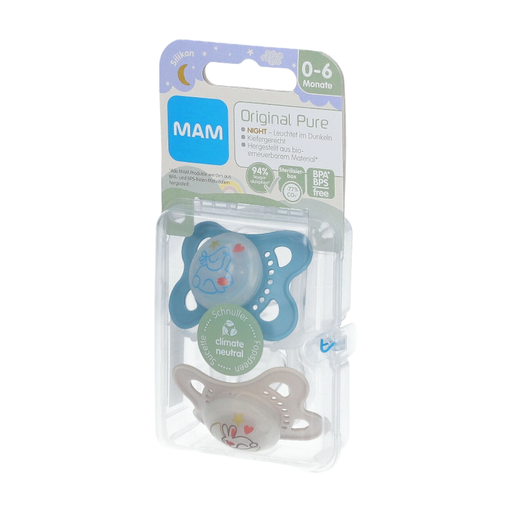
Why it's a great fit: This model from MAM combines an orthodontic shape with practical features for daily life with a newborn. The glow-in-the-dark function of the knob makes finding it at night much easier.
Solves the problem of nighttime searches and impractical handling with its glowing knob and the included sterilising and travel case.
The knob glows in the dark. The travel case allows for quick sterilisation in the microwave.
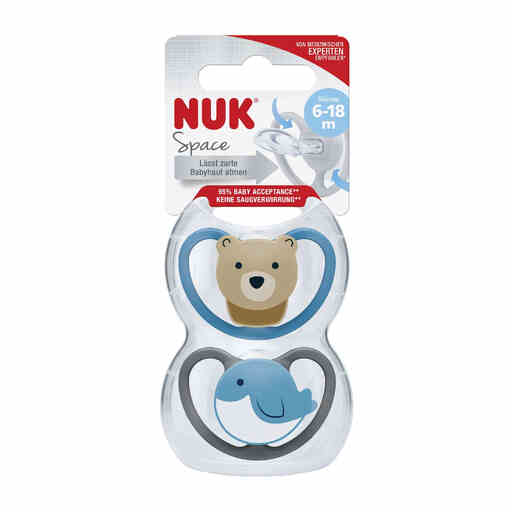
Why it's a great fit: The NUK Space was specially designed for babies with sensitive skin. Its design minimises skin contact and maximises air circulation to prevent irritation.
Specifically addresses the pitfall of skin irritation with a shield featuring extra-large openings that give skin room to breathe.
Maximum airflow thanks to its unique shield design. According to NUK, 98% of mothers confirm this effect (independent market research, Germany 2018).
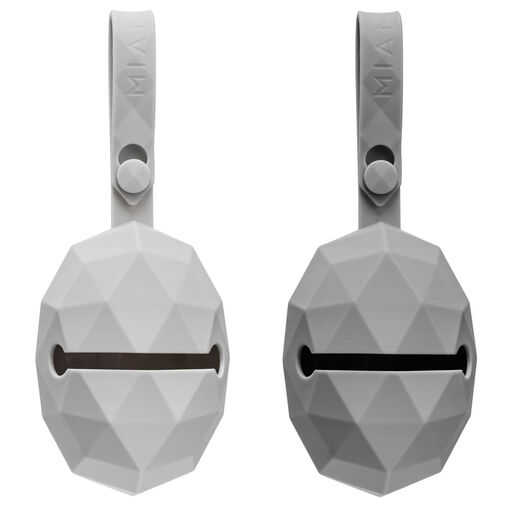
Why this accessory is a great fit: For parents who are always on the move, hygienic storage for pacifiers is essential. These cases, made from food-grade silicone, keep up to three pacifiers clean and within reach.
Solves the problem of lost or dirty pacifiers. The flexible strap allows it to be attached to a stroller or diaper bag.
Convenient double pack, dishwasher-safe, and made from flexible, BPA-free silicone. Holds multiple pacifiers.
During the teething phase, a teething ring can also be useful to soothe irritated gums. Models like the SOPHIE LA GIRAFE Teething Ring made from natural rubber are a popular choice. Gift sets that combine bottles and pacifiers, such as the Philips Avent Natural Response Gift Set, can also be a practical option for your newborn starter kit.
We've compiled a complete, up-to-date list of products that fully meet these strict selection criteria and UK/EU safety regulations.
For hygiene and safety reasons, it is recommended to replace a pacifier every one to two months. Before each use, inspect the pacifier by pulling firmly on the teat. Replace it immediately at the first sign of cracks, holes, or stickiness.
An orthodontic pacifier is shaped to interfere as little as possible with the natural development of the jaw, palate, and teeth. Key features include a thin teat neck, which keeps the gap between the upper and lower dental arches small, and an asymmetrically shaped teat that allows the tongue sufficient freedom of movement.
Before first use, the pacifier should be sterilised in boiling water for five minutes. For daily cleaning, rinsing with warm water and mild washing-up liquid is sufficient. Regular sterilisation (e.g., by boiling, in a steam steriliser, or a microwave steriliser box) is also recommended. Always follow the manufacturer's specific instructions.