
Lieferung heute & morgen

Qualitätsgarantie

Willkommens-Angebote freischalten: KOSTENLOSE Lieferung | Bis zu 80 % RABATT | Kostenlose 30-Tage-JoyPlus-Testphase
App herunterladen
Choosing a pacifier might seem like a simple task at first glance. However, faced with a wealth of shapes, materials, and brands, many parents find themselves making an unexpectedly complex decision. An unsuitable pacifier is often rejected by a child or, in the worst-case scenario, can lead to problems. This guide will help you understand the essential criteria and avoid typical buying mistakes.
As a Joybuy Product Recommendation Officer, my job is to filter market information and provide you with objective, practical advice so you can make an informed decision for your child.
Before we dive into the important features, here are three common pitfalls to avoid:
To find the right pacifier, you should focus on a few crucial product features. These will help you objectively evaluate a model's quality and suitability.
Most modern pacifiers are made of silicone. Silicone pacifiers are taste-neutral, particularly temperature-resistant, and easy to clean. Unlike latex, which can become porous over time and has a higher allergy potential, silicone maintains its shape and hygienic properties for longer.
It is essential to ensure the pacifier is labelled as BPA-free and complies with the European safety standard EN 1400. This standard ensures that the pacifier meets strict requirements for material, construction, and tear resistance.
The term orthodontic pacifier refers to a special teat shape designed to support the natural development of the jaw and teeth. Typical features include:
It's important to distinguish that a pacifier (soother) has a different function and shape than a bottle teat, which is designed for feeding.
The pacifier's shield should be large enough to prevent it from being swallowed but shaped so that it doesn't cover the nose. Large air holes in the shield are crucial to let the skin breathe and prevent irritation, which is especially relevant for babies needing a pacifier for sensitive skin. Always choose the size recommended for your child's age, such as a pacifier 0-6 months for newborns.
Here are some product recommendations tailored to the specific needs of parents and children.
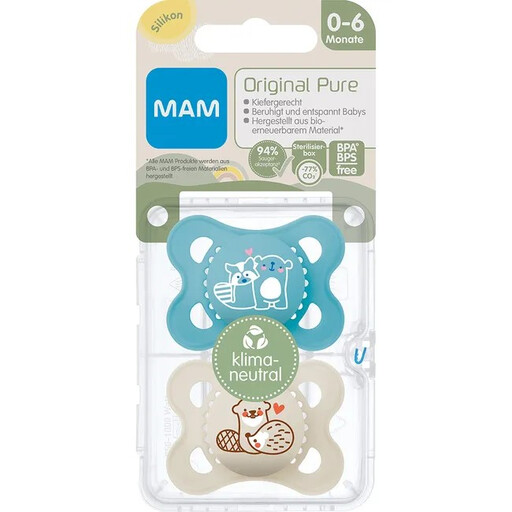
Why it's a great fit: This sustainable pacifier is specially designed for the needs of newborns. The shield and button are made from bio-renewable material, making it the first climate-neutral MAM pacifier. Ideal for parents who value sustainability and an age-appropriate fit.
It is precisely designed for the 0-6 month age group and features large air holes and nubs on the inside to prevent skin irritation.
Comes with a convenient sterilising and travel box that allows for quick, energy-saving sterilisation in the microwave.
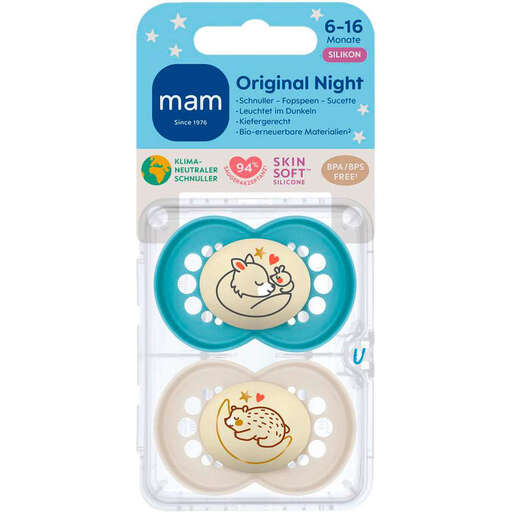
Why it's a great fit: This glow-in-the-dark pacifier is the solution for parents who don't want to search for the soother in the dark. The button glows, helping to minimise sleep disruptions for both parents and child.
It solves the practical problem of nighttime searches while also featuring the skin-friendly shield and orthodontic teat.
The button glows in the dark. According to the manufacturer, the SkinSoft silicone is instinctively accepted by 94% of babies.
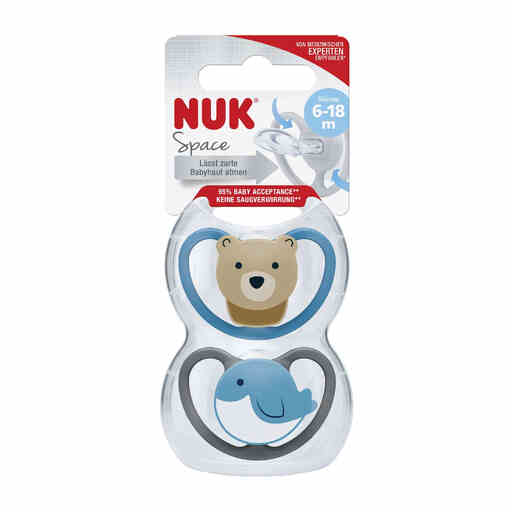
Why it's a great fit: The NUK pacifier was specially developed to give sensitive baby skin maximum room to breathe. Its design with extra-large openings ensures optimal air circulation.
It directly addresses the problem of skin irritation caused by poor ventilation, making it a great choice for babies prone to redness around the mouth.
The unique design with minimal skin contact. According to an independent market research study by NUK in Germany (2018), 98% of mothers confirm its skin-friendly effect.
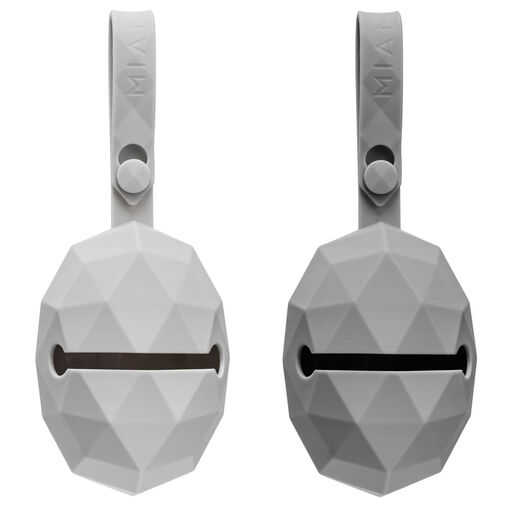
Why it's a great fit: This pacifier case is not a pacifier itself, but an essential accessory for all parents. It provides clean and secure storage for up to three pacifiers and is perfect for the diaper bag or for attaching to the stroller.
It solves the problem of unhygienic storage and ensures a clean spare pacifier is always within reach, reducing everyday stress.
Made from food-grade silicone, it is dishwasher-safe and features a practical loop for flexible attachment.
We've compiled a complete, up-to-date list of products that fully meet these strict selection criteria and German safety standards.
For hygiene and safety reasons, it is recommended to replace a pacifier every one to two months. Before each use, inspect the teat for cracks, bite marks, or stickiness, and dispose of it at the first sign of wear and tear.
An orthodontic pacifier is designed to minimise pressure on the teeth and jaw. This is typically achieved with an especially thin, soft, and flat teat neck. The shape is intended to allow the tongue sufficient space and enable a natural sucking motion.
Before first use, a pacifier should be sterilised in boiling water for five minutes. For daily cleaning, hot water and mild dish soap are sufficient. Many pacifiers come with a sterilising box that allows for quick disinfection in the microwave. Silicone pacifier cases are often dishwasher-safe, which makes cleaning even easier.