
Lieferung heute & morgen

Qualitätsgarantie

Willkommens-Angebote freischalten: KOSTENLOSE Lieferung | Bis zu 80 % RABATT | Kostenlose 30-Tage-JoyPlus-Testphase
App herunterladen
A good frying pan is the heart of any kitchen. But switching to an induction hob presents a new challenge: not every pan works, and the differences in quality are enormous. As a Joybuy Product Recommendation Officer, I see well-intentioned purchases end in frustration every day. Misleading claims and unclear product information often render a new pan useless within just a few months.
This guide will show you what truly matters when choosing an induction frying pan. We'll uncover the three most common traps that lead to costly mistakes and explain the key features that define a durable, high-performance pan.
The market is flooded with pans claiming to be suitable for induction. However, suitability alone doesn't guarantee great cooking results. Watch out for these three common problems:
To avoid these pitfalls, you should carefully check three technical features before buying. These determine the performance, durability, and your overall cooking enjoyment.
The base is the most important component of an induction frying pan. A high-quality base must meet two criteria:
Choosing the right non-stick induction pan depends on your cooking habits. Both common materials have specific properties:
The size of the pan should match the size of your household and your hob.
Here are some recommendations that are aligned with the criteria mentioned and suit different user profiles.
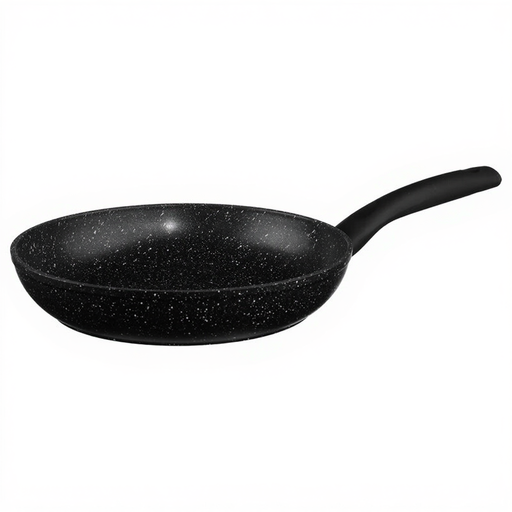
Why This Fits Their Persona: Ideal for daily use when you need a reliable and value-oriented solution. The 26 cm size is a great compromise for various dishes, from pancakes to sautéed vegetables.
The body made of forged aluminium and the reinforced stainless steel base offer high dimensional stability and prevent warping. The three-layer non-stick coating is more resilient than basic standard coatings.
Even heat distribution thanks to its solid construction. The ergonomic Bakelite handle stays cool during cooking.
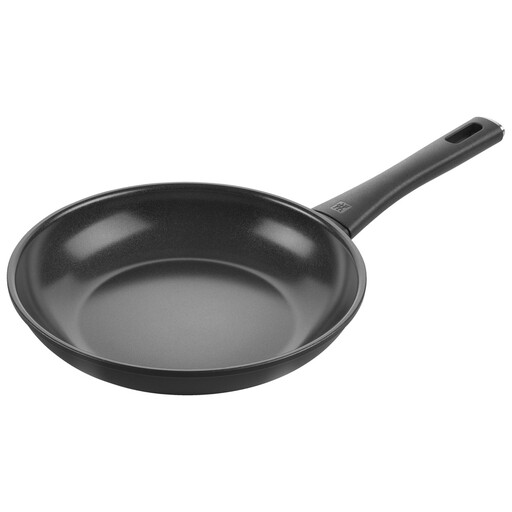
Why This Fits Their Persona: For cooks who value high-quality materials, durability, and health-conscious frying. Its high heat resistance also allows for use in the oven.
The CeraForce granite-ceramic coating is PTFE- and PFOA-free and more resistant to high temperatures than standard PTFE. The solid, forged aluminium body ensures excellent heat conduction and dimensional stability.
High heat resistance and oven-safe up to 250°C. The stainless steel handle stays cool for a long time on the hob.
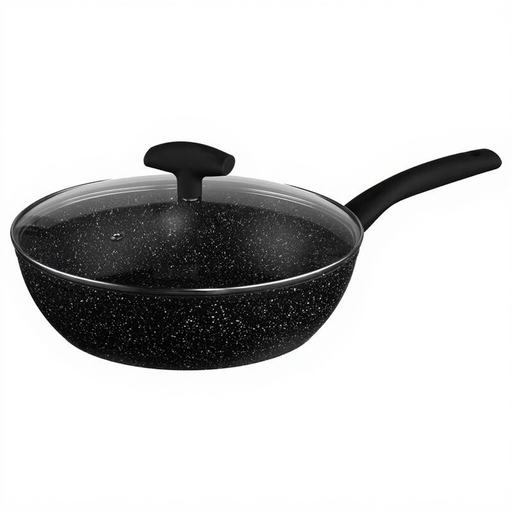
Why This Fits Their Persona: Perfect for preparing larger meals for the whole family. The included glass lid makes the pan versatile for frying, braising, and steaming.
The robust construction of forged aluminium ensures stability and even heat distribution, even at a size of 28 cm. The durable non-stick coating is designed for frequent use.
Complete set with a matching glass lid for more cooking options and splash protection. The stainless steel induction base ensures compatibility with all hob types.
We have compiled a complete, up-to-date list of products that fully meet these strict selection criteria and German safety regulations.
1. Why doesn't my old pan work on an induction hob? An induction hob generates a magnetic field to create heat directly in the pan's base. This only works if the base is made of a ferromagnetic (magnetisable) material like iron or special stainless steel. Pans made of pure aluminium, copper, or glass are not magnetic and therefore will not heat up.
2. How do I properly care for a non-stick induction pan to extend its lifespan? To protect the coating, you should follow a few basic rules:
3. Can I use a ceramic induction pan the same way as a PTFE-coated pan? Essentially, yes, but there are differences. A ceramic induction pan can often handle higher temperatures, making it good for searing. However, it is more sensitive to thermal shock and mechanical stress. A PTFE pan is unparalleled at low to medium temperatures for delicate foods and often offers slightly better and more durable non-stick performance, as long as it is not overheated.