
Lieferung heute & morgen

Qualitätsgarantie

Willkommens-Angebote freischalten: KOSTENLOSE Lieferung | Bis zu 80 % RABATT | Kostenlose 30-Tage-JoyPlus-Testphase
App herunterladen
A successful game night or party thrives on the right atmosphere. A good party game can make all the difference—it breaks the ice, gets everyone laughing, and creates shared memories. But the selection is vast, and not every game that promises a lot delivers. Many buyers invest in games that end up gathering dust on a shelf after one round or are simply unsuitable for their group.
As your Joybuy Product Recommendation Officer, I'm here to help you navigate the common pitfalls. Instead of relying on marketing promises, we'll focus on the objective features that define a great party game. This way, you'll find a suitable option that truly fits your occasion and your guests.
Before you make a purchasing decision, you should be aware of the most common issues that can dampen the fun:
To avoid a bad buy, you should base your choice on three fundamental parameters. These will help you objectively assess whether a game fits your needs.
The player count on the box is just a starting point. The crucial factor is whether the game works well in different group sizes. Some games are only fun with the maximum number of participants, while others shine in smaller rounds. Consider whether you're looking for family games for mixed age groups or adult games for a close-knit circle of friends. A good party game should be flexible and work well in both small and large groups (e.g., through team modes).
No one wants to spend 30 minutes studying rules while the guests are waiting. The best game night ideas are based on simple, easy-to-learn concepts. Pay attention to the complexity of the game mechanics:
A game with high replay value offers new experiences with every playthrough. Look for the following features:
Here are some recommendations tailored to different host profiles and groups. Each selection considers the criteria mentioned above to avoid the typical pitfalls.
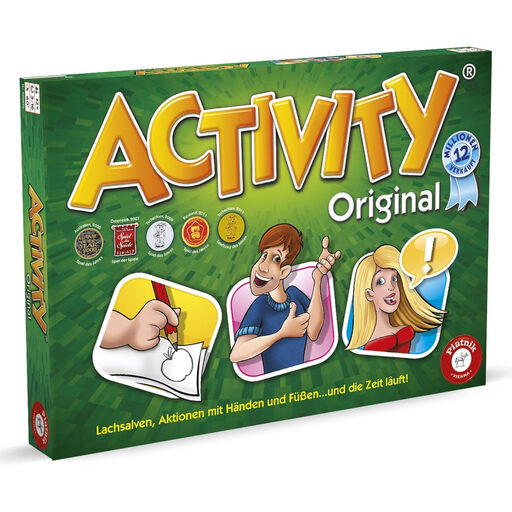
Why This Fits Their Persona: Ideal for hosts looking to entertain a diverse mix of friends, family, and colleagues. The combination of drawing, explaining, and charades is universally understood and requires no specific prior knowledge or personal revelations.
Avoids the "Awkward Silence" risk, as the tasks are creative but not overly personal. The 2,640 terms ensure high replay value and prevent the "One-and-Done" trap.
Promotes teamwork and communication. Scales excellently for large groups of up to 16 players.

Why This Fits Their Persona: Perfect for groups where musical tastes and memories are shared. The gameplay of arranging song titles chronologically sparks nostalgia and leads to lively discussions and sing-along moments.
Proactively addresses the "Hidden Requirements" trap: it's clearly communicated that an app and a Spotify account are needed. The 300+ songs offer high variety and prevent the "One-and-Done" effect.
Very low barrier to entry, as no complex rules need to be explained. The integration of real music instantly creates a relaxed party atmosphere.
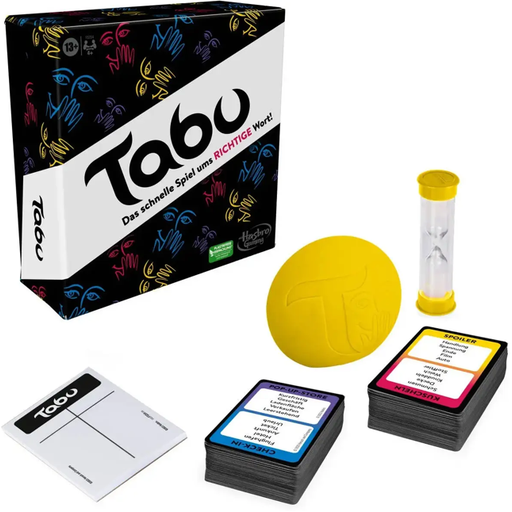
Why This Fits Their Persona: A classic word game that connects generations. It challenges creative thinking and quick communication, appealing to teenagers and adults alike without the content being too childish or too complex.
With over 1,000 terms and five game variations, it offers enormous replay value, steering clear of the "One-and-Done" trap. The team-based format prevents individual players from feeling left out.
Enhances linguistic creativity and quick thinking. Its compact design also makes it easily portable for game nights away from home.
We have compiled a complete, up-to-date list of products that fully meet these strict selection criteria and all relevant safety regulations.
Game length varies greatly. Many manufacturers provide an estimated duration on the packaging, often between 20 and 60 minutes. Games with simple rules and quick rounds are well-suited for casual parties, while more complex board games can fill an entire evening. Check this information to ensure it fits your schedule.
For large groups, the ideal games have simple rules, can be played in teams, and have little downtime for individual players. Games like "Activity" or "Taboo" are great examples because they divide players into two or more teams, keeping everyone involved simultaneously—either by guessing or by monitoring the opposing team.
Not all, but many modern music quiz games like the "Hitster" series use apps to play the song tracks directly. This is a crucial feature to check before buying. You will usually find notes like "App required" or "Spotify account needed" in the product description. If you're looking for a tech-free alternative, there are classic music quiz games that work without any digital aids.