
Lieferung heute & morgen

Qualitätsgarantie

Willkommens-Angebote freischalten: KOSTENLOSE Lieferung | Bis zu 80 % RABATT | Kostenlose 30-Tage-JoyPlus-Testphase
App herunterladen
Do you often wake up with a stiff neck or shoulder tension? The pillow you choose plays a crucial role in your spinal alignment as you sleep. An unsuitable pillow can lead to an unnatural posture, causing or aggravating discomfort.
This article serves as a comprehensive guide. It introduces various pillow types and explains which features are most relevant for different needs and sleeping positions. Our goal is to provide you with an objective foundation for your purchasing decision, helping you find the perfect product for your individual requirements.
With so many options available, the search for the right pillow can seem complex. Focusing on a few key criteria can simplify the process.
The fill material is a key determinant of the pillow's comfort, support, and durability.
The ideal pillow shape and loft depend directly on your preferred sleeping position to keep your spine in a neutral alignment.
Also, consider individual needs such as travel or allergies. For life on the go, a lightweight, compressible inflatable travel pillow that takes up minimal luggage space is ideal. Allergy sufferers should look for washable covers and hypoallergenic materials.
Here is a selection of pillows that are worth considering for individuals with neck discomfort, based on their specific features and materials.

What makes this product stand out This classic 80x80 cm pillow is filled with shredded memory foam. Unlike a solid foam block, this fill allows for individual adjustment of loft and firmness by removing or fluffing up the material. It combines the traditional feel of a hotel pillow with the pressure-relieving properties of memory foam.
Advantages:
Who is it suitable for? This pillow is suitable for those who appreciate the adaptive support of memory foam but prefer the shape of a traditional pillow. Thanks to its adjustable fill, it can be used by side, back, and stomach sleepers alike.
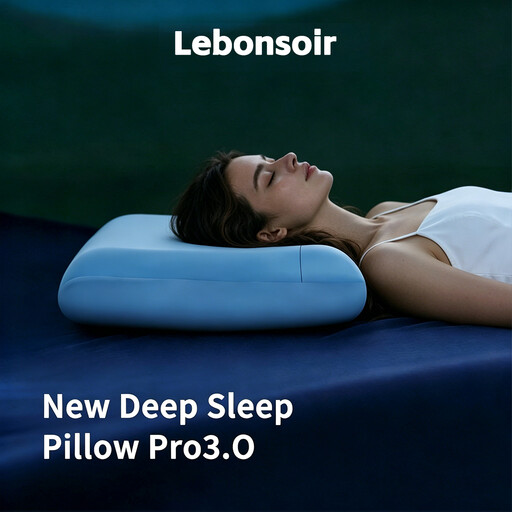
What makes this product stand out This ergonomic pillow was specifically designed to support the neck and shoulder area. Its unique feature is the 3-layer foam construction: a soft top layer of slow-rebound foam cradles the head and neck, a middle layer prevents sinking too deeply, and a firm base layer provides stable support. The contour is modelled on the natural curve of the cervical spine.
Advantages:
Who is it suitable for? Ideal for back and side sleepers seeking a structured orthopaedic pillow for targeted relief of neck and shoulder tension. Its firm yet yielding structure can benefit individuals with posture-related discomfort.
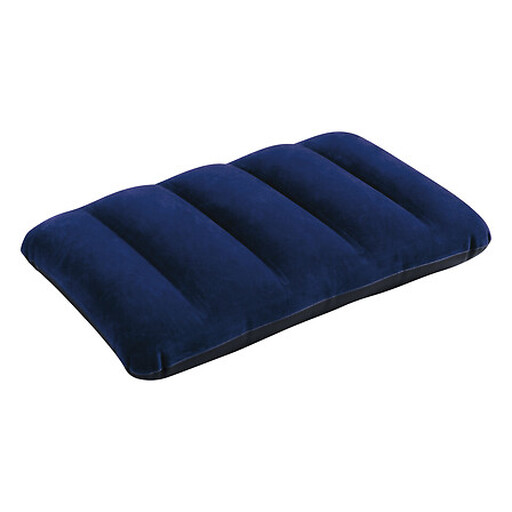
What makes this product stand out This inflatable travel pillow is designed for on-the-go use. Its main feature is the combination of a compact, lightweight design and a flocked surface. The velvet-like material feels pleasant against the skin and prevents the stickiness typical of PVC. When deflated, it can be folded down to a minimal packed size.
Advantages:
Who is it suitable for? This pillow is a practical solution for travellers, campers, or festival-goers who don't want to sacrifice head and neck support on the move. It can also be repurposed as a lumbar support in the office or car.
While this guide focuses on pillows for neck support, comfort extends beyond the bedroom. If you are looking for durable and decorative cushions for your patio, balcony, or garden, you might find suitable products in our selection of colourful outdoor cushions.
For side sleepers, a pillow that is high and firm enough to fill the space between the ear and the shoulder is recommended. This keeps the spine in a straight line. A side sleeper pillow or an ergonomic pillow with a pronounced contour, like the featured Lebensoir model, can fulfil this function.
The optimal loft of an orthopaedic pillow depends on your individual body frame (especially shoulder width) and sleeping position. It should support the natural curvature of the neck without tilting the head up or down. Some models are available in different heights to accommodate various body types.
Yes, a short adjustment period is possible. When switching to a new, more supportive pillow, especially a cervical pillow, the muscles and ligaments in your neck may need time to adapt to the new, more correct alignment. This adjustment phase should typically last no longer than one to two weeks. If the discomfort persists, the pillow may not be the right choice for you.