
Lieferung heute & morgen

Qualitätsgarantie

Willkommens-Angebote freischalten: KOSTENLOSE Lieferung | Bis zu 80 % RABATT | Kostenlose 30-Tage-JoyPlus-Testphase
App herunterladen
Anyone who loves to bake or cook knows that the right flour is the foundation of every successful dish. But when you try to buy flour online, you're often faced with a daunting array of choices. Making the wrong decision can quickly lead to disappointing results—cakes that don't rise, bread that's too dense, or dumplings that fall apart. To help you make the right choice, we'll highlight the crucial criteria and show you how to avoid common pitfalls.
Two common mistakes when buying flour online are:
To ensure your next baking or cooking project is a success, you need to consider two main factors: the flour type and its specific intended use, especially for international recipes.
The type number on German flour (e.g., 405, 550, 1050) indicates the mineral content in milligrams per 100 grams of flour. This value is also known as the extraction rate. A lower number means that primarily the inner part of the grain kernel (the endosperm) was milled, resulting in a lighter and finer flour. A higher number indicates a greater proportion of bran components.
Many recipes from other cultures require flours with special properties that standard German flours don't always offer.
Here are some product recommendations tailored to specific needs and culinary projects.
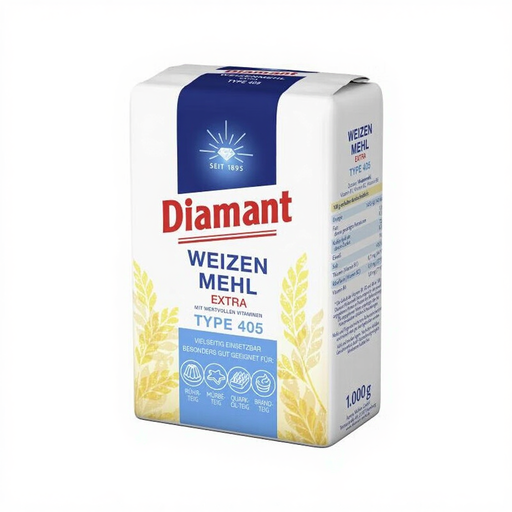
Why This Fits Their Persona: Ideal for home bakers who focus on delicate pastries, sponge cakes, shortcrusts, and cake bases. This flour is the standard for classic German baking recipes.
This product is the perfect choice for recipes that require a fine, light flour. It prevents the problem of using a flour that is too high in gluten or too dark, which would compromise the texture of delicate pastries.
Universally suitable for fine baked goods. According to the manufacturer, it is enriched with vitamins B1, B2, and B6.
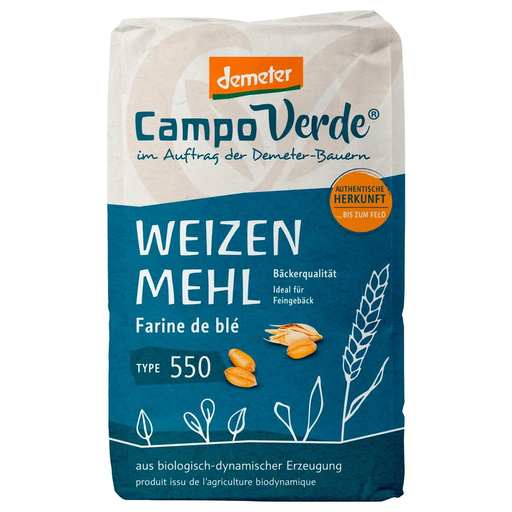
Why This Fits Their Persona: For health-conscious bakers who value biodynamic agriculture and are looking for a versatile flour for bread, rolls, and pizza. This organic flour with Demeter certification represents high standards.
This Type 550 flour is the right choice for doughs that need good structure. It avoids the mistake of using a flour that is too fine for bread and provides clear guidance on organic quality through its Demeter certification.
Flour from biodynamic agriculture (Demeter). Versatile for bread, rolls, pizza, and sweet yeast doughs.
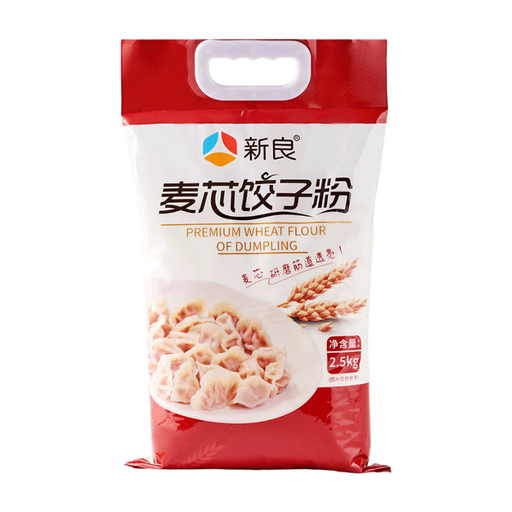
Why This Fits Their Persona: Perfect for anyone who wants to make authentic Asian noodles and dumplings at home. This specialty flour is designed to meet the specific requirements of dumpling doughs.
This product solves the problem of standard wheat flour being unsuitable for creating elastic, thin, yet tear-resistant dumpling wrappers. It is a targeted flour for dumplings.
Specially milled from the wheat core for an elastic and smooth dough. The high protein content of 11g per 100g provides the necessary structure.
We have compiled a complete, up-to-date list of products that fully meet these strict selection criteria and German regulations.
The main difference lies in the protein (gluten) content and the texture. Type 405 wheat flour is very fine and low in gluten, which results in a delicate, tender texture—ideal for cakes and cookies. Type 550 wheat flour has more gluten protein, which gives the dough structure and elasticity. It is therefore the better choice for yeast doughs like pizza, rolls, or white bread that need to rise and develop a certain chewiness.
In theory, you can bake bread with any flour, but the results will vary significantly. For a light, airy bread with a good crumb structure, a flour with a high protein content (11g per 100g or more) is necessary, such as Type 550 wheat flour or specialty bread flours. Flours like Type 405 will result in a very dense and compact loaf. Whole wheat flour also produces a denser bread, but it is very nutritious due to its high fiber content.
Light-colored flours (e.g., Type 405) have a long shelf life when stored in a cool, dry, and dark place. Flours with a higher proportion of bran and germ components, such as whole wheat flour or atta flour, contain more natural oils. These oils can go rancid over time, which shortens their shelf life. It is recommended to store these flours in an airtight container in the refrigerator or even the freezer after opening to extend their freshness.