
Lieferung heute & morgen

Qualitätsgarantie

Willkommens-Angebote freischalten: KOSTENLOSE Lieferung | Bis zu 80 % RABATT | Kostenlose 30-Tage-JoyPlus-Testphase
App herunterladen
Houseplants are more than just green companions; they are a key element of modern interior design. But too often, they end up on the floor or crowded onto a windowsill. A planter with a stand literally elevates your plants to a new level, turning them into a true statement piece. It creates vertical layers, fills empty corners, and seamlessly integrates nature into your living space.
This article serves as your guide. We'll outline the key criteria for selecting the right model and present a curated selection of planters that meet various functional and aesthetic needs.
Choosing the right model depends on several factors that go beyond mere aesthetics. A thoughtful choice ensures that both your plant and your space will benefit.
The material of the pot and stand largely determines its impact in a room. A modern plant stand made of powder-coated metal in black, white, or gold fits well with minimalist or industrial-inspired interiors. Its clean lines enhance an uncluttered aesthetic. Stands made of wood or bamboo, on the other hand, add warmth and a natural touch that harmonises particularly well with Scandinavian or Boho styles. The pot itself, often made of ceramic, stoneware, or metal, should be coordinated in colour and texture with the stand and its surroundings to create a cohesive look as a decorative plant pot.
Size is crucial. A tall plant pot that is too small will look lost in a large, empty corner, while an oversized model can overwhelm a small room. Carefully measure the available space (height, width, and depth). Also, consider the plant's growth habit. Tall plants like a Bird of Paradise or a Rubber Tree need a stable, relatively low stand to avoid looking top-heavy. Vining plants like Pothos or String of Pearls are showcased beautifully in a taller stand, as their tendrils can cascade freely downwards. The pot itself must provide enough space for the root ball, with about 2-4 cm of clearance between the ball and the pot's edge.
A functional design is essential for plant health. Check if the planter with a stand has a built-in drainage hole. Without one, waterlogging and root rot can occur. Many models include a matching saucer or a waterproof inner tray. For a cachepot on legs, which serves as a holder for a separate nursery pot, a drainage hole in the cachepot itself is not necessary. In this case, it's important to remove the plant from the cachepot for watering or to pour out any excess water shortly after. Also, pay attention to the stand's stability. An indoor plant stand should be stable and not wobble, especially in households with children or pets.
Based on the criteria mentioned, we have compiled a selection of products that cater to different needs and style preferences.
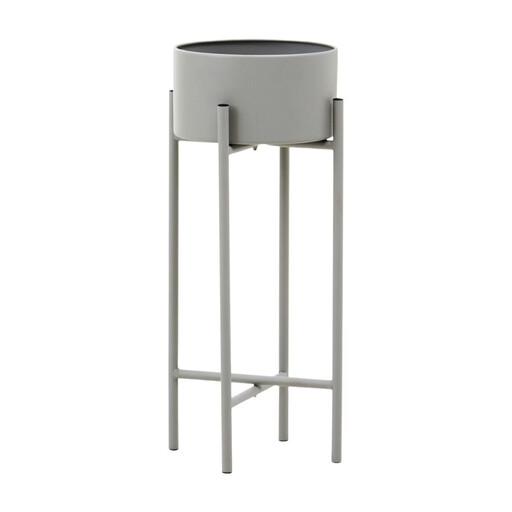
Why It Stands Out This model is a classic interpretation of the planter with a stand. The combination of a cylindrical grey pot and a delicate black metal frame embodies contemporary, minimalist design. At 51 cm tall, it's ideal for bringing medium-sized plants to an appealing eye level.
Advantages
Who Is It For? Ideal for fans of modern and minimalist decor who are looking for an elegant and understated solution to prominently showcase a single plant.
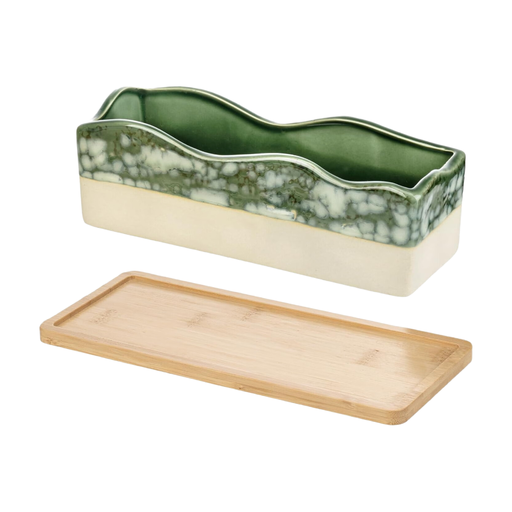
Why It Stands Out This planter takes a different approach to elevation. Instead of a tall stand, an elegant bamboo saucer subtly lifts the ceramic pot. Its rectangular shape and two-tone glaze in beige and green make it an excellent choice for windowsills, desks, or sideboards.
Advantages
Who Is It For? Perfect for users looking for a stylish solution for smaller spaces and wanting to arrange multiple plants compactly in one place. It's an alternative to the classic tall stand, designed for display on furniture.

Why It Stands Out This set offers a creative and decorative way to propagate plants. The five handmade, mushroom-shaped glass vases are not traditional plant pots but serve as propagation stations for cuttings or as vases for single blooms. They bring a playful and unique accent to shelves, desks, or windowsills.
Advantages
Who Is It For? For plant enthusiasts who enjoy propagation and are looking for a decorative, unconventional solution to stylishly display cuttings and small flowers.
The selection presented here covers specific use cases. If these models don't perfectly match what you're looking for, you might find the right piece in our broader collection. Explore a wide variety of other designs, materials, and sizes.
Discover the Entire Plant Pot Category on Joybuy.de
1. How tall should a planter with a stand be? The ideal height depends on the location and purpose. Low stands (20–40 cm) are well-suited for placing plants next to seating or on lowboards. Mid-height stands (40–60 cm) work well as accent pieces in living areas. Tall models (over 60 cm) are ideal for filling empty corners or acting as room dividers without obstructing the view.
2. What is the best material for an indoor plant stand? Metal (iron, steel) is very stable and durable, fitting well with modern styles. Look for a powder coating for protection against moisture. Wood and bamboo offer a warm, natural look but should be protected from direct contact with water to prevent discolouration or swelling. The choice ultimately depends on your interior style and maintenance requirements.
3. Does a cachepot on legs need a drainage hole? No, a cachepot that serves as a decorative cover for an inner plastic nursery pot does not need its own drainage hole. This is actually an advantage, as it protects your floor from water. The key here is the right watering technique: water the plant, let the excess water drain completely from the inner pot, and only then place it back into the cachepot. This is an effective way to prevent waterlogging.