
Lieferung heute & morgen

Qualitätsgarantie

Willkommens-Angebote freischalten: KOSTENLOSE Lieferung | Bis zu 80 % RABATT | Kostenlose 30-Tage-JoyPlus-Testphase
App herunterladen
A play kitchen is more than just a toy. It's a creative space where children mimic everyday life through role-playing, develop social skills, and refine their motor abilities. However, the selection is vast, and not every model lives up to its promises. As your Joybuy Product Recommendation Officer, I'll help you identify the key features and avoid common purchasing traps, ensuring you make a durable and safe choice.
Many offers sound tempting, but a closer look often reveals weaknesses that can quickly spoil the fun. Pay special attention to these three points:
To make an informed decision, you should focus on objective and practical criteria.
The choice of material affects durability, stability, and where it can be used.
Modern kids' kitchens offer a variety of functions.
Here are three recommendations tailored to different needs and environments.
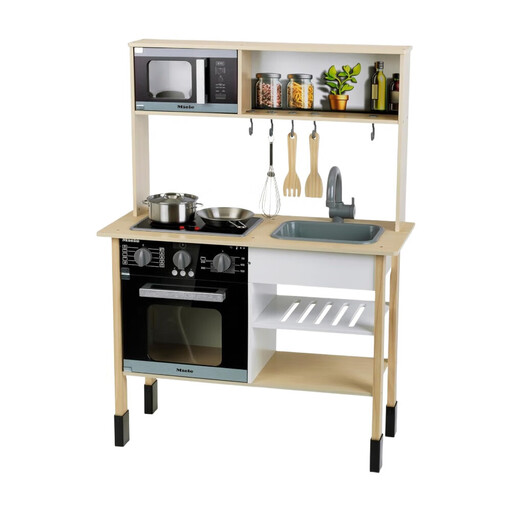
Why This Fits Their Persona: This model is ideal for families looking for a durable, stylish, and well-equipped wooden kitchen for the playroom. It offers a good balance of size and features for children aged 3 and up.
The wooden (MDF) construction provides the necessary stability. With a width of 70 cm and a height of 91 cm, it offers adequate countertop space and an ergonomic height for kindergarten-aged children.
The battery-operated hob with sound and light functions ensures realistic play. High-quality accessories made of wood and metal are already included in the delivery.
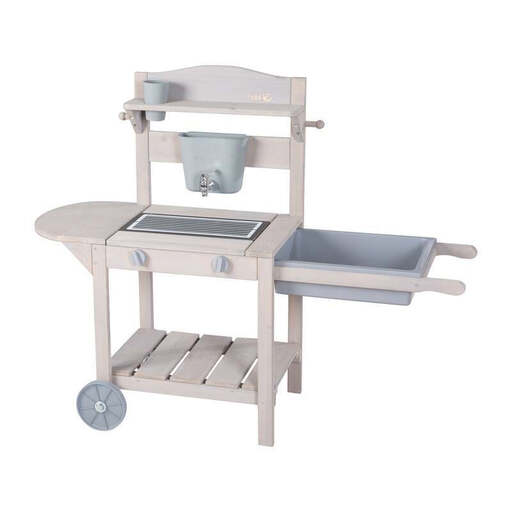
Why This Fits Their Persona: Perfect for families who want to move the play area outdoors. This mud kitchen is designed for use in the garden or on the patio and encourages play with sand, water, and natural materials. Suitable for children from 18 months.
The weather-resistant, stained solid wood is specially designed for outdoor use, making it durable. The working height of 52 cm is suitable even for young children, while the generous work surface provides plenty of space for making mud pies and experimenting.
The kitchen is mobile thanks to its wheels. A water container with a working tap and a removable plastic tub allow for real water play. The printed grill area provides additional play options.
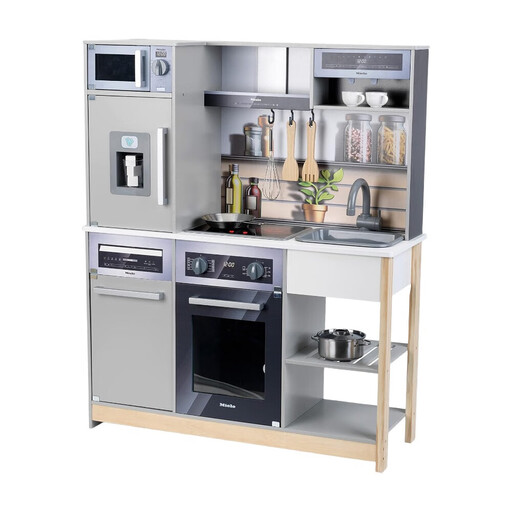
Why This Fits Their Persona: For demanding young chefs who want a realistic and extensively equipped play environment. This large, FSC-certified wooden model offers long-lasting fun for several years and for siblings to share.
The high-quality wooden construction is designed for durability and stability. With a width of 83.5 cm and a height of 101 cm, it offers a generous work and play area that doesn't feel cluttered.
The full set of features includes a hob with light/sound, a microwave, an espresso machine, and a refrigerator with an ice dispenser. The included accessories made of metal and wood underscore the commitment to quality.
We have compiled a complete, up-to-date list of products that meet these strict selection criteria and UK safety regulations.
Simple, low-height models are suitable for children from around 18 months to train early motor skills. More complex play kitchens with lots of accessories are generally ideal from age 3, when interest in role-playing grows. Always check the manufacturer's age recommendation, especially regarding potential choking hazards from small parts.
A wooden play kitchen should only be wiped with a soft, slightly damp cloth. Do not use harsh cleaning agents or too much water, as the wood can swell. Always wipe the surface dry afterwards. Removable sinks made of plastic or metal can be cleaned separately with water and mild dish soap.
Not necessarily. A basic set of a pot, a pan, and a few cooking utensils is often enough to get started. Many play kitchens already come with such a starter set. Additional play kitchen accessories like play food or small appliances like a Bosch toy toaster can be added later to expand the play value and create new incentives.