
Lieferung heute & morgen

Qualitätsgarantie

Willkommens-Angebote freischalten: KOSTENLOSE Lieferung | Bis zu 80 % RABATT | Kostenlose 30-Tage-JoyPlus-Testphase
App herunterladen
Setting up a tent doesn't have to be complicated or time-consuming. For spontaneous getaways, festivals, or short camping trips where every minute counts, tents with a rapid setup system offer a practical solution. These models, often called pop-up tents, are designed to unfold almost by themselves in seconds.
This guide introduces different types of quick-pitch tents and explains the key criteria you should consider when making your choice. Our goal is to provide an objective foundation for your decision.
To find the right model, a few technical features are crucial. The following points will help you better compare tent specifications.
The person count provided by manufacturers (e.g., 2-4 person camping tent) usually refers to the maximum number of sleeping spots without any luggage. For greater comfort and storage space for your gear, it's wise to choose a tent rated for one more person than will actually be sleeping in it. For example, a 3-person tent provides ample space for two people and their gear.
A crucial criterion for any tent is its waterproof rating. This is indicated by the hydrostatic head, measured in millimetres (mm). The value describes the water pressure the material can withstand before moisture penetrates.
Also, look for taped seams, as these are a common weak point for water entry.
While the classic pop-up tent has a flexible frame that springs into shape when unpacked, there are also instant tents. These often feature a central hub mechanism that deploys the frame at the push of a button or with a simple pull.
Tent shapes also differ:
Here is a selection of models that stand out for their specific features and setup systems.
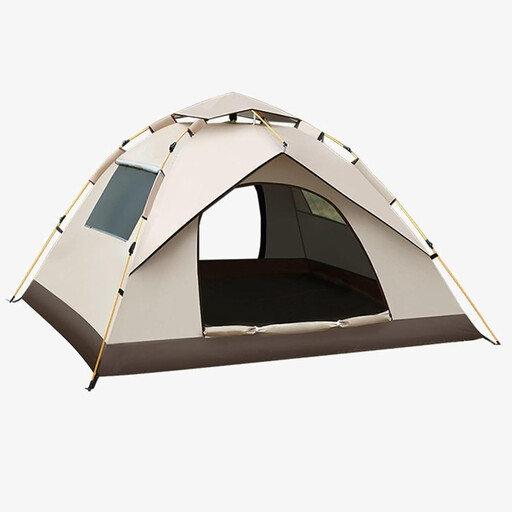
Why it stands out: According to the manufacturer, its hydraulic automatic system allows for setup in under a minute. The tent combines a rapid pitch with a robust, weatherproof design.
Advantages:
Who it's for: Ideal for couples or small families (up to 3 people) who prioritise an extremely fast and straightforward setup without compromising on weather protection.
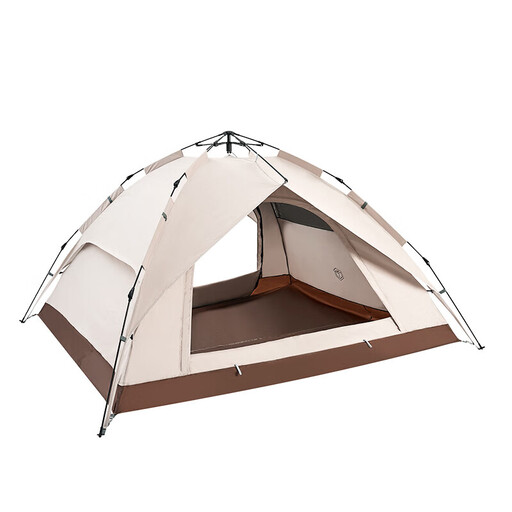
Why it stands out: This tent combines a pop-up mechanism with a dual-layer construction. The outer layer protects against the elements, while the inner tent ensures a comfortable interior climate.
Advantages:
Who it's for: Suitable for small groups or families looking for a quick-pitch dome tent for hiking or weekend camping trips.
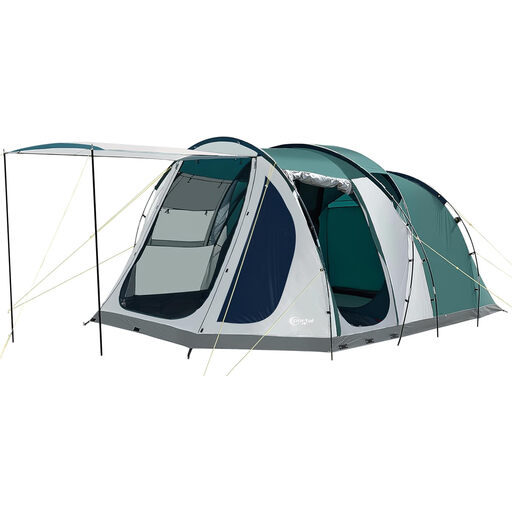
Why it stands out: While not a classic pop-up tent, the manufacturer states this spacious tunnel tent can be pitched in about 10-15 minutes. Its main feature is the large, separate living area, which provides extra space for gear and relaxation.
Advantages:
Who it's for: A great choice for families or groups of up to 5 people who are planning longer camping holidays and are willing to trade a slightly longer, yet still simple, setup for significantly more space and comfort.
Haven't found the right model for your needs yet? In our Outdoor Overnight & Party Tent category, you'll find a wider selection of tents for various occasions, from compact pop-up models to large group tents.
Packing away a pop-up tent often takes a bit of practice. Typically, the tent is twisted into a figure-eight (8) shape and then folded into a circle. It is highly recommended to follow the manufacturer's instructions carefully and to practice the process at home before your first trip. Online videos for your specific model can also be very helpful.
Yes, most modern pop-up tents are designed for typical weather conditions. The key factor is the hydrostatic head rating. A value of at least 2,000 mm, along with taped seams, provides good protection from rain. For more demanding conditions or regions with frequent rainfall, models with a rating of 3,000 mm or more are a safer choice.
Both terms describe tents with a quick setup, but there are technical differences. A classic pop-up tent unfolds due to the tension in its flexible frame as soon as it's taken out of its bag. An instant tent, on the other hand, often has a pre-assembled frame with a central, umbrella-style or hydraulic mechanism that activates the setup with a pull or a push. The result for both is a very fast pitch time.