Rising summer temperatures are becoming a challenge for many in their own homes, especially in apartments or houses without central air conditioning. A portable air conditioner can be a flexible and effective solution for cooling specific rooms like the bedroom, living room, or home office. However, the market offers a wide variety of models with different technologies and features, which can make the choice difficult.
This article serves as a practical guide. We'll explain the key features you should look for and present a selection of units for various applications—from powerful cooling for your home to off-grid solutions for when you're on the go.
What to Look for When Buying a Portable Air Conditioner?
To find the right unit for your needs, several technical aspects should be considered. These will help you objectively evaluate a model's performance and suitability.
1. Cooling Capacity and Room Size (BTU/h)
Cooling capacity is often specified in BTU/h (British Thermal Units per hour) or watts. This value is crucial for determining how effectively a unit can cool a room. Insufficient power will lead to unsatisfactory results, while an oversized unit will consume unnecessary energy.
As a rule of thumb for rooms with standard ceiling height and average sun exposure, you can use the following values as a guide:
- Up to 25 m?: approx. 7,000–9,000 BTU/h
- Up to 35 m?: approx. 10,000–12,000 BTU/h
- Up to 45 m?: approx. 12,000–14,000 BTU/h
Factors such as large windows, a south-facing orientation, or a top-floor location may require a higher cooling capacity.
2. Unit Types: Monoblock, Split, and Battery-Powered Units
Portable air conditioners can be divided into three main categories, which differ in their design and application.
- Monoblock Units: This is the most common type. All components are housed in a single casing. The warm exhaust air is vented outside through a flexible hose placed in a partially opened window or a special window sealing kit. They are easy to install and highly portable.
- Portable Split Air Conditioners: These units consist of an indoor and an outdoor unit connected by a flexible line. The noisy compressor is located in the outdoor unit, making the portable air conditioner significantly quieter indoors. They are often more efficient but slightly less flexible in placement than monoblock units.
- Battery-Powered Portable Air Conditioners: These units are designed for off-grid use and are perfect as an air conditioner for an RV, camper, or tent. Their cooling capacity is often lower than that of mains-powered models, but they offer maximum portability.
3. Noise Level and Additional Features
The noise level, measured in decibels (dB), is a crucial criterion, especially for bedrooms or offices. Values below 50 dB during operation are considered relatively quiet. Look for models with a dedicated sleep or silent mode.
Modern units also offer useful additional features:
- Air Conditioner with App Control: Allows for remote control and scheduling via your smartphone.
- Air Conditioner with Heating Function: Can also be used as a supplementary heater during transitional seasons.
- Dehumidifier Function: Improves the indoor climate by removing excess moisture from the air.
Featured Portable Air Conditioners
Here is a selection of units that cover different needs—from high cooling capacity for your home to maximum flexibility for on the go.
Hisense APC12QC Portable Air Conditioner – 12000 BTU
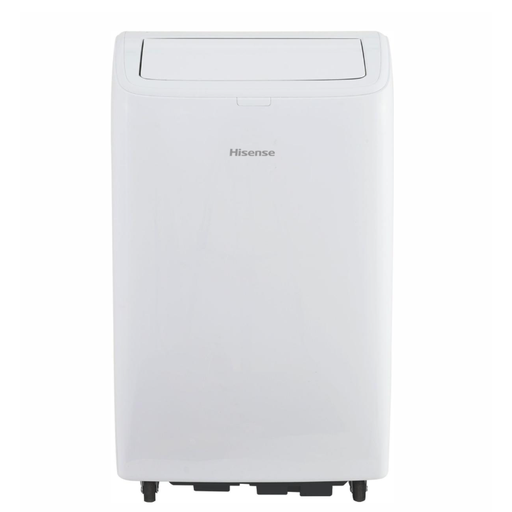
Hisense APC12QC Portable Air Conditioner – 12000 BTU, 3500 W Cooling, Wi-Fi Control, R290
- Why It Stands Out: This monoblock unit combines high cooling capacity with modern connectivity, making it a solid choice for medium-sized living spaces.
- Advantages:
- Powerful Cooling: With 3500 W (12,000 BTU/h), it effectively cools rooms.
- Smart Control: Integrated Wi-Fi functionality allows for control via a smartphone app.
- 3-in-1 Functionality: Cools, dehumidifies (approx. 1.3 L/h), and ventilates.
- More Eco-Friendly Refrigerant: Uses R290 refrigerant.
- Who Is It For? For users seeking a powerful and smart cooling solution for their living room, bedroom, or office who value remote control.
Midea PortaSplit Cool Air Conditioner – 8000 BTU
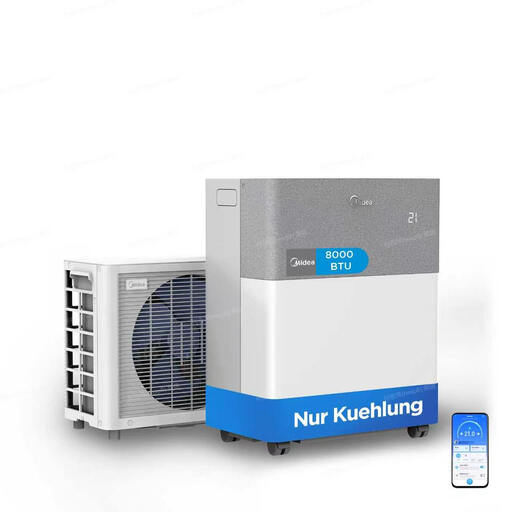
Midea PortaSplit Cool Air Conditioner – Portable, 8000BTU, App & Remote Control, Quiet Operation down to 38dB
- Why It Stands Out: As a portable split air conditioner, it offers exceptionally quiet indoor operation because the compressor is located in the outdoor unit.
- Advantages:
- Very Quiet Operation: In Silent Mode, the indoor unit reaches a sound pressure level of just 38 dB(A).
- High Energy Efficiency: With an A++ energy efficiency class (SEER 6.1), the unit operates economically.
- Flexible Control: Can be operated via remote control or app.
- Effective Cooling: Suitable for rooms up to approx. 28 m?.
- Who Is It For? Ideal for noise-sensitive individuals and for use in bedrooms or quiet work environments where a low noise level is a priority.
ECOFLOW WAVE 3 Portable Air Conditioner
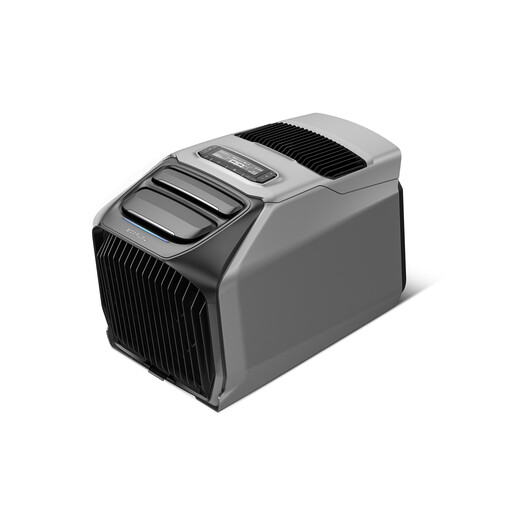
ECOFLOW WAVE 3 Portable Air Conditioner, 1800 W/6100 BTU Cooling, 2000 W/6800 BTU Heating
- Why It Stands Out: This portable air conditioner is designed for mobile use and can be operated completely off-grid thanks to an optional add-on battery.
- Advantages:
- Battery-Powered Operation: With the separately available battery, it offers up to 8 hours of wireless operation.
- Cooling and Heating Function: Provides 1800 W of cooling power and 2000 W of heating power for year-round use.
- Compact and Portable: Its design with a carrying handle makes it the ideal air conditioner for an RV, SUV, or camping.
- Smart App Control: Allows you to monitor and adjust temperature, mode, and timers.
- Who Is It For? For campers, van life enthusiasts, and anyone who needs a flexible, off-grid air conditioning solution for on the go or for small spaces.
Didn't Find the Right Model?
The selection of portable air conditioners is vast and covers many other specific requirements. If the models presented here don't exactly match what you're looking for, you can find more options in our collection.
Discover More Models in Our Portable Air Conditioner Category
Frequently Asked Questions
How effective is a portable air conditioner really?
Effectiveness largely depends on correct sizing (BTU for the room size) and proper installation. For monoblock units, a good seal for the exhaust hose in the window gap is crucial to minimize warm outside air from entering. When used correctly, a portable air conditioner can noticeably lower the room temperature by several degrees Celsius and create a comfortable climate.
Do you have to drill a hole in the wall for a portable air conditioner?
No, a wall penetration is generally not required. Monoblock units vent the warm air through a flexible hose that is routed through a window gap or a sliding door. For better efficiency and sealing, special window or door sealing kits are commercially available. These prevent warm air from outside from re-entering the room.
How much electricity does a portable air conditioner use?
Power consumption depends on the cooling capacity (in watts), the energy efficiency class, and the duration of use. A look at the unit's energy label provides this information. Models with a high energy efficiency class (e.g., A++ or A+++) are more economical to run. To estimate consumption, you can multiply the power consumption in kilowatts (kW) by the number of operating hours to get the consumption in kilowatt-hours (kWh).


