
Lieferung heute & morgen

Qualitätsgarantie

Willkommens-Angebote freischalten: KOSTENLOSE Lieferung | Bis zu 80 % RABATT | Kostenlose 30-Tage-JoyPlus-Testphase
App herunterladen
An electric cooler promises chilled drinks and fresh food, whether you're camping, on long road trips, or at a festival. But the market is flooded with models whose performance claims often don't hold up in practice. Many buyers invest in a device that fails on a hot summer day or silently drains the car battery. This guide highlights the crucial features you need to look for to make an informed decision and find a portable cooler that truly fits your needs.
Before diving into the technical details, it's important to understand the most common marketing traps and design flaws that lead to dissatisfaction.
To avoid these pitfalls, you should focus on three core technical aspects. These determine the performance, efficiency, and versatility of your future cooler.
The type of cooling is the most important factor. There are two fundamentally different systems:
A modern portable cooler should offer maximum flexibility in its power supply. Look for models with combined connections:
For anyone who wants to run a cooler in their vehicle, a multi-stage battery protection system is essential. This function monitors the car battery's voltage and automatically shuts off the cooler before the battery is discharged to the point where the engine won't start. Three adjustable levels (e.g., High, Medium, Low) are common to adapt the protection to the respective battery capacity.
Based on these criteria, we have put together a selection of products that are suitable for different user groups and their specific requirements.
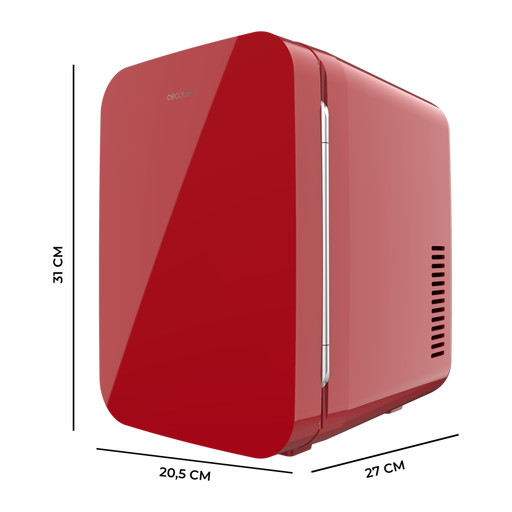
Why This Fits Their Persona: Ideal for individuals seeking a compact and lightweight solution for transporting drinks and snacks in the car or office. Its low weight and dual power supply (12V/220V) make it extremely flexible for daily use.
This model is an honest thermoelectric cooler. It doesn't promise freezing capabilities but serves to keep items cool and optionally warm them, which perfectly matches its intended use case and avoids the trap of unrealistic performance expectations.
Cooling and Warming Function: Offers year-round versatility. Compact Design: Fits easily in the footwell or on the passenger seat.

Why This Fits Their Persona: Perfect for families or groups needing reliable refrigeration on multi-day camping trips or in an RV. The large volume and two separate cooling zones allow for simultaneous storage of drinks and frozen foods.
The compressor technology delivers consistent cooling down to -20°C, regardless of the outside temperature. The integrated three-stage battery protection reliably prevents the car battery from draining, addressing two of the biggest problems.
Dual Cooling Zones: Separate compartments to prevent odour transfer. App Control: Temperature management via Bluetooth for high convenience.

Why This Fits Their Persona: For users who demand maximum independence and performance. The option to use a separate battery allows for hours of operation without an external power source—ideal for remote locations, boats, or as an emergency backup at home.
This model completely solves the power supply problem by offering its own energy source (battery sold separately). Its powerful compressor cooling and robust construction are designed for demanding conditions, thus avoiding the pitfalls of inadequate performance and poor durability.
Battery Operation Possible: Up to 39 hours of cooling without an external power source (according to manufacturer's specs with a 298Wh battery). Flexible Charging Options: Supports charging via solar, AC, DC, and USB-C.
We've compiled a complete, up-to-date list of products that fully meet these strict selection criteria and all relevant safety regulations.
1. How long can an electric cooler run on a car battery without draining it? This depends heavily on the cooler, the outside temperature, and the condition of the car battery. A modern compressor cooler in eco mode consumes significantly less power than a thermoelectric model. The key is the integrated battery protection: set it to "High" or "Medium" to ensure the cooler shuts off in time for your vehicle to start. As a rule of thumb, do not run a cooler for more than a few hours to a maximum of overnight without the engine running, unless you have a separate leisure battery.
2. What is the real performance difference between thermoelectric and compressor on a hot day? On a day with an outside temperature of 35°C, a thermoelectric cooler might only be able to cool its contents to 15–20°C. This is enough to keep drinks refreshing but is unsuitable for raw meat or dairy products. Under the same conditions, a compressor cooler can easily reach and maintain a temperature of 4°C (refrigerator) or even -18°C (freezer).
3. Does an electric cooler require special maintenance? Maintenance is generally straightforward. Keep the interior clean and dry to prevent mould and odours. Wipe it out with a damp cloth after use. Ensure the unit's ventilation slots are always free of dust and obstructions to guarantee adequate air circulation and cooling performance. When not in use, store the cooler with the lid slightly ajar in a dry place.