
Lieferung heute & morgen

Qualitätsgarantie

Willkommens-Angebote freischalten: KOSTENLOSE Lieferung | Bis zu 80 % RABATT | Kostenlose 30-Tage-JoyPlus-Testphase
App herunterladen
Whether for a weekend camping trip, a mobile office, or as a backup during a power outage, a reliable, independent power source is becoming increasingly essential. A portable power station offers a flexible solution for running electronic devices far from a wall outlet. However, the market is diverse, and the technical specifications can be overwhelming.
As a Joybuy Product Recommendation Officer, my job is to provide you with clear guidance. This article explains the key criteria for selecting the right model and presents a selection of devices for various use cases, based on objective product features.
To make the right decision, it helps to understand a few basic technical features. These three points are crucial for most users.
These two values are often confused, but they describe different characteristics:
Most newer, high-quality power stations use Lithium Iron Phosphate (LiFePO4 battery) cells. Compared to traditional lithium-ion batteries (NCM/NCA), they offer significant advantages:
A good power station should be versatile. Look for a selection of ports that match your devices:
Furthermore, the ability to recharge the power station flexibly is a key factor. Besides charging from a wall outlet at home, the ability to charge via a solar panel (turning it into a solar generator) is ideal for off-grid independence.
Here is a selection of devices that are well-suited for different user groups due to their specific features.
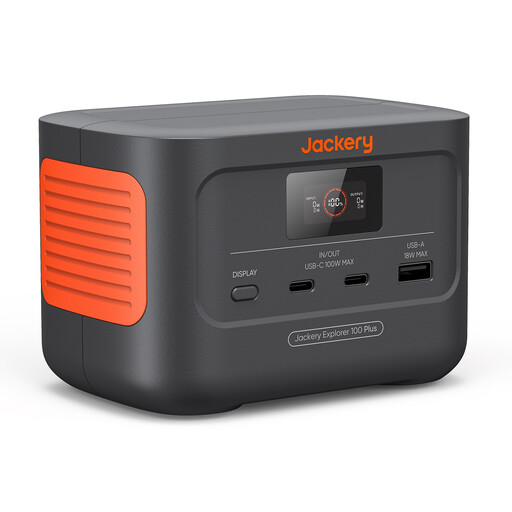
View Product: Jackery Explorer 100 Plus Portable Power Station
Why it stands out: The Jackery Explorer 100 Plus is designed for maximum portability. Weighing under one kilogram with a 99 Wh capacity, it meets the carry-on regulations of many airlines. Its charging output of up to 128W across three ports is impressive for a device of this size.
Key Specs:
Who it's for: Ideal for travellers, digital nomads, and photographers who need an extremely lightweight and compact power source for laptops, cameras, and smartphones and can do without an AC outlet.
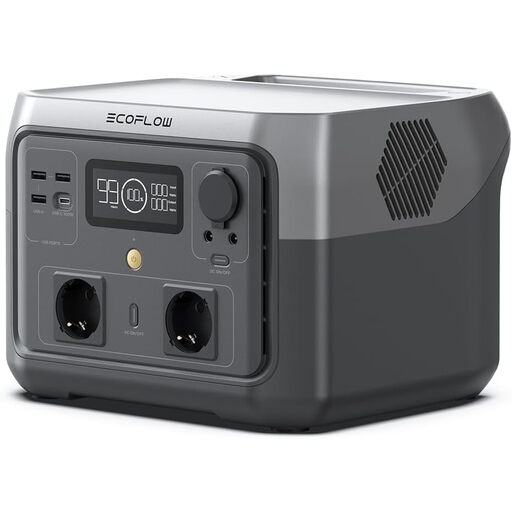
View Product: EcoFlow RIVER 2 MAX Portable Power Station
Why it stands out: The EcoFlow power station RIVER 2 MAX is an all-rounder that combines high capacity with fast charging times and versatile port options. According to EcoFlow, its X-Stream technology allows it to charge from 0 to 100% in just 60 minutes from a wall outlet. With 512 Wh of capacity and a continuous output of 500W (peaking at 1000W), it can power even more demanding devices.
Key Specs:
Who it's for: An excellent choice as a power station for camping, RV trips, or as a battery-powered emergency generator at home to keep essential devices like laptops, lights, and small coolers running during a power outage.
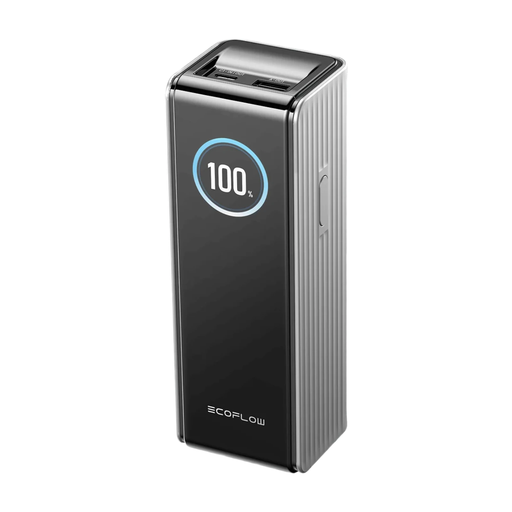
View Product: EcoFlow Powerbank 25000 mAh 170W
Why it stands out: This device bridges the gap between a classic power bank and a power station. It forgoes an AC outlet but offers extremely high charging power via USB-C. With up to 140W from a single port, it can charge even the most demanding laptops at maximum speed.
Key Specs:
Who it's for: Perfect for users who primarily need a powerful laptop power bank for their tablet and smartphone and require maximum charging speed in a compact format, without needing a 230V outlet.
The models presented here cover common use cases. However, the market offers an even greater variety of devices with different capacities, power outputs, and features. If you are looking for a solution for specific needs or simply want to compare more models, you may find the right product in our wider selection.
Discover our entire range of mobile power solutions in the Outdoor Camping Tools category.
A power bank is primarily designed to charge mobile devices like smartphones and tablets via USB ports. It is smaller and lighter. A portable power station is a larger mobile power storage unit that typically offers higher capacity and power output, and additionally features AC outlets (230V) and 12V ports to run a wider range of devices.
The lifespan is measured in charge cycles. According to manufacturers, modern devices with a LiFePO4 battery often last for 2,000 to 3,000 full charge and discharge cycles before the capacity drops to about 80% of its original value. With weekly use, such a device can function reliably for over 10 years.
Yes, most modern power stations can be charged with compatible solar panels, functioning as a solar generator. This is an eco-friendly way to stay independent of the power grid on the go, especially during multi-day outdoor activities. The charging time depends on the power of the solar panel and the intensity of the sunlight.