
Lieferung heute & morgen

Qualitätsgarantie
App herunterladen
Kategorien
After a surgical procedure, choosing the right support garment is a critical factor in the recovery process. A post-op bodysuit is a specially designed garment that applies targeted compression to reduce swelling, promote tissue regeneration, and stabilise the surgical outcome. The functionality of these garments is based on advanced material properties and a thoughtful design tailored to the specific needs of the post-operative phase.
The selection of a suitable model should be based on objective criteria. The following technical aspects are central to both functionality and wearing comfort.
The effectiveness of a post-op compression bodysuit is directly dependent on its material blend. Polyamide (Nylon) and Elastane (Spandex) are typically used.
Double-layered fabric constructions, particularly in the abdominal and back regions, locally increase the compression level and offer additional support. The compression level is often classified as light, medium, or firm (or medical-grade) and should be chosen according to the stage of recovery and your doctor's recommendation.
Practical design elements are essential for daily use during the recovery phase.
A correct fit is fundamental. A bodysuit that is too tight can impair blood circulation, while one that is too loose will not provide adequate compression. It is imperative to take precise body measurements (waist, hips, bust) and compare them with the manufacturer's size chart.
Based on the technical criteria mentioned above, we present three models that are suited for different applications due to their specific design features.
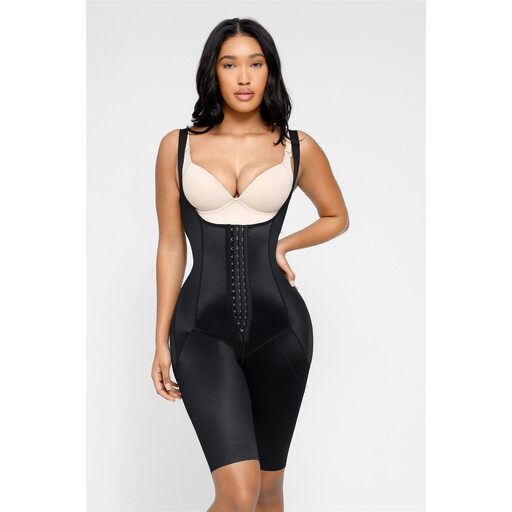
Why we recommend this product: This model features a double-layered fabric construction in the abdominal and back areas, enabling targeted, high compression. The material blend of 57% Nylon and 43% Spandex (outer layer) offers high elasticity. The three-row hook closure at the front allows for precise pressure adjustment throughout the healing process.
Pros:
Best for: Users in the post-operative phase (approx. 2-12 weeks, following medical advice) who require high but adjustable compression, for instance, after liposuction or a tummy tuck.
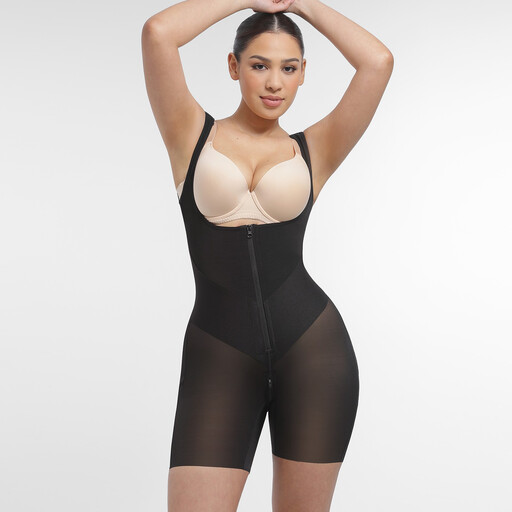
Why we recommend this product: This model combines medium compression with high comfort through a breathable mesh fabric. A wide, V-shaped elastic band (11 cm) provides additional compression at the waist and abdomen. The front zipper with an underlying hook closure simplifies putting it on. The design is classified as a Fajas type, known for its powerful shaping properties.
Pros:
Best for: Users who are seeking medium compression for everyday wear after the initial healing phase, or those who prefer a high-compression shaping bodysuit with superior comfort for daily use.
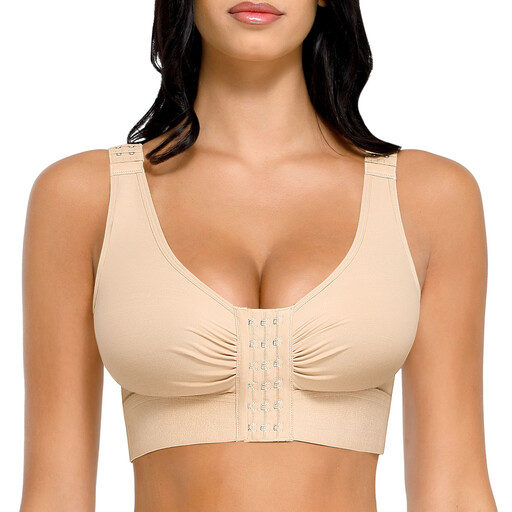
Why we recommend this product: This product is not a full-body shapewear but a specialised compression garment for the chest area. Made from a material with 53% Nylon and 47% Spandex, it offers medical-grade compression. The 8-row hook closure at the front allows for extremely fine pressure adjustment. The pre-molded 3D cups support the breast without flattening it.
Pros:
Best for: Users specifically after breast surgery (e.g., augmentation, reduction, lift) or after liposuction in the underarm and back area, who require targeted and highly adjustable compression.
While a post-op bodysuit is designed for the immediate recovery phase, other supportive garments can be considered for later stages or for everyday comfort. For lighter support and high comfort in daily life, a selection of shaping underwear is a great option. You can find an overview of various models in our women's boxer underwear category.
1. How long should a post-op bodysuit be worn? The duration of wear is individual and depends on the type of procedure and the healing process. Typically, wearing it for several weeks to months is recommended. Only your attending surgeon can provide a definitive instruction on this.
2. What level of compression is appropriate after liposuction? Immediately after liposuction, high to medical-grade compression is usually recommended to minimise swelling and bruising. As healing progresses, you may switch to medium compression. Here too, consulting with your doctor is crucial.
3. How should medical compression garments be cleaned? To preserve the fabric's elasticity and compressive effect, gentle hand washing in cold or lukewarm water is recommended. You should avoid machine washing, tumble drying, bleach, and fabric softeners. The garment should be air-dried flat.