
Lieferung heute & morgen

Qualitätsgarantie

Willkommens-Angebote freischalten: KOSTENLOSE Lieferung | Bis zu 80 % RABATT | Kostenlose 30-Tage-JoyPlus-Testphase
App herunterladen
Burnt-on food in pots, stubborn crusts on baking trays, or grease residue on the grill—such cleaning tasks can be a chore. Choosing the right cleaning tool is crucial for a satisfactory result without damaging the material. An unsuitable pot scourer can scratch surfaces, while a sponge that's too soft will be ineffective against burnt-on messes.
This article serves as a guide. We will introduce different types of pot cleaners and explain which features are relevant for various applications. Our goal is to provide you with a factual basis for your purchasing decision, helping you find the perfect product for your kitchen.
The selection of kitchen sponges and scouring sponges is vast. To make the right choice, three criteria are particularly important: the material, the question of integrated cleaning agents, and the specific application.
The material of the pot cleaner determines its scrubbing power and the surfaces it's suitable for.
Some pot cleaners come pre-soaped or impregnated with another cleaning agent. When they come into contact with water, they lather up and release their cleaning power. This can be convenient, as no additional dish soap is needed. The downside is that the soap is used up after a few uses, and the cleaning effect diminishes. Conventional sponges without integrated agents offer more flexibility, as you can use your preferred dish soap or a special oven cleaner.
Think carefully about what you want to clean. For daily pot cleaning, a combination sponge is often sufficient. For heavily burnt-on residue in a roasting pan or on a baking sheet, a stainless steel pot scourer is often the more effective solution. Special grill sponges are also usually made of robust material to tackle the extreme grime on a grill grate. Using the right tool for the job not only protects your cookware but also saves time and effort.
Based on the criteria mentioned, we have compiled a selection of products that cover different needs and applications.

Why it stands out: This product combines fine microfibres with an integrated, vegan plant-based soap. The pads are fully soaped, enabling powerful yet gentle cleaning.
Advantages:
Who it's for: For users looking for a practical all-in-one solution who value vegan ingredients and German manufacturing. Ideal for the quick and effective cleaning of pots, pans, and modern cookware.
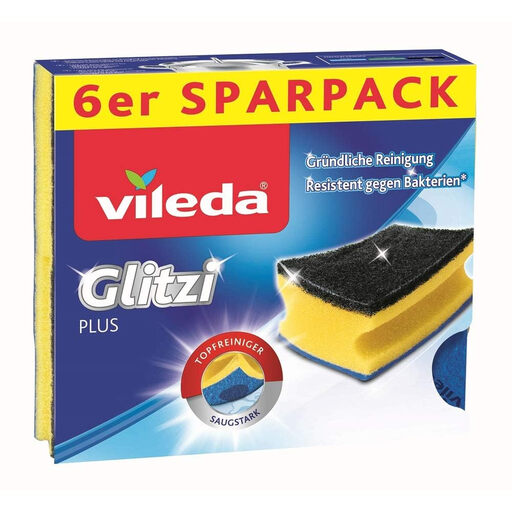
Why it stands out: The Vileda Glitzi Plus is a classic kitchen sponge with two different sides and an ergonomic grip. According to the manufacturer, the black scouring side is treated with an antibacterial agent that prevents 99.9% of bacterial growth.
Advantages:
Who it's for: An all-rounder for the everyday household. Suitable for those who want a versatile washing-up sponge with comfortable handling and an added hygiene feature.
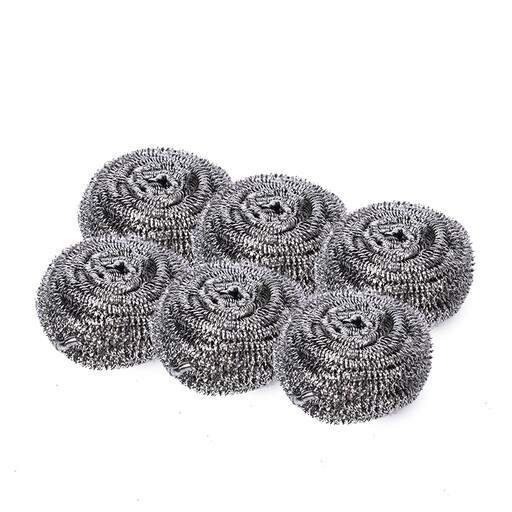
Why it stands out: These stainless steel pot scourers offer pure mechanical scrubbing power for extreme messes. The multi-pack provides an economical solution for demanding cleaning tasks.
Advantages:
Who it's for: For users who need an uncompromising solution for uncoated cast iron or stainless steel cookware, as well as for cleaning grill grates, baking trays, and ovens.
The products featured here cover common use cases. However, if you have special requirements or simply want to compare a wider selection of pot cleaners and washing-up sponges, you can find more alternatives for every type of grime and surface in our comprehensive category.
For pans with a non-stick coating, you should never use a stainless steel pot scourer or an aggressive scouring sponge, as these can permanently damage the coating. Instead, opt for a soft sponge or a kitchen sponge with a scouring side explicitly labelled as 'scratch-free' or 'safe for non-stick coatings'. When in doubt, always read the pan manufacturer's care instructions.
For hygiene reasons, it is recommended to replace a washing-up sponge every one to two weeks, depending on the frequency of use. Bacteria can multiply quickly in the damp environment of a sponge. To extend its lifespan slightly, you should rinse the sponge thoroughly after each use, wring it out well, and store it in a place where it can dry completely.
Yes, stainless steel pot scourers are very well-suited as a grill sponge for cleaning grill grates made of stainless steel or cast iron. Their high abrasive power effectively removes burnt-on grease and food residue. However, caution is advised with enamelled grill grates, as the enamel could be scratched.