
Lieferung heute & morgen

Qualitätsgarantie

Willkommens-Angebote freischalten: KOSTENLOSE Lieferung | Bis zu 80 % RABATT | Kostenlose 30-Tage-JoyPlus-Testphase
App herunterladen
As a Joybuy Product Recommendation Officer, I analyse product information daily to provide you with clear and objective guidance. A common observation: when buying a power bank, exaggerated marketing claims often lead to disappointment. An external battery that doesn't live up to its promises is more than just an annoyance—it's unreliable when you need it most. Before you make a decision, you should understand the typical pitfalls.
Two common problems repeatedly lead to poor purchasing decisions:
This guide will help you navigate these pitfalls and find a power bank that is precisely tailored to your needs.
To make an informed choice, focus on three core technical aspects. These determine the performance and practical utility of a portable charger far more than mere marketing claims.
The milliampere-hour (mAh) rating displayed on a power bank, for example, 10000mAh or 20000mAh, refers to the capacity of the internal battery cells. However, this figure alone is not indicative of charging performance. During energy transfer to your device, losses inevitably occur due to voltage conversion.
The critical metric is the rated capacity. It specifies how much energy the power bank can actually deliver to a device. A high-quality 10000mAh model typically has a rated capacity of around 6000mAh. Look for this specification in the technical data to realistically assess the real-world charging performance.
Charging speed is measured in watts (W). Modern devices, from smartphones to laptops, use specific fast-charging protocols. The most important is Power Delivery (PD), which is delivered via the USB C port.
A power bank without the correct protocol for your device will always charge at the slowest possible speed, even if it has a high wattage rating.
The variety of ports determines flexibility. While USB-A is still common, at least one USB-C port with PD support is standard today. For users of newer iPhones, a MagSafe power bank is an especially convenient solution. It attaches magnetically to the device and charges wirelessly, eliminating the need for a separate cable in daily use. Models with multiple outputs allow for simultaneous charging of several devices—a practical feature for users with a smartphone, headphones, and a smartwatch.
Here are some recommendations tailored to specific use cases that take the above criteria into account.
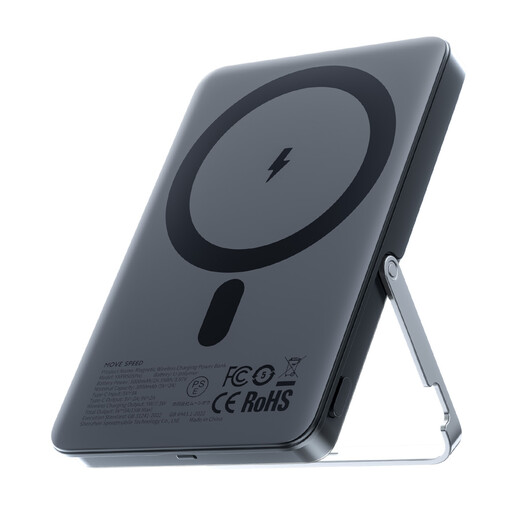
Why This Fits Their Persona: Ideal for daily use when portability and convenience are top priorities. The ultra-slim design and magnetic attachment make it the perfect companion for MagSafe-compatible iPhones. The integrated stand is a practical extra for on-the-go use.
The product clearly states a rated capacity of 3000mAh and focuses on a specific use case (magnetic charging for iPhones) rather than vague all-in-one promises.
Supports 15W magnetic wireless charging and features an integrated, adjustable stand for hands-free viewing.
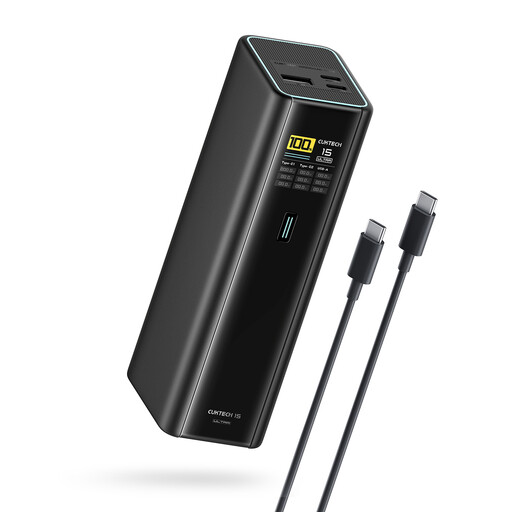
Why This Fits Their Persona: Designed for users who need maximum power for multiple devices, including laptops. Ideal for business trips, long workdays, or anyone who needs a reliable power source for demanding tech.
This power bank precisely specifies its maximum output of 140W and its support for the PD3.1 protocol. This avoids the trap of vague fast-charging promises and ensures it functions as a true laptop power bank.
High capacity of 20000mAh combined with 140W output via USB-C. Three ports allow for simultaneous charging of multiple devices.
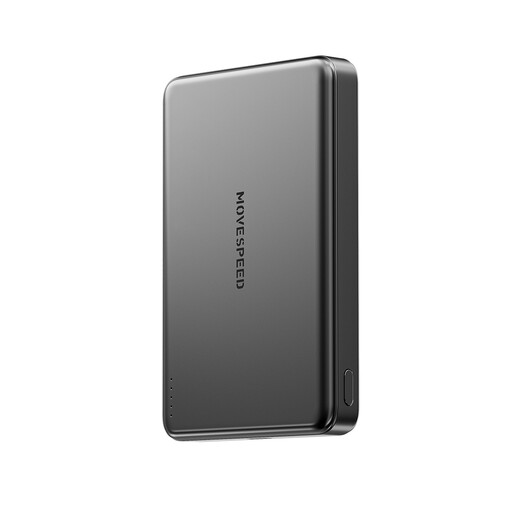
Why This Fits Their Persona: An excellent compromise for those who need solid capacity for multiple charges but don't want to sacrifice a slim and lightweight design. Perfect for the daily commute, for students, or for weekend trips.
This model offers a clear balance of performance and design. The rated capacity of 6000mAh is transparently stated, and the NTC temperature control is a verifiable safety feature, not an empty marketing promise.
Offers a 10000mAh capacity in a body that is only 12.7 mm thin. Supports both wired fast charging via USB-C and wireless charging.
We have compiled a complete, up-to-date list of products that fully meet these strict selection criteria and UK/EU safety regulations.
This depends on the rated capacity of the power bank and the battery size of your smartphone. A 10000mAh power bank typically has a rated capacity of about 6000mAh. A modern smartphone with a 4000mAh battery can be fully charged about 1.5 times with it (6000 / 4000 = 1.5).
No. A power bank for a laptop must not only have a USB-C port but also deliver a sufficiently high power output (in watts) via the Power Delivery (PD) protocol. Check your laptop's power requirements (often stated on the original power adapter) and choose a power bank that meets or exceeds this value, typically 65W or more.
Look for recognised safety certifications like the CE mark, which confirms compliance with EU safety standards. High-quality models also feature protection mechanisms against overcharging, deep discharge, overheating, and short circuits. Information about these safety features can usually be found in the product details. Avoid products without clear manufacturer information or certifications.