Choosing a stroller is a decision driven by functional requirements and your intended use. Different models, such as modular strollers, buggies, or specialised jogging strollers, are designed for various lifestyles and stages of a child's development. An informed decision is based on analysing technical specifications like wheel type, folding mechanism, weight, and the materials used. This guide focuses on objective criteria to simplify your selection process.
Technical Criteria for Selecting a Stroller
How well a stroller integrates into your daily life depends on its specific product features. The following parameters are relevant for a rational evaluation.
1. Chassis, Suspension, and Wheels
The chassis forms the basis for stability and durability. Aluminium frames offer an excellent balance of sturdiness and low weight. The type of wheels and suspension are crucial for ride comfort on different surfaces.
- Solid Rubber Wheels: Puncture-proof and low-maintenance, ideal for smooth urban surfaces.
- Air-Chamber Wheels: Offer better cushioning than solid rubber wheels and are also puncture-proof.
- Pneumatic Wheels: Provide maximum cushioning and comfort, especially on uneven terrain like forest paths or gravel tracks. They require occasional inflation.
- Suspension: A four-wheel suspension system effectively absorbs shocks and ensures a smooth ride. For sports strollers, adjustable suspension is often a standard feature.
- Swivelling Front Wheels: Increase manoeuvrability in the city. They should be lockable for stability on uneven terrain.
2. Seat Unit and Recline Function
The seat unit must adapt to the child's development. A stroller suitable from birth requires a fully flat lie-flat function or a separate bassinet.
- Viewing Direction: A reversible seat unit allows the child to face either the parents or the direction of travel.
- Backrest and Footrest: Multi-position adjustable components allow for ergonomic customisation from an upright sitting to a lie-flat position.
- Safety System: A 5-point harness is the European standard (EN 1888) and prevents the child from slipping out of or standing up in the seat. A removable bumper bar makes it easier to get your child in and out.
3. Folding Mechanism and Transport Dimensions
For families on the go, a simple folding mechanism and a compact folded size are essential.
- Folding Mechanism: One-hand folding mechanisms allow you to collapse the stroller while holding your child.
- Folded Size and Weight: These specifications determine whether the foldable stroller will fit in your car boot or can be transported on public transport. A travel stroller is characterised by its exceptionally low weight and compact dimensions.
- Transport Lock: An automatic lock prevents the folded stroller from accidentally opening.
4. Materials and Care
High-quality, functional materials contribute to longevity and comfort.
- Fabrics: Removable covers that are machine-washable at 30°C simplify cleaning.
- Sun Protection: A large canopy with UV protection (UPF 50+) shields the child's sensitive skin. Ventilation windows made of mesh fabric ensure good air circulation.
- Handlebar: A height-adjustable telescopic or pivoting handlebar allows for an ergonomic posture for parents of different heights.
Options We've Chosen
The following models have been selected based on their specific technical features and intended use cases.
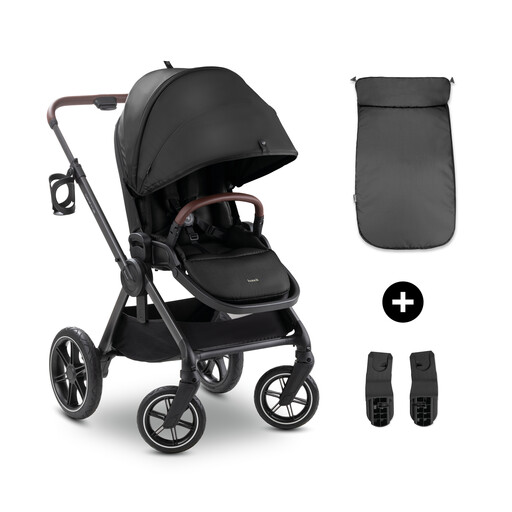
hauck Comfort N Care: The All-Rounder for Urban Life

-
Why we recommend it: The hauck Comfort N Care is designed as a modular stroller that offers flexibility for urban environments. Its reversible and height-adjustable seat unit, along with its compatibility with infant car seats via the included adapter, makes it a complete solution from birth up to a weight of 22 kg.
-
Pros:
- Flexible Seat Unit: Can be mounted in both directions and is height-adjustable.
- Complete System: Adapters for hauck infant car seats are included.
- Superior Ride Comfort: Large, puncture-proof rubber wheels and a four-way suspension.
- Thoughtful Details: Height-adjustable telescopic handlebar (92–107 cm), large shopping basket, and cup holder.
- Lie-Flat Position: The backrest has a 3-position recline, including a fully flat position.
-
Best for: Parents looking for a versatile and fully-equipped stroller from birth for daily use in the city and for occasional outings.
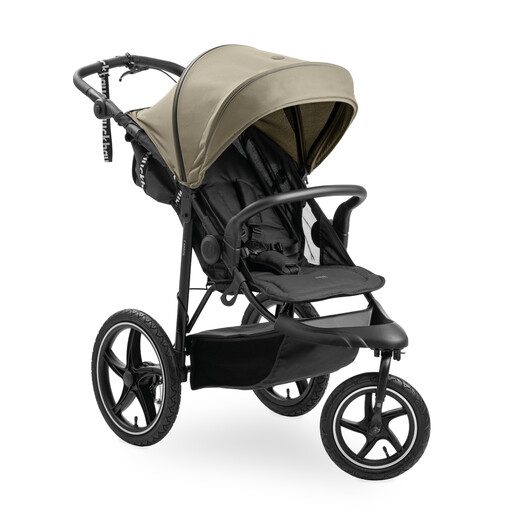
hauck Runner 3: The Sports Stroller for Active Families

-
Why we recommend it: The hauck Runner 3 is a robust jogging stroller engineered for sports activities and rough terrain. Its large XL pneumatic wheels, adjustable suspension, and handbrake for speed control deliver both safety and performance.
-
Pros:
- All-Terrain Capability: Three large air-filled wheels (rear 40.5 cm) and a dual-adjustable rear suspension.
- Safety Features: A handbrake for speed regulation in addition to the parking brake.
- High Load Capacity: Suitable for children up to 22 kg, with an extra-long backrest.
- Weather Protection: Large canopy with UPF 50+ protection and ventilation windows.
- Practical Features: A closable basket, a zipped pocket on the canopy, and a cup holder.
-
Best for: Active families who regularly jog, hike, or venture off paved paths and need a durable sports stroller.
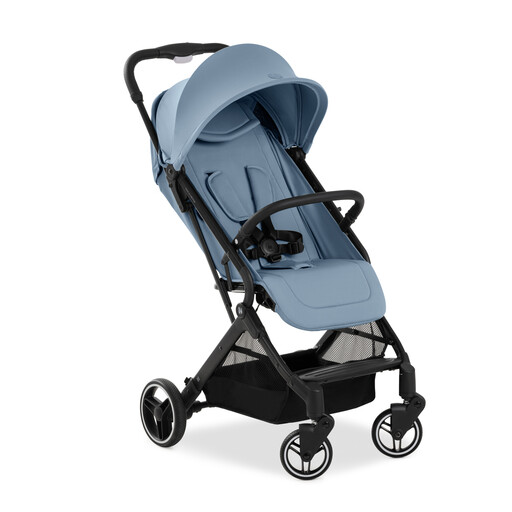
hauck Travel N Care Plus: The Lightweight Travel Stroller

-
Why we recommend it: This travel stroller combines an extremely low weight of 7.2 kg with a compact one-hand folding mechanism. Despite its lightness, it offers comfort features like a lie-flat function and 4-way suspension, making it a functional companion for travel.
-
Pros:
- Extremely Portable: Weighs only 7.2 kg, is self-standing when folded, and comes with a carrying strap.
- Compact Folding Mechanism: Folds down with just one hand.
- Child Comfort: Continuously adjustable backrest to a lie-flat position and 4-way suspension.
- High Load Capacity: Approved as a buggy for up to 22 kg.
- Easy to Clean: The seat cover is removable and machine-washable.
-
Best for: Families who frequently travel by car, train, or plane and need a lightweight, straightforward, yet comfortable buggy.
Other Models and Alternatives
The products featured here cover specific user needs. If your requirements differ or you would like a broader market overview to aid your decision-making, our main category offers a comprehensive selection of other models. There, you can compare various types and brands using detailed technical data.
Discover more models in our Strollers and Buggies category.
Frequently Asked Questions (FAQ)
1. What is the difference between a modular stroller and a buggy? A modular stroller is a system that typically consists of a chassis, a bassinet for newborns, and a later a toddler seat unit. It is designed for use from birth up to the toddler years (approx. 3–4 years). A buggy is generally lighter, more compact, and designed for children who can already sit up independently (from approx. 6 months). However, many modern buggies also offer a flat recline position and can be used up to a weight of 22 kg.
2. When can a child switch from a pram to a buggy? The switch is recommended as soon as the child can sit upright stably and without assistance. This is usually between six and nine months of age. The back muscles must be sufficiently developed to support the upper body independently. However, models with a fully flat lie-flat function can be used earlier for sleeping infants.
3. What should I look for in stroller wheels? The choice of wheels depends on the primary environment of use. For smooth surfaces in the city, smaller, swivelling solid rubber wheels are suitable due to their manoeuvrability. For rural areas, parks, or uneven paths, larger wheels with pneumatic or air-chamber tyres and good suspension are advantageous as they absorb shocks better and provide a smoother ride. Lockable front wheels offer additional stability on rough ground.