
Lieferung heute & morgen

Qualitätsgarantie

Willkommens-Angebote freischalten: KOSTENLOSE Lieferung | Bis zu 80 % RABATT | Kostenlose 30-Tage-JoyPlus-Testphase
App herunterladen
Anyone who has ever painted or renovated knows the hassle: first, you tediously tape off edges, trim, and borders, then you cover floors and furniture with a separate film. This process is not only time-consuming but also carries the risk of paint or dust seeping through gaps. A pre-taped masking film combines these two steps into a single product, offering an efficient solution for protecting surfaces quickly and precisely.
This guide introduces various options and explains the key features to consider when choosing a suitable masking film with tape. The goal is to provide you with a solid basis for making an informed decision for your next project.
The right painter's masking film depends on the specific requirements of your project. Three central criteria will help guide your selection.
The durability of the film is crucial for reliable protection. Products made from polypropylene (PP) or high-density polyethylene (HDPE) generally offer high tear resistance. A thicker film is more resilient against mechanical stress, such as from moving ladders or foot traffic. For protecting delicate surfaces or during jobs that generate a lot of dirt, like a full renovation, a heavy-duty protective film for painting is essential. Thinner films may suffice as a simple dust cover for less demanding masking tasks.
The tape is the second critical component. A good self-adhesive masking film should be removable without leaving residue or damaging the underlying surface. Pay attention to the specified adhesive strength and its suitability for different surfaces (e.g., wood, plaster, metal). For special applications like automotive painting, a heat-resistant masking film is necessary, as it must maintain its shape and adhesion at the higher temperatures found in paint booths. Temperature resistance is typically indicated in degrees Celsius (°C).
Pre-taped masking films are available in various widths and lengths. Measure the areas you need to protect before you buy. For large surfaces like floors or entire walls, wide rolls are ideal to minimise seams. Narrower versions are practical for precisely protecting window sills, door frames, or for use as a dedicated masking film for furniture. A set with multiple widths can be a flexible solution for projects with diverse requirements.
Here is a curated list of products that are well-suited for different applications due to their specific features.
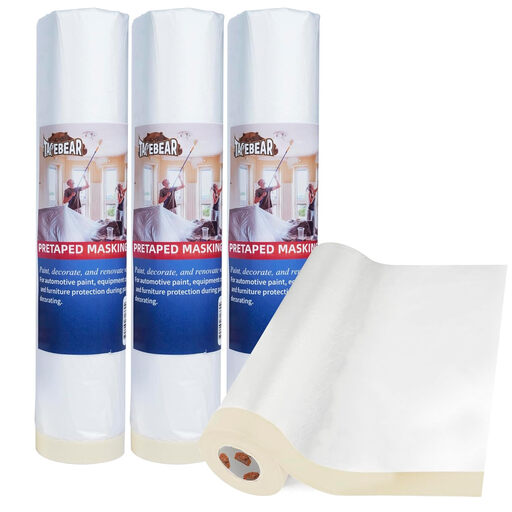
Why it stands out: This set is distinguished by its extra-thick material and high temperature resistance, qualifying it for demanding projects. The four rolls provide extensive total coverage.
Pros:
Who is it for? Ideal for large-scale interior and exterior renovation and painting projects. Its heat resistance also makes this film an option for use as a car masking film during automotive paint jobs.
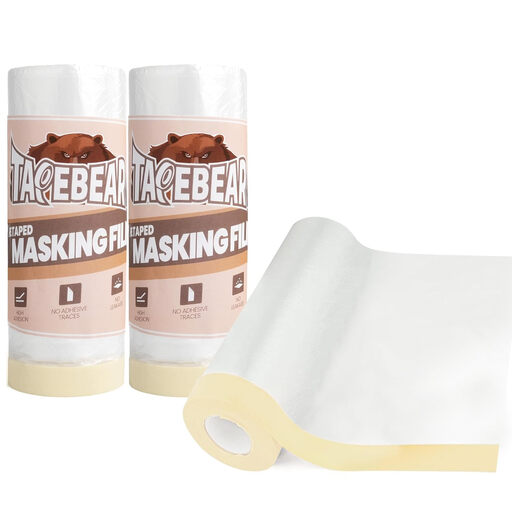
Why it stands out: The focus here is on clean application and removal. The integrated tape is designed to leave no residue behind after use.
Pros:
Who is it for? A great choice for DIY enthusiasts and professionals who prioritise protecting delicate surfaces, such as when covering furniture, cabinets, or floors during a renovation.
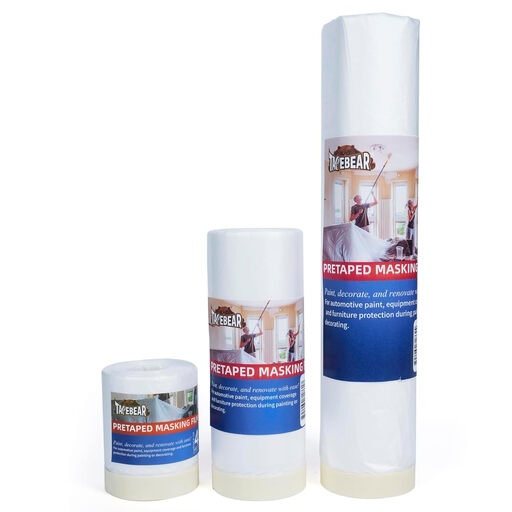
Why it stands out: This set offers maximum flexibility with three rolls in different widths. It combines the extra-thick film with heat resistance, making it an all-in-one package.
Pros:
Who is it for? Perfect for users working on a project with varied masking requirements—from narrow window frames to large floor areas or vehicles.
If the products featured here don't exactly match your needs or if you're looking for other solutions to protect your surfaces, you can find a wider selection in our Furniture & Floor Protection category. It lists additional masking materials and protective products for various projects.
1. How do you remove pre-taped masking film without leaving residue? For residue-free removal, the tape should be pulled off the surface slowly and at a shallow angle. It is advisable not to leave the tape on the surface longer than recommended by the manufacturer, especially in direct sunlight or high temperatures. A quick test on an inconspicuous spot beforehand can provide peace of mind.
2. Can pre-taped masking film be used outdoors? Many products are suitable for both indoor and outdoor use. Always check the manufacturer's product description. For outdoor applications, factors like the tape's UV and weather resistance are crucial to ensure reliable adhesion and clean removal.