
Lieferung heute & morgen

Qualitätsgarantie

Willkommens-Angebote freischalten: KOSTENLOSE Lieferung | Bis zu 80 % RABATT | Kostenlose 30-Tage-JoyPlus-Testphase
App herunterladen
Published on July 28, 2026 by Joybuy Product Recommendation Officer
Choosing the right gift for a first-grader, or a meaningful educational toy for their first year of school, can be a challenge for many parents and relatives. A science kit for primary school seems like an excellent choice to spark curiosity and promote STEM skills. However, the market is crowded, and not every product delivers on its promise. Before you make a decision, it's helpful to know the common pitfalls that can lead to disappointment instead of learning success.
Common Pitfalls to Avoid When Choosing:
To make an informed decision, you should evaluate three core parameters. These will help you identify a product that provides long-term enjoyment and fulfils its educational purpose.
The "Ages 6+" label is a starting point, but the quality of execution is crucial. A good primary school science kit features highly visual instructions. Large, clear illustrations showing each step allow children to conduct the experiments largely on their own. Check if the text is brief and written in simple language. For an educational toy for a first-grader, the ability to make progress without constant adult help is a key motivational factor.
Science kits cover a variety of fields. Sets focused on science and nature experiments for kids are often the most tangible for primary school students. They explore phenomena like air, water, magnetism, or simple laws of physics that connect directly to a child's world. A kids' discovery kit that is explicitly aligned with the first and second-grade curriculum ensures that what is learned can be recognised and reinforced in the classroom. This strengthens both understanding and the child's self-confidence.
The advertised number of experiments can be misleading. More important is the quality and variety of the included components. Pay attention to which materials are included in the set and which common household items (like water, glasses, or scissors) are required. A good STEM toy for 6-year-olds should include all the specific and hard-to-find parts to allow for an immediate start without lengthy preparation. Durable, reusable materials ensure that experiments can be performed multiple times.
Based on these criteria, we have curated a selection of products suitable for the diverse interests and play styles of primary school children.
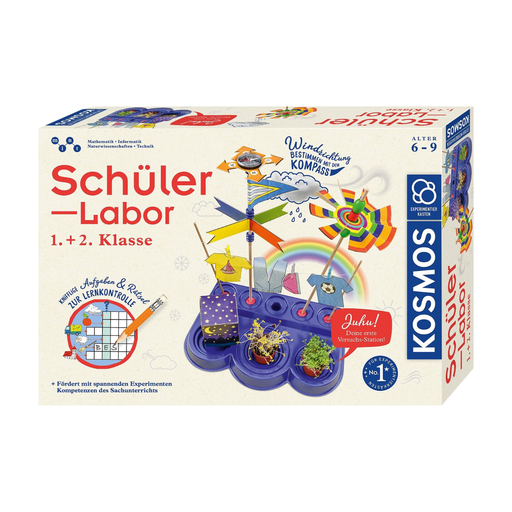
Why This Fits Their Persona: This set is ideal for children who enjoy applying their school knowledge in a practical way. It was specifically designed to complement the science and general studies curriculum for the first two years of primary school in Germany.
The instructions are fully illustrated, and the experiments are directly aligned with the curriculum. This avoids the pitfalls of irrelevance and excessive complexity.
According to the manufacturer, it offers over 50 experiments on topics like air, water, light, and the senses. The materials are tailored to the experiments and robust enough for repeated use.
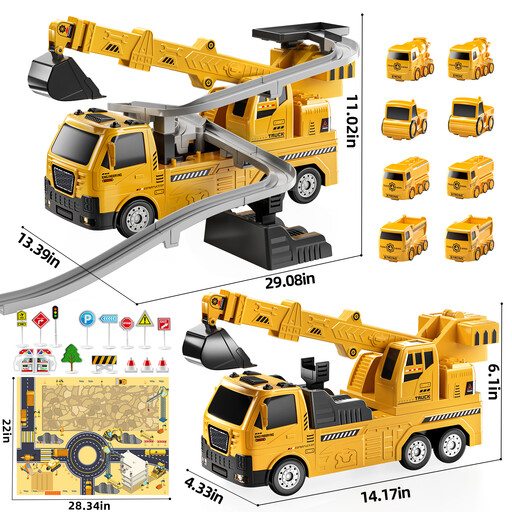
Why This Fits Their Persona: For children who are less interested in guided experiments and more in free-form, creative building and play. This set promotes spatial reasoning and an understanding of simple mechanical processes.
Instead of rigid instructions, this toy focuses on open-ended play. It bypasses the frustration of complex experiments, fostering creativity and problem-solving within a play-based context instead.
An extensive set with 8 mini-vehicles, a play mat, and a foldable crane that doubles as a storage case. It offers high play value and promotes fine motor skills.
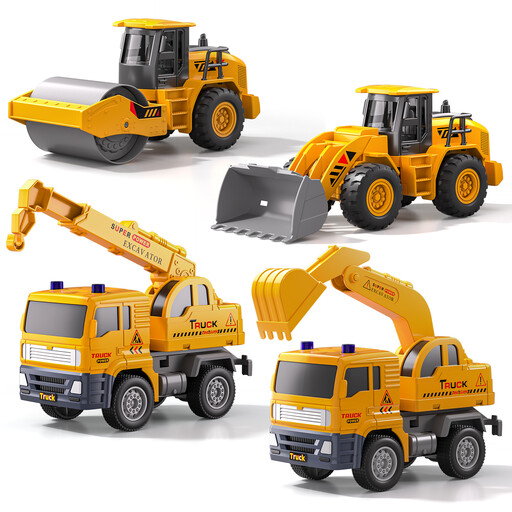
Why This Fits Their Persona: A straightforward and affordable option for a first-grader's gift. This set of four sturdy construction vehicles is excellent for sparking a basic interest in engineering and mechanics.
This set avoids the material quality pitfall with its simple and robust design. There are no small, fragile parts or complex instructions that could lead to frustration.
Promotes tactile learning and role-playing. The vehicles are easy to handle and encourage kids to playfully explore the functions of construction machinery.
We have compiled a complete, real-time list of products that fully satisfy these strict selection criteria and UK safety regulations.
Most science kits for this age group are designed for children aged 6 and up, which corresponds to the age of first-graders. However, the child's individual interest and ability to concentrate are more important than their exact age. A set that is aligned with the first and second-grade curriculum usually provides the most suitable entry point.
Even with excellent instructions, a joint introduction is recommended at the beginning. Adults should explain the safety and usage instructions and be on hand for the first experiment. The goal, however, is for the child to be able to conduct subsequent experiments with increasing independence. The need for supervision depends on the specific experiment and the child's maturity.
This varies by manufacturer and set. Specific components like lenses, measuring cups, or chemicals are typically included. However, many experiments, especially in the fields of nature and technology, often require additional, everyday items such as water, empty bottles, a coin, or paper. A look at the back of the box or the product description will provide this information.