
Lieferung heute & morgen

Qualitätsgarantie

Willkommens-Angebote freischalten: KOSTENLOSE Lieferung | Bis zu 80 % RABATT | Kostenlose 30-Tage-JoyPlus-Testphase
App herunterladen
Primitivo red wine has become incredibly popular. Its intense fruit, full body, and often outstanding price-to-quality ratio make it a sought-after choice. However, the sheer variety of labels, origins, and production styles can make selection difficult, especially when looking to buy a Primitivo wine case. This article serves as your guide. It presents objective criteria for your purchasing decision and showcases a selection of wines that cover different flavour profiles.
As your Joybuy Product Recommendation Officer, I have analysed the available information to provide you with an objective basis for your choice.
To find the perfect wine that meets your expectations, some basic knowledge is helpful. The following points can make your decision easier.
The majority of Primitivo comes from Puglia, the sun-drenched heel of Italy's boot. Within this region, however, there are significant differences. A wine with the designation Primitivo di Manduria carries a protected designation of origin (DOC). This means the grapes originate from a clearly defined area around the town of Manduria, and the wine is subject to specific production regulations. Wines labelled "Riserva" must also undergo a longer ageing period, often in wooden barrels, which lends them additional complexity and structure.
The information on the label provides clues about the wine's character.
Purchasing a 6-bottle Primitivo case is both economical and practical. You secure a supply of your favourite wine for various occasions—whether for dinner, for guests, or as a companion to a relaxing evening. When choosing a wine case, ensure that the wine matches your flavour profile and pairs well with the dishes you frequently prepare.
The following selection represents different styles of Primitivo and offers a suitable option for various preferences.
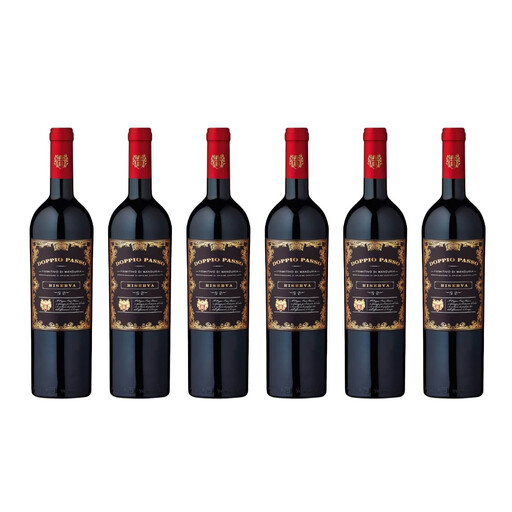
Why it stands out: This wine combines the prestigious Primitivo di Manduria origin with the elaborate Ripasso method and the status of a Riserva. The double fermentation on the grape skins gives it remarkable depth and complexity.
Who it's for: Lovers of powerful, multi-layered, and dry red wines who are looking for a wine with structure and ageing potential. It is a perfect pairing for grilled meats and hearty pasta dishes.
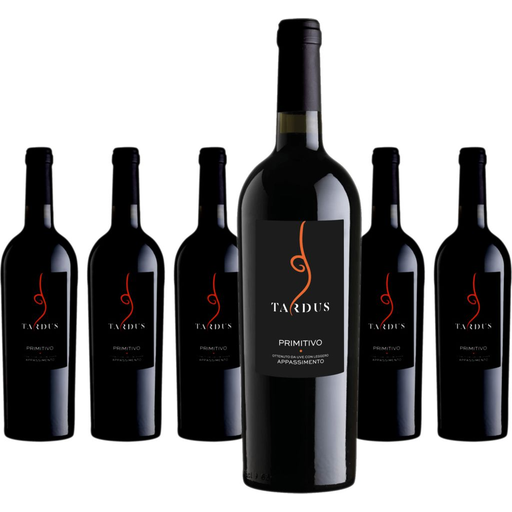
Why it stands out: Produced using the Appassimento method, where the grapes dry before vinification. This concentrates the sugars and aromas, resulting in a particularly full-bodied and velvety wine.
Who it's for: Wine drinkers who prefer a full-bodied, yet soft and approachable Italian red wine. Its velvety texture and intense fruit make it enjoyable on its own or as a partner to spicy dishes.
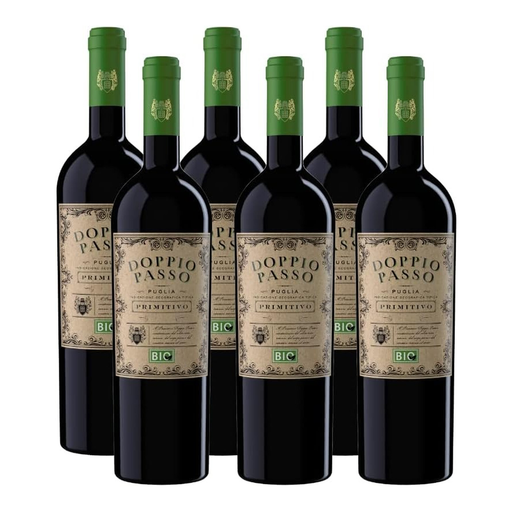
Why it stands out: This wine combines the popular Doppio Passo style with EU organic certification. The semi-dry profile makes it particularly approachable and fruit-forward.
Who it's for: Consumers who value organic farming and appreciate an uncomplicated, fruity wine with a touch of sweetness. It pairs well with pasta, dark meats, and strong cheeses.
If our selection of Primitivo wines doesn't have the right option for you, or if you'd like to expand your range of Italian beverages, you can find more options in our category.
? Discover our range of Italian Beer here
1. What food pairs with Primitivo red wine? Primitivo is a versatile food-pairing wine. A dry Primitivo harmonises excellently with pizza, pasta with rich tomato sauces, grilled beef and lamb, as well as aged hard cheeses like Pecorino. Softer or semi-dry versions also pair well with braised dishes or a cheese platter.
2. Is Primitivo always a dry wine? No. Although many Primitivo wines are made in a dry style, there are also semi-dry (amabile) and sweet (dolce) versions. Wines produced using the Appassimento or Doppio Passo methods often have a natural sweetness resulting from concentration, which makes them very round and smooth.
3. How long can you store a 6-bottle case of Primitivo? The storage potential depends on the wine. Basic Primitivo wines are intended for early consumption, within 2-3 years. A high-quality Primitivo di Manduria, especially a Riserva, can certainly mature for 5-8 years or longer with proper storage (cool, dark, and horizontal), gaining complexity in the process. The information on the product label or in the product description often provides a guideline for the optimal drinking window.