
Lieferung heute & morgen

Qualitätsgarantie

Willkommens-Angebote freischalten: KOSTENLOSE Lieferung | Bis zu 80 % RABATT | Kostenlose 30-Tage-JoyPlus-Testphase
App herunterladen
Finding the right red curry paste can be overwhelming. The shelves are filled with options that vary widely in ingredients, heat level, and authenticity. For many, the deciding factor is whether a paste contains shrimp paste. This guide is designed to help you make an informed choice by outlining key criteria and presenting a selection of products suited to different needs.
To find the perfect red Thai curry paste for your kitchen, it helps to pay attention to a few key features. These criteria will help you choose a paste that matches your flavour preferences and dietary needs.
Arguably the most significant difference lies in one ingredient: shrimp paste (kapi). An authentic Thai curry paste traditionally includes shrimp paste, which provides a deep, savoury umami flavour. However, for vegans, vegetarians, or those with a shellfish allergy, this is a deal-breaker.
Pay close attention to the ingredient list. Products labelled as vegan curry paste are guaranteed to be free of animal products. Other pastes may also be made without it but aren't explicitly labelled as vegan. A careful look at the ingredients is always wise if you're looking for a curry paste without shrimp paste.
A high-quality Thai curry paste is defined by an aromatic blend of specific herbs and spices. The key ingredients that create its signature flavour include:
The presence and ratio of these ingredients are crucial in determining the quality and taste of the final product.
The heat of a red curry paste is primarily determined by the amount of dried red chillies, which is usually one of the first items on the ingredient list. The intensity can vary from brand to brand. Some pastes are highly concentrated and require only a small amount, while others are milder and can be used more generously. As a rule of thumb, start with a small amount and taste your dish before adding more.
Here is a selection of products that cater to different needs—from vegan options to traditional recipes. If you'd like to buy one of these pastes, you can click directly on the image.

Why it stands out: This paste was specifically formulated without shrimp paste or fish sauce, making it the go-to choice for a plant-based diet while staying true to the original Thai recipe.
Benefits:
Who is it for? Perfect for vegans, vegetarians, and anyone who avoids animal products or is looking for a curry paste without shrimp paste without compromising on flavour.

Why it stands out: Mae Ploy is a staple brand in Thai cuisine, known for its traditional flavour profile. The included shrimp paste provides a distinct depth and complexity.
Benefits:
Who is it for? For home cooks seeking an authentic Thai curry paste made with a traditional recipe and who appreciate the characteristic flavour that shrimp paste provides. Not suitable for a vegan or vegetarian diet.
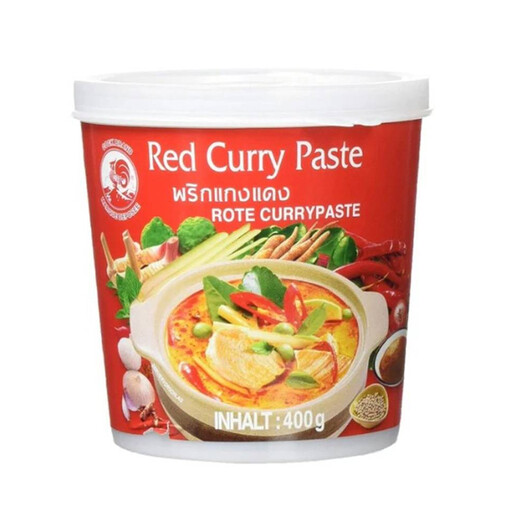
Why it stands out: This paste is distinguished by its high content of dried red chillies (28%), which gives it a robust heat and an intense colour. According to the ingredient list, it does not contain shrimp paste.
Benefits:
Who is it for? For anyone who prefers a hot red curry paste and wants to avoid shrimp paste. It's a great alternative for dishes where a bold, spicy flavour is the priority.
The world of Thai flavours is vast. If the products featured here aren't quite what you're looking for, or if you want to explore other pastes like green or Massaman curry, you're sure to find the right fit in our wider selection.
Discover our entire range of Thai sauces
A red curry paste is vegan if it contains no animal-derived ingredients like shrimp paste (kapi) or fish sauce. Products like Sunlee Vegan Red Curry Paste are explicitly labelled as such. With other brands, a close look at the ingredient list is necessary to ensure no animal products are included.
Once opened, the curry paste should be stored in an airtight container in the refrigerator, where it will typically last for several months. To extend its shelf life, you can smooth the surface of the paste in the jar and cover it with a thin layer of vegetable oil. This minimises contact with oxygen.
The heat level varies depending on the brand and recipe. The primary source of heat is the amount of dried red chillies. Generally, red curry paste is considered medium-hot to hot. It's best to start with a small amount (e.g., one teaspoon) and gradually adjust the intensity to your personal preference.