
Lieferung heute & morgen

Qualitätsgarantie

Willkommens-Angebote freischalten: KOSTENLOSE Lieferung | Bis zu 80 % RABATT | Kostenlose 30-Tage-JoyPlus-Testphase
App herunterladen
A robot vacuum that not only vacuums but also mops and then empties itself promises to be a significant time-saver in any household. However, the market is flooded with models whose marketing promises often suggest more than the technology can deliver in daily use. Choosing the wrong device quickly leads to frustration when the robot misses corners, gets stuck on thresholds, or its mopping function merely leaves a damp streak behind.
This guide highlights the crucial technical features and helps you separate the wheat from the chaff. We focus on the objective parameters that define reliable and autonomous floor cleaning, and we'll show you which pitfalls to avoid when making a purchase.
Before deciding on a model, it's important to understand the common weaknesses that can severely limit the usefulness of a robot vacuum and mop.
To avoid a bad purchase, you should carefully examine three core technical areas. These are the primary determinants of performance and daily convenience.
An auto-empty station is the central feature for low-maintenance operation. A self-emptying robot returns to the station after cleaning, and the contents of its dustbin are automatically suctioned into a larger bag or container in the station.
The actual cleaning performance depends on the combination of suction power and mechanical mopping technology.
The robot's intelligence is demonstrated by its ability to navigate its surroundings and respond to commands.
Instead of making a blanket recommendation, we have selected models tailored to specific user profiles and their requirements.
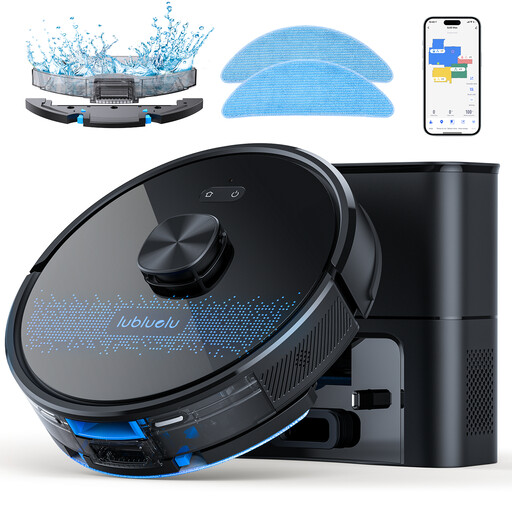
Why This Fits Their Persona: This model offers the core features of a modern robot vacuum and mop—including an auto-empty station and laser navigation—at an accessible price. It's a solid choice for anyone looking to enter the world of automated floor cleaning without compromising on key convenience features.
It bypasses the pitfall of chaotic cleaning with its integrated laser navigation. The included auto-empty station eliminates the need to empty the dustbin daily.
Offers a complete system with the most important automation features. Its 4,000 Pa suction power is sufficient for hard floors and low-pile carpets.
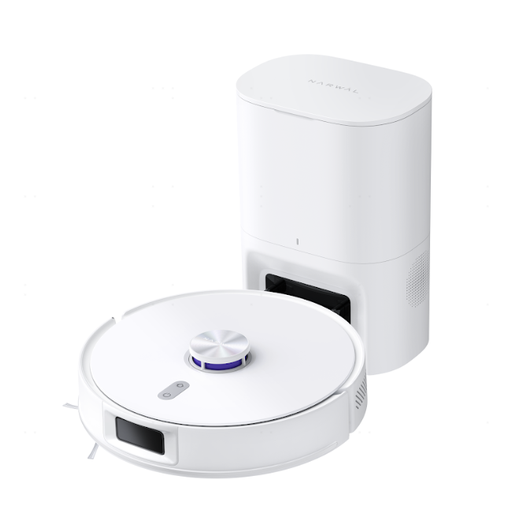
Why This Fits Their Persona: For households with dogs or cats, high cleaning performance is essential. This model combines a very high suction power of 8,000 Pa with a mopping system that exerts 8 N of downward pressure. This is ideal for reliably removing pet hair, food debris, and dried-on paw prints.
It debunks the "gimmick mopping" pitfall with its measurable downward pressure. The high suction power isn't an empty promise here but a targeted solution for the problem of pet hair.
A combination of very high suction power and mopping pressure. The 3.5-litre dust bag in the station significantly reduces maintenance intervals.
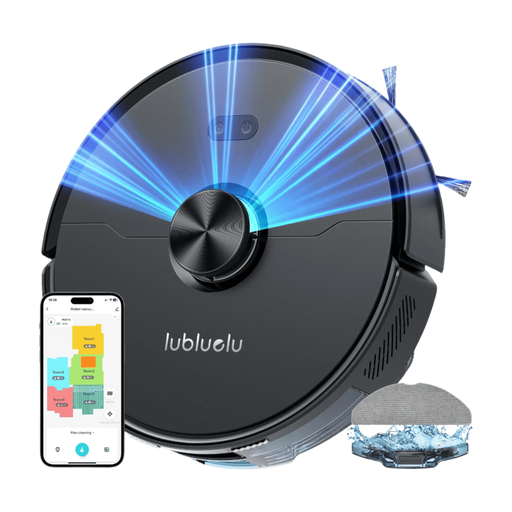
Why This Fits Their Persona: This model is aimed at users seeking the highest level of automation. The all-in-one station not only empties the dust but also cleans the mop pads, refills the clean water tank, and dries the mops with 45°C hot air. This maximises convenience and minimises maintenance.
It addresses an often-overlooked pitfall: the manual maintenance of the mopping function. With automatic mop cleaning and drying, the entire process is automated from start to finish.
Fully automated cleaning station including mop management. The precise laser navigation, with storage for up to 5 maps, is ideal for multi-level homes.
We have compiled a complete, up-to-date list of products that fully meet these strict selection criteria and all relevant safety regulations.
1. How often does the dust bag in an auto-empty station need to be replaced? The frequency depends on the bag's size (typically 2.5 to 4 litres), the size of your home, the number of occupants, and the presence of pets. Manufacturer claims range from 30 to 180 days. In a household with pets and carpets, changing it every 4 to 8 weeks is a realistic estimate.
2. Does a robot vacuum with a mopping function also work on carpets? Yes, modern devices feature carpet detection. As soon as the robot moves onto a carpet, it automatically lifts its mop pads to avoid getting the carpet wet. At the same time, the suction power is often increased to remove deep-seated dirt from the fibres. Look for this feature when buying.
3. Is laser navigation really necessary? Although there are cheaper models with gyroscope or infrared navigation, a robot vacuum with laser navigation (LDS) offers significant advantages. It cleans systematically and efficiently, reliably finds its charging station even in low-light conditions, and allows for the precise setting of no-go zones via the app. For structured and complete cleaning, this technology is highly recommended.