
Lieferung heute & morgen

Qualitätsgarantie

Willkommens-Angebote freischalten: KOSTENLOSE Lieferung | Bis zu 80 % RABATT | Kostenlose 30-Tage-JoyPlus-Testphase
App herunterladen
The selection of robot toys is vast, and manufacturers' promises are often grand. However, not every model advertised as innovative or educational delivers on its promise. As a Joybuy Product Recommendation Officer, I filter the important information from the marketing hype for you, so you can make an informed decision and avoid disappointment in the playroom. Three common pitfalls often lead to poor purchasing decisions.
To find the right model, you shouldn't be guided by colourful packaging but should instead examine three core aspects. These will help you assess the actual value and longevity of a toy.
The type of interaction is crucial for the educational benefit and long-lasting fun.
A build-it-yourself robot offers a two-fold learning effect: first, technical understanding is trained during assembly, followed by play. Pay attention to the following points:
The method of control significantly influences usability.
Instead of making a one-size-fits-all recommendation, we have identified models that suit different interests and age groups.

Why This Fits Their Persona: Ideal for children who love to build and redesign. This set combines the classic building experience with modern technology and provides long-lasting motivation through its various models. It's a perfect gift for kids interested in vehicles and engineering.
Counteracts the closed system problem. With 604 parts, five completely different models can be built, which significantly increases the play value and encourages creativity.
Versatile Control: Both a 2.4 GHz remote control and an app with four modes (Driving, Path, Gravity Sensor, Programming) are included. The battery is rechargeable.
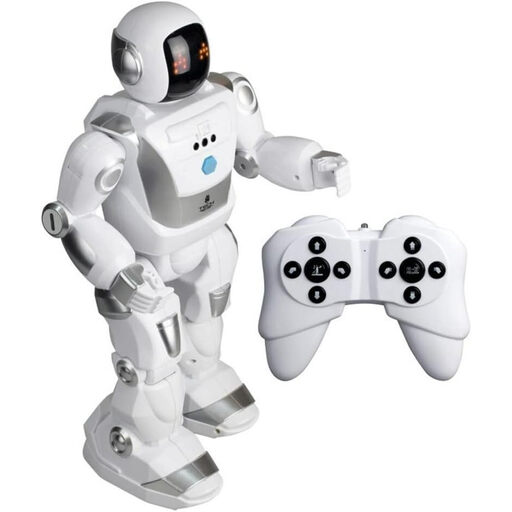
Why This Fits Their Persona: Perfect for children who want to take their first steps in programming. The focus is on creating command chains and observing the direct results, which builds a fundamental understanding of algorithmic thinking.
Delivers on the empty "learning" promise by enabling a chain of up to 48 programmable functions. This goes far beyond a simple remote control and offers real depth for experimentation.
Multi-modal Control: The robot can not only be programmed via the remote control but also controlled by hand gestures. This ensures an intuitive and captivating interaction.

Why This Fits Their Persona: For inquisitive children who want to understand how artificial intelligence works. Miika is not just a toy, but an experiment kit that makes complex topics like machine learning tangible and experiential.
Goes far beyond empty marketing terms. The robot can actually be trained through gestures and voice commands. Its development in cooperation with the Tübingen AI Center guarantees a sound educational approach.
Data Privacy: The accompanying app works completely offline; no internet connection is required. All data remains on the local device, which is a crucial factor for toys that work with microphones and cameras.
We have compiled a complete, up-to-date list of products that fully meet these strict selection criteria and German safety regulations.
An educational robot is designed to playfully teach a specific concept (e.g., mechanics, sensor technology). It often has a fixed function that is discovered through interaction, like the sound-responsive hedgehog robot. A programmable robot gives the child the tools to create their own logic and sequences. The focus here is on developing problem-solving skills and algorithmic thinking. Many models are both at the same time.
Simple plug-in or click-together kits are suitable for children from around 6 years of age, provided the instructions are image-based and easy to understand. More complex kits with many small parts, screws, and electronic components are generally recommended for children aged 8 or 10 and older. Here, adult assistance is often helpful at the beginning, which can turn into a wonderful joint project.
No. Many models, especially those for younger children, come with a dedicated infrared or radio remote control. This avoids the need for a smartphone and reduces screen time. However, app-controlled robots often offer advanced programming capabilities that would not be feasible with a simple remote. Models that support both control methods offer a good solution.