
Lieferung heute & morgen

Qualitätsgarantie

Willkommens-Angebote freischalten: KOSTENLOSE Lieferung | Bis zu 80 % RABATT | Kostenlose 30-Tage-JoyPlus-Testphase
App herunterladen
Cleaning floors in a modern home can be a time-consuming task, especially with large living spaces, pets, or complex layouts. An automatic vacuum and mop robot promises to solve this. Models with a fully automatic station go one step further: they not only empty the dustbin but also clean and dry their own mop pads. The result is a high degree of autonomy and significant time savings.
This article serves as a guide. It highlights key technical features to consider when making your choice and presents a selection of current models that stand out for their specific functions. The goal is to provide you with an objective basis for your purchasing decision.
The market offers a wide variety of models with different specialisations. The following criteria will help you identify the features that are most relevant to your needs.
A common issue with round robot vacuums is their inability to clean effectively along baseboards and in corners. Manufacturers have developed innovative solutions for this. Look for models marketed as robot mops with edge cleaning. These use technologies like extendable side brushes or pivoting mop pads (e.g., with names like FlexiArm or TruEdge) that actively move towards the edge to capture dust and dirt. This is particularly beneficial in rooms with many corners or furniture with toe-kicks.
A modern auto-empty station is more than just a charging and emptying dock. For a comprehensive self-cleaning robot vacuum, you should examine the station's functions closely. High-end systems offer:
For households with pets or carpets, strong suction power is crucial. Performance is measured in Pascals (Pa). Models with values over 10,000 Pa are considered very powerful and can effectively pick up deep-seated dirt, making them an ideal robot vacuum for pet hair. The design of the main brush is equally important. Rubberised brushes or special anti-tangle systems (often called "Anti-Tangle" or "ZeroTangle") prevent long hairs from wrapping around the brush, thus reducing maintenance.
Here, we present a few models that stand out for their technical specifications and innovative approaches to floor cleaning.
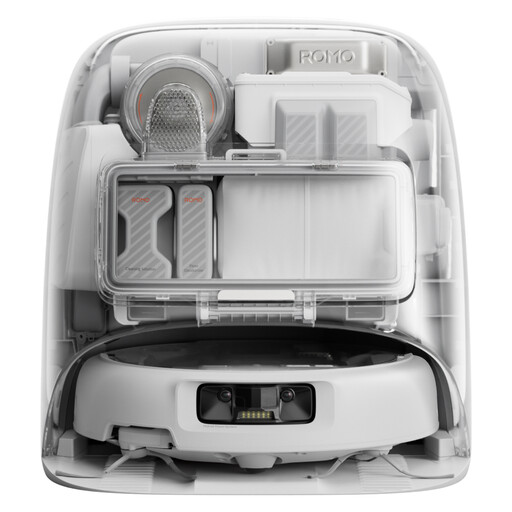
Why this model stands out The DJI ROMO P combines exceptionally high suction power with a unique mechanical approach to edge cleaning. Its dual robotic arms actively extend to guide brushes and mops right up to the baseboards. The sensor technology, described by the manufacturer as "Drone-Level," promises highly precise navigation and obstacle detection.
Pros
Who is this model for? This device is aimed at tech enthusiasts and users with complex floor plans who demand maximum cleaning coverage, especially at the edges, and value precise navigation.
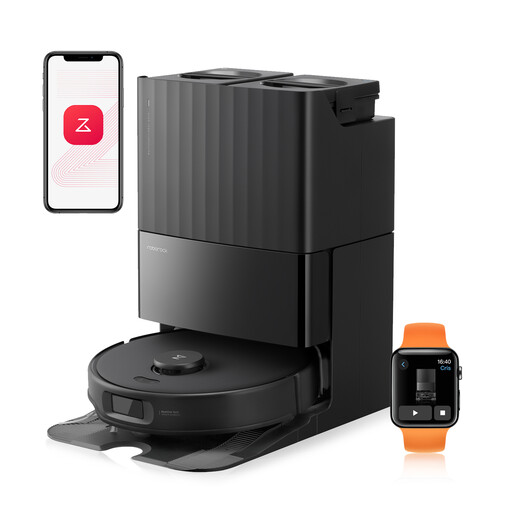
Why this model stands out The Roborock Qrevo Edge S5A places a strong emphasis on the hygienic maintenance of its mop pads. The station cleans the mops with 75°C hot water. Combined with the FlexiArm design for edge cleaning, it offers a well-designed solution for thorough wet cleaning.
Pros
Who is this model for? Ideal for households where a particularly hygienic mopping function is a priority. The hot water cleaning and anti-tangle system make it a great option for pet owners and allergy sufferers.
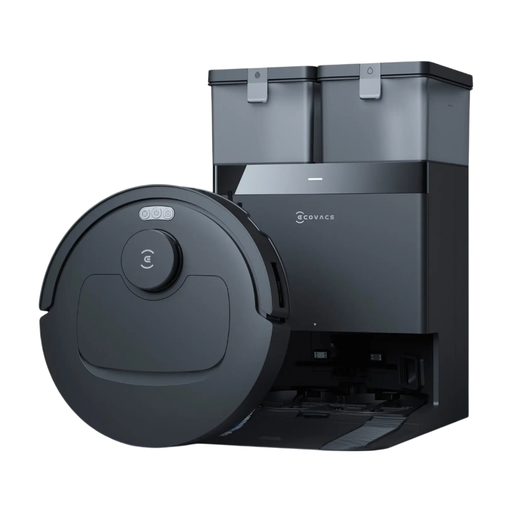
Why this model stands out The Deebot T30C OMNI Gen2 is designed for maximum automation. Its OMNI station handles nearly all maintenance tasks—from dust emptying and hot water mop washing to hot air drying. Combined with very high suction power and advanced edge cleaning, it represents a comprehensive cleaning system.
Pros
Who is this model for? This model is designed for users seeking an "all-in-one" system with minimal manual intervention. It is excellently suited for large households, pet owners, and anyone who values the convenience of almost completely autonomous floor care.
The models presented here are just a snapshot of the available technologies. If you want to compare more devices or search for robots with other specialisations, you can find a broader selection in our Kitchen Cleaner Robots category.
1. How important is suction power in Pascals (Pa) really? The Pascal rating is a useful indicator of a robot vacuum's motor power. High suction power (e.g., over 10,000 Pa) is particularly beneficial for cleaning carpets and removing fine dust from crevices. However, it is not the only factor for good cleaning performance. The design of the brushes, navigation efficiency, and software tuning play an equally important role in the final result.
2. Can robot vacuums with a mopping function also clean carpets? Yes, most modern combination devices have automatic carpet detection. When the robot approaches a carpet, it lifts or fully retracts its mop pads to avoid getting the carpet wet. At the same time, the suction power is often automatically increased to pull dirt from the fibres.
3. How often does the auto-empty station need to be maintained? Maintenance intervals depend on the size of the dust bag in the station, the size of your home, and the frequency of cleaning. On many current models, the dust bag's capacity lasts for 60 days or more. The fresh and dirty water tanks need to be emptied or refilled every few days to a week, depending on usage, unless the station is connected to a permanent water supply.