
Lieferung heute & morgen

Qualitätsgarantie

Willkommens-Angebote freischalten: KOSTENLOSE Lieferung | Bis zu 80 % RABATT | Kostenlose 30-Tage-JoyPlus-Testphase
App herunterladen
Cleaning the floors in a modern household can be a time-consuming task. Between work, family, and leisure, there's often little time left for daily vacuuming and mopping. Dirt, hair, and crumbs accumulate quickly, especially in homes with children or pets. A robot vacuum with a mopping function and a cleaning station promises to significantly lighten this load by largely automating floor care.
This article serves as a guide to help you navigate the market. It highlights the crucial features of current models and presents a selection of devices to provide you with a solid basis for an informed decision in 2026.
The market for robot vacuums with mopping functions is diverse. To find the right device for your needs, several technical aspects are particularly important.
A modern cleaning station, often called an all-in-one station, does much more than just empty the dustbin. Look for the following features, which determine the level of automation:
A self-cleaning robot vacuum with such a fully equipped station significantly minimises the need for manual maintenance.
Suction power, measured in Pascals (Pa), is a key indicator of cleaning performance, especially on carpets. For households with pets, a robot vacuum for pet hair with high suction power (over 5,000 Pa) and a specialised brush design is recommended. Rubberised or spiral-shaped brush rollers are less prone to tangling with long hair, which simplifies maintenance.
Modern devices navigate using lasers (LiDAR), cameras, or a combination of both. AI-powered systems with RGB cameras can recognise and navigate around a variety of objects like shoes, cables, or toys.
Pay special attention to robot vacuums with edge cleaning. While round robots inherently struggle to fully reach corners and baseboards, some newer models feature extendable side brushes or pivoting mop pads that specifically target these areas.
Based on the criteria mentioned, we have compiled a selection of models that stand out for their technical features and functionality.
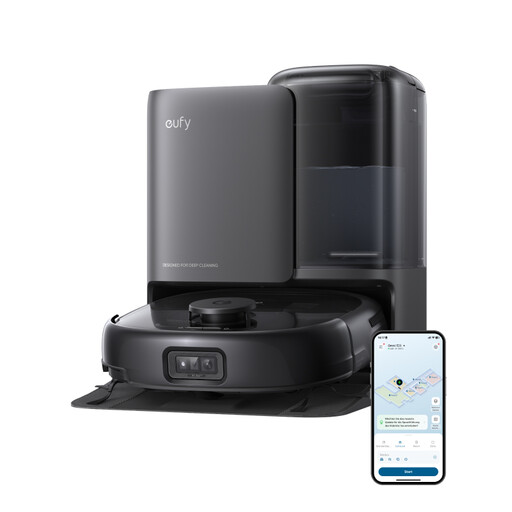
Why this model stands out: The eufy Omni E25 is distinguished by a manufacturer-specified suction power of 20,000 Pa, making it particularly suitable for deep-cleaning carpets. The HydroJet system cleans the mopping roller in real-time during operation, ensuring a consistent and streak-free wet clean.
Advantages:
Who is this model for? This device is an excellent choice for households with a mix of hard floors and carpets, as well as for pet owners who need powerful suction. The CornerRover arm specifically addresses the common problem of inadequate edge cleaning.
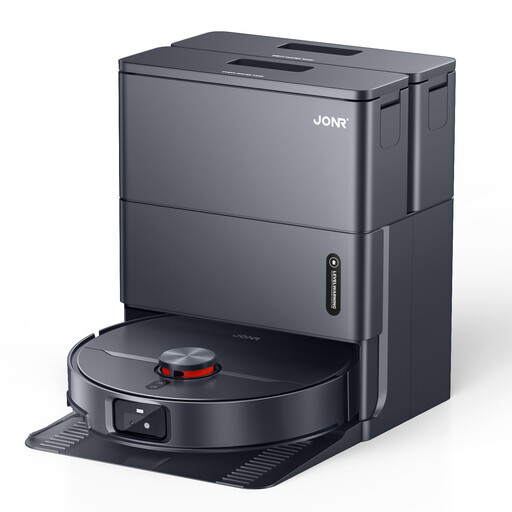
Why this model stands out: The JONR X1 Max places a strong emphasis on hygiene in its mopping function. The cleaning station washes the mop pads with water dynamically heated to 75°C, which, according to the manufacturer, is effective at removing stubborn and oily stains.
Advantages:
Who is this model for? Ideal for users who prioritise hygienic cleanliness, such as families with young children. The hot water cleaning function is particularly useful for kitchen floors and dried-on messes.
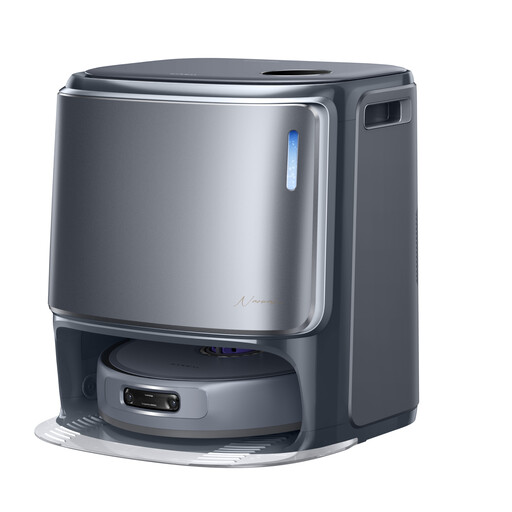
Why this model stands out: The NARWAL Freo Z10 Ultra relies on advanced AI-powered obstacle detection using dual RGB cameras. According to the manufacturer, the system can identify over 200 different objects and precisely avoids them. The mop pads can extend and pivot to thoroughly scrub edges and corners with 8N of downward pressure.
Advantages:
Who is this model for? This model is aimed at tech-savvy users and pet owners who require reliable and intelligent navigation in complex living environments. The precise obstacle detection and special pet mode offer added peace of mind.
View the NARWAL Freo Z10 Ultra
The models presented cover a broad spectrum of requirements. However, if none of these devices exactly match your needs or if you are looking for devices with a different set of features, you can find other alternatives.
Discover a wider selection of devices in our Bluetooth Vacuums category.
A self-cleaning robot vacuum with a fully automatic station reduces maintenance to a minimum. The main tasks are limited to occasionally refilling the fresh water tank, emptying the dirty water tank, and replacing the dust bag in the station (approximately every 60–120 days, depending on the model and usage). The brushes and sensors should also be regularly checked for hair and debris.
Yes, modern robot vacuums for pet hair are specifically designed for this challenge. Models with high suction power (over 5,000 Pa) can effectively pull hair from carpet fibres. Anti-tangle brushes made of rubber or with special bristle arrangements prevent hair from wrapping around the roller. Many devices also automatically lift their mop pads when they detect a carpet to avoid getting it wet.
Robot vacuums with edge cleaning feature special technologies to clean the areas along walls and in corners that round robots often fail to reach adequately. This is achieved through various mechanisms, such as extendable side brushes, pivoting mop pads that move right up to the edge, or a D-shaped design for the robot itself.