
Lieferung heute & morgen

Qualitätsgarantie

Willkommens-Angebote freischalten: KOSTENLOSE Lieferung | Bis zu 80 % RABATT | Kostenlose 30-Tage-JoyPlus-Testphase
App herunterladen
Open-concept layouts are modern, but they often come with challenges: a lack of privacy in the home office, unstructured areas, or poor room acoustics. A room divider seems like the obvious solution. However, the market is flooded with products whose quality and functionality only become apparent after purchase. Many buyers invest in solutions that quickly prove to be impractical or unstable. This guide highlights the crucial criteria for making an informed decision and avoiding typical buying mistakes.
Before we look at the solutions, it's important to understand the three most common problems that lead to disappointment:
To make the right choice, you should focus on three essential technical features. These will help you objectively evaluate a product's functionality.
The material determines durability, appearance, and function.
The installation method must suit your living situation.
Clearly define the problem the room divider is meant to solve.
Here are some product recommendations tailored to specific user profiles that take the aforementioned pitfalls into account.
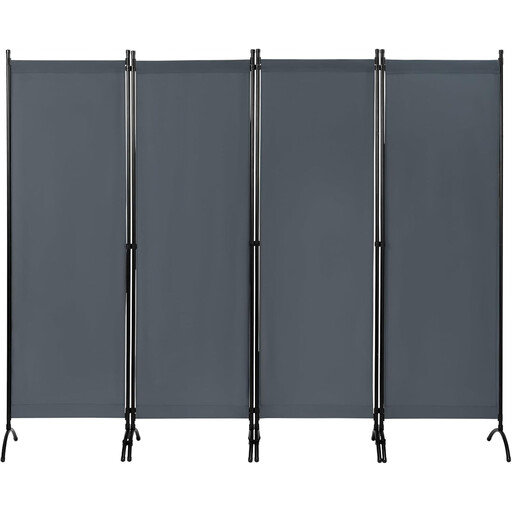
Why This Fits Their Persona: Ideal for those who need a mobile solution to create privacy on the balcony in summer and section off a workspace in the living room in winter. Easy handling and storage are key here.
The steel tube frame provides necessary stability, avoiding the problem of wobbly constructions. The 160 g/m? polyester fabric with a PA coating is weatherproof and durable, counteracting the pitfall of low-quality materials.
Foldable and easy to transport; water-repellent and sun-protective PA coating for outdoor use.
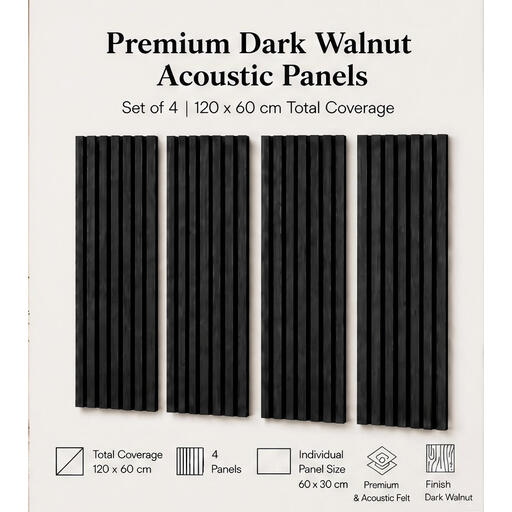
Why This Fits Their Persona: For home office professionals, podcasters, or music lovers who specifically want to reduce reverb and echoes. The combination of functionality and modern aesthetics is the main focus.
This product avoids the trap of misleading acoustic claims. It is specifically designed with an MDF core and an acoustic felt backing to effectively dampen sound waves, rather than just serving as decoration.
Proven sound absorption to reduce echo; modern wood slat design that serves as a decorative element; renter-friendly installation options.
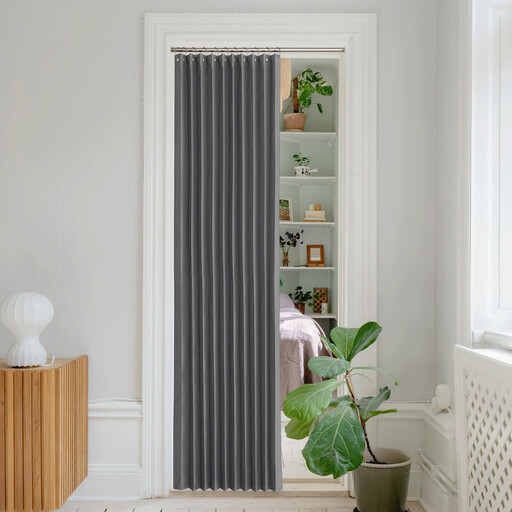
Why This Fits Their Persona: Perfect for renters in smaller apartments who want to quickly and opaquely close off an open alcove, a doorless closet, or a passageway without drilling.
This product is clearly positioned as a door curtain and doesn't promise stability it can't deliver. The triple-weave technology ensures high light blockage, meeting the expectation of a true blackout effect.
High blackout performance for maximum privacy; simple installation with hooks without permanent structural changes.
We have compiled a complete, up-to-date list of products that fully meet these strict selection criteria and German safety regulations.
Stability primarily depends on three factors: the frame material (steel is generally more stable than aluminum or plastic), the design of the feet (wider feet offer more support), and the number and connection of the panels. Multi-panel screens that are set up at a slight angle gain additional stability compared to being set up in a straight line.
Yes, that is usually possible. Many acoustic panels, like the models featured, are designed for flexible installation. They can either be attached with strong but residue-free removable mounting adhesive, which is ideal for renters. Alternatively, screwing them in is also an option for a permanent solution. Check the condition of your wall beforehand.
A regular blackout curtain is primarily designed for windows and comes in standard sizes. A room divider curtain is often wider and taller to cover entire areas. Additionally, like the accordion model, it may have special mounting systems that allow it to be used as a flexible wall within a room, rather than just hanging in front of a window.