
Lieferung heute & morgen

Qualitätsgarantie

Willkommens-Angebote freischalten: KOSTENLOSE Lieferung | Bis zu 80 % RABATT | Kostenlose 30-Tage-JoyPlus-Testphase
App herunterladen
The launch of the GeForce RTX 5070 Ti, built on the Nvidia Blackwell architecture, marks a significant leap forward for PC enthusiasts, gamers, and content creators. With 16GB of GDDR7 memory and advanced AI features like DLSS 4, this GPU generation promises a new level of performance. However, with a wide array of custom models from manufacturers like ASUS and Gigabyte, choosing the right one can be a challenge.
This article serves as an objective guide. We will introduce various RTX 5070 Ti models and highlight their specific features to provide you with a solid basis for making an informed decision when you're ready to buy an RTX 5070 Ti.
Before you decide on a model, there are several technical aspects to consider that go beyond raw computing power.
Thermal performance is crucial for stable and sustained performance. Manufacturers use various cooling solutions that differ in size and efficiency. Models with a 3-slot design or larger often feature a more extensive heatsink and bigger fans, which can lead to lower temperatures under load. In contrast, more compact 2.5-slot designs are better suited for space-constrained cases, common in Small Form Factor (SFF) builds. Therefore, always check the graphics card's dimensions and its compatibility with your PC case before purchasing.
The standard loadout for modern graphics cards includes multiple DisplayPort and HDMI ports. GeForce RTX 5070 Ti models are typically equipped with DisplayPort 2.1b and HDMI 2.1b, enabling them to drive monitors with very high resolutions and refresh rates—an essential feature for a future-proof graphics card for 4K gaming and beyond. Some specialized cards, like the ProArt RTX 5070 Ti, offer additional ports such as USB-C, which can be beneficial for content creators who want to connect external devices directly to the GPU.
For many PC builders, the appearance of their components is a key factor. The trend towards themed builds, such as all-white systems, has led manufacturers to offer special design variants. A white graphics card can be the central aesthetic element of such a setup. Models like the white ASUS TUF Gaming or the Gigabyte EAGLE OC ICE are specifically designed for users who prioritize a cohesive overall look.
Here is an overview of selected models that cover different requirements and use cases.
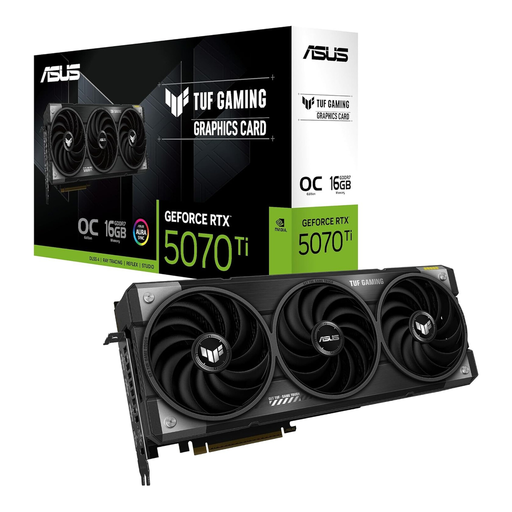
Why It Stands Out: This model is engineered for durability and robust cooling performance. Its 3.6-slot, triple-fan design ensures effective heat dissipation even during intense use.
Pros:
Who Is It For? For gamers and power users seeking a reliable and powerful all-around gaming graphics card with a focus on maximum cooling, who have a sufficiently spacious PC case.
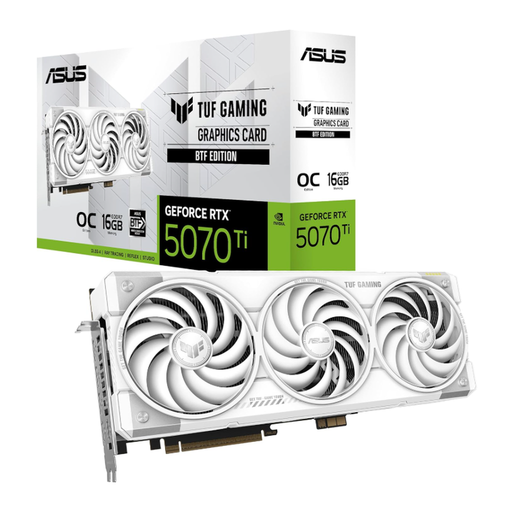
Why It Stands Out: This white graphics card combines the performance of the TUF series with striking aesthetics and compatibility with BTF (Back-To-the-Future) motherboards for exceptionally clean cable management.
Pros:
Who Is It For? For PC modders and design enthusiasts who want to create an aesthetically pleasing, white PC build with minimal visible cabling, without compromising on performance.
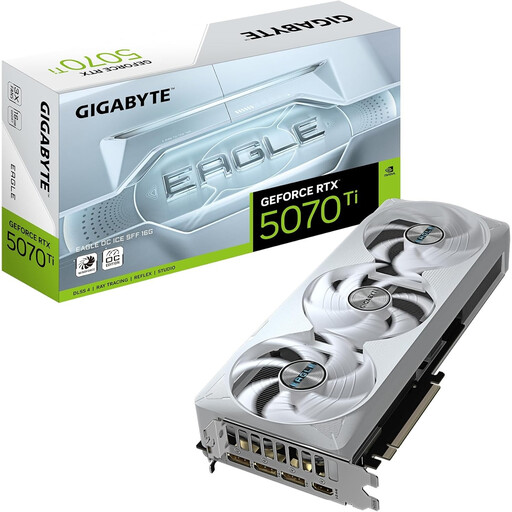
Why It Stands Out: The EAGLE OC ICE is certified as an NVIDIA SFF-Ready graphics card, combining a compact design with an appealing white aesthetic, making it an excellent choice for space-saving systems.
Pros:
Who Is It For? For users building a high-performance PC in a compact (SFF) case who don't want to sacrifice an appealing white aesthetic.
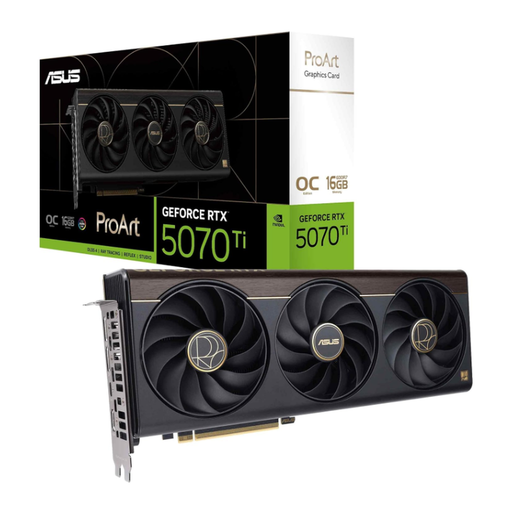
Why It Stands Out: The ProArt RTX 5070 Ti is specifically engineered for the needs of content creators. It combines high computing power with a subtle design and professional features.
Pros:
Who Is It For? For content creators, 3D artists, and video producers who need a powerful GPU for AI applications, rendering, and video editing, and who value professional connectivity and an understated design.
The selection presented here covers common use cases. However, the market offers an even greater variety of models that differ in clock speeds, cooling concepts, and designs. If you'd like to explore more options, you can find additional variants in our main category.
Discover More 5070 Graphics Card Models
Manufacturer recommendations for powering a GeForce RTX 5070 Ti typically range from 750 watts to 850 watts. The exact requirement can vary depending on the custom model and the rest of your system (especially the CPU). It is advisable to check the specific recommendations from the graphics card manufacturer and plan for a high-quality power supply with some headroom.
Yes, the GeForce RTX 5070 Ti is a very capable graphics card for 4K gaming. Thanks to the Nvidia Blackwell architecture, 16GB of GDDR7 memory, and support for DLSS 4, it can smoothly render modern games at 4K resolution with high frame rates and graphics settings.
The main differences between models from partners like ASUS RTX 5070 Ti or Gigabyte RTX 5070 Ti lie in four areas: