
Lieferung heute & morgen

Qualitätsgarantie

Willkommens-Angebote freischalten: KOSTENLOSE Lieferung | Bis zu 80 % RABATT | Kostenlose 30-Tage-JoyPlus-Testphase
App herunterladen
Conventional brooms with horsehair or synthetic bristles tend to kick up fine dust and hair rather than capturing it effectively. A rubber broom operates on a different physical principle. Its bristles, made from rubber or thermoplastic elastomers (TPE), generate an electrostatic charge through friction on surfaces. This charge attracts and traps particles like dust, hair, and fine dirt, minimising their dispersal into the air. This operating principle makes it a specialised tool, especially for households with pets or for individuals with dust allergies.
The effectiveness of a rubber broom depends on specific design features. A rational purchasing decision should be based on an analysis of material, ergonomics, and functionality.
The bristles are the functional core of the broom. They are typically made from natural rubber or synthetic materials like TPE. The arrangement and shape of the bristles determine the cleaning performance. Densely packed, V-shaped bristles can effectively loosen and gather dirt and hair from various surfaces, including low-pile carpets. The material's flexibility allows it to conform to uneven floors, such as tiled surfaces with grout lines.
A broom with a telescopic handle offers a significant ergonomic advantage. The ability to adjust the handle's length to the user's height reduces strain on the back and shoulders. Aluminium handles are lightweight and corrosion-resistant, while steel versions can offer greater stability. A locking adjustment mechanism is crucial for secure handling during use.
Many rubber broom models feature an integrated squeegee edge on the back of the broom head. This feature significantly expands the tool's range of applications. The rubber lip can be used to efficiently gather and remove liquids from hard floors such as tile, laminate, or sealed parquet. This is particularly useful in kitchens, bathrooms, or for cleaning up spills.
The following products were selected based on their technical specifications and intended applications.
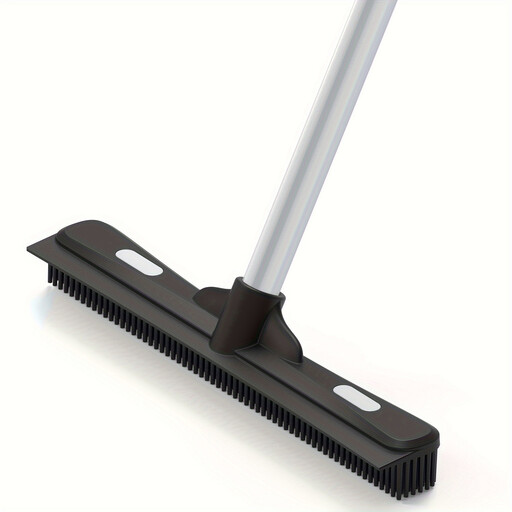
Why we recommend this product: This model combines the core functions of a rubber broom with an adjustable telescopic handle and an integrated water squeegee. The flexible rubber head is designed to loosen and collect hair and dust from both hard floors and carpets.
Pros:
Who it's for: This model is a practical choice for households with pets and for users seeking a multifunctional cleaning tool for both dry and wet messes on various floor types.
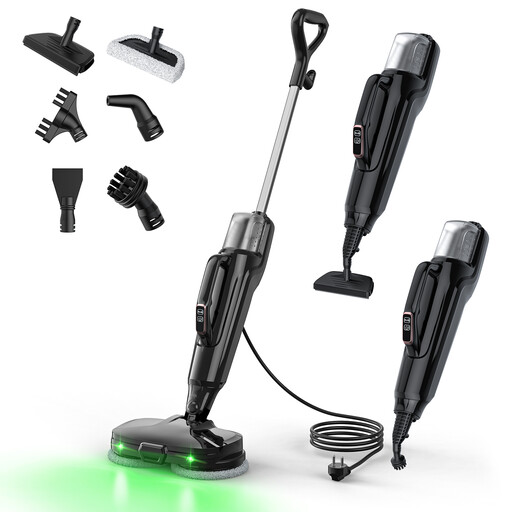
Why we recommend this product: As an electric alternative to manual floor cleaning, this device offers a combination of steam cleaning and mechanical scrubbing. With 1580 watts of power, it generates hot steam to break down tough grime without chemical cleaners. It's not a classic floor brush, but rather a system for deep cleaning.
Pros:
Who it's for: This device is aimed at users looking for a solution for hygienic deep cleaning of sealed hard floors and who want to effectively remove stubborn, dried-on stains. It is an alternative for households where a sanitising effect is desired.
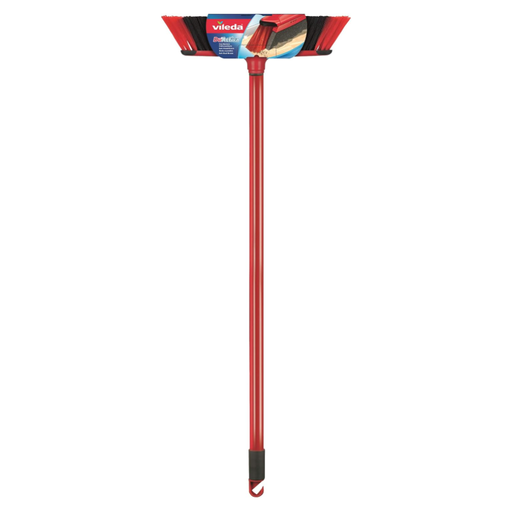
Why we recommend this product: The Vileda Du-Activa is not a pure rubber broom but a hybrid model that combines two cleaning technologies. It features a row of firm bristles to loosen dirt and a micro-foam strip in front that captures fine dust and hair without kicking it up.
Pros:
Who it's for: This model is designed for users seeking an efficient, dust-free cleaning solution for smooth indoor floors like tile, laminate, and vinyl. It's a great choice for allergy sufferers and households that prioritise minimal dust disturbance.
The featured models cover specific use cases, from pet hair removal to hygienic steam cleaning. For a broader overview of various cleaning tools, including other specialty brooms and floor brushes, we recommend exploring the Cleaning Brooms category. There you will find additional models with different specifications to meet diverse cleaning needs.
1. Can a rubber broom be used on carpet? Yes, a rubber broom is well-suited for removing hair, lint, and surface dirt from low-pile carpets. The rubber bristles "comb" through the fibres, pulling out particles via electrostatic charge. However, its effectiveness is limited on high-pile or shag carpets.
2. How do you clean a rubber broom properly? Cleaning is straightforward. The broom head can be rinsed under running water. For oily or stubborn grime, a mild soap solution can be used. Afterwards, the broom head should be left to air dry to preserve the material properties of the rubber.
3. Is a rubber broom a good choice for allergy sufferers? Due to its ability to trap dust and allergens like pet hair rather than kicking them up, a rubber broom is often considered beneficial for allergy sufferers. Its dust-trapping action reduces the concentration of airborne particles during sweeping.