
Lieferung heute & morgen

Qualitätsgarantie

Willkommens-Angebote freischalten: KOSTENLOSE Lieferung | Bis zu 80 % RABATT | Kostenlose 30-Tage-JoyPlus-Testphase
App herunterladen
A reliable light source is indispensable, whether on a construction site, while camping, or as a precaution for a power outage. However, the market for mobile lighting is flooded with products whose marketing promises often fail to deliver in practice. A lamp advertised as "rugged" can quickly prove to be a poor investment if it fails at the first challenge. This guide will help you identify the crucial features and find a truly durable and functional, rugged LED lantern.
Before we dive into the key performance features, let's look at the most common reasons why buyers are dissatisfied with their choice. Recognising these pitfalls is the first step toward making a better purchasing decision.
To make an informed decision, you should examine three core technical parameters. These define the actual performance and longevity of a portable light.
The IP (Ingress Protection) code is an internationally standardised system that indicates how well a housing is protected against the ingress of foreign objects (first digit) and water (second digit).
Resistance to mechanical stress is classified by the IK code. An impact-resistant lamp with an IK08 rating, such as those found in the VARTA Indestructible series, can withstand an impact energy of 5 joules. This is equivalent to a 1.7 kg hammer falling from a height of 29.5 cm. Look for materials like aluminium alloys, polycarbonate for the lenses, and rubberised edges that absorb shocks.
A good LED work light or emergency lantern must not only be bright but also long-lasting. Check the ratio of brightness (lumens) to maximum runtime (hours).
Here are some models tailored to specific use cases that meet the aforementioned quality criteria in different ways.
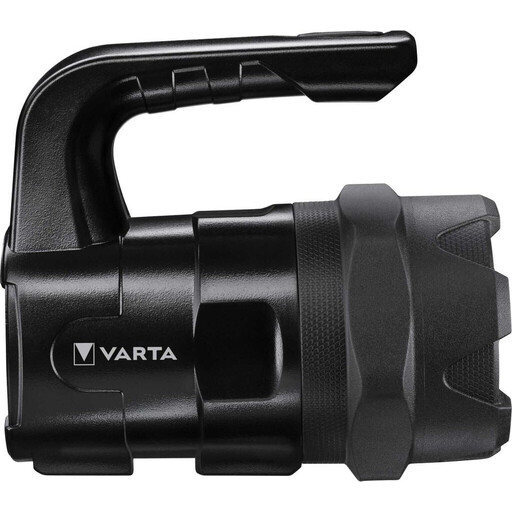
Why This Fits Their Persona: Ideal for use on job sites, in workshops, or during demanding outdoor tours where absolute reliability and resilience are required. A tool, not a toy.
This model bypasses the 'weatherproof' trap with a genuine IP67 certification and the 'fake ruggedness' pitfall with a verifiable IK08 impact resistance rating (tested for a 4-metre drop).
Extreme durability and a very long runtime of up to 85 hours in energy-saving mode. Its 400-lumen output provides bright, wide-area illumination.
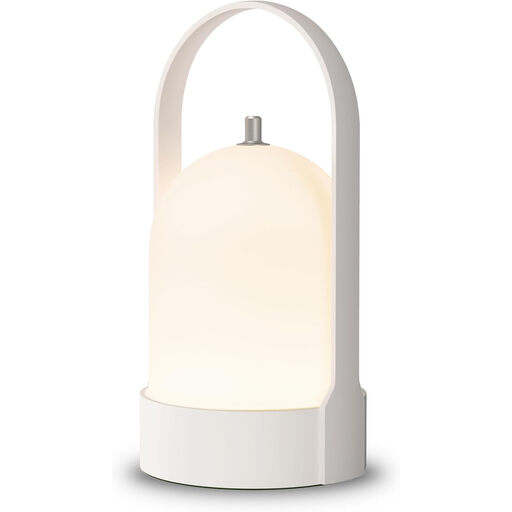
Why This Fits Their Persona: Perfect for homeowners who need a flexible light source for the basement, the patio, as an emergency lantern during power outages, or for occasional camping trips. The focus is on convenience and ease of use.
This model makes no false promises. The IP44 rating is clearly communicated, positioning the lamp correctly for home and leisure use, not for extreme conditions. It focuses on practical features rather than exaggerated claims of ruggedness.
High user convenience thanks to the integrated 4000 mAh battery (rechargeable via USB) and an intuitive 4-level touch dimming function for adjustable brightness.

Why This Fits Their Persona: For users seeking functional yet stylish lighting for the balcony, a garden party, or "glamping." The lamp combines modern design with practical outdoor suitability.
The lamp avoids the 'fake ruggedness' pitfall with a solid material combination of polypropylene and steel. The IP44 protection rating is transparently stated, promising reliable protection against splashing water—no more, no less.
Offers great atmospheric versatility with three light modes (multi-colour, flame effect, white). The integrated battery makes it portable and flexible for any location.
We have compiled a complete, real-time list of products that fully satisfy these strict selection criteria and UK safety regulations.
1. What exactly does the IP rating mean for an LED lantern? The IP rating consists of two digits. The first (0-6) describes protection against foreign objects like dust, while the second (0-9) describes protection against water. For outdoor use, the second digit is crucial. IPx4 means protection against splashing water, whereas IPx7 ensures protection against temporary immersion. For a truly rugged lantern, a rating of IP67 is recommended.
2. How many lumens does a good work light or camping lantern need? This depends on the application. For general illumination of a tent or a small room, 200 to 500 lumens are usually sufficient. For detailed work or illuminating a larger area, more lumens can be useful. However, more important than the raw lumen count is the quality of the light beam and the ability to regulate the brightness to extend battery life.
3. Are battery-powered or rechargeable lanterns better? Both systems have their pros and cons.