
Lieferung heute & morgen

Qualitätsgarantie

Willkommens-Angebote freischalten: KOSTENLOSE Lieferung | Bis zu 80 % RABATT | Kostenlose 30-Tage-JoyPlus-Testphase
App herunterladen
For owners of motorhomes, caravans, and large trailers, safety on long journeys is paramount. Correct tire pressure is a critical, yet often underestimated, factor. A Tire Pressure Monitoring System (TPMS) continuously monitors the condition of your tires and can warn you of dangerous situations, such as a sudden loss of pressure. However, the market is crowded, and many products don't deliver on their promises. As your Joybuy Product Recommendation Officer, I'll help you identify the common pitfalls and make an informed decision.
Many systems are designed for standard passenger cars and are unsuitable for the demands of a motorhome or a vehicle-trailer combination. Watch out for these two critical weaknesses to avoid a bad buy:
To ensure your system functions reliably, you should check three core technical parameters before buying. These are crucial if you plan to retrofit a TPMS.
Based on the criteria above, we have identified several systems that are well-suited for specific user profiles.
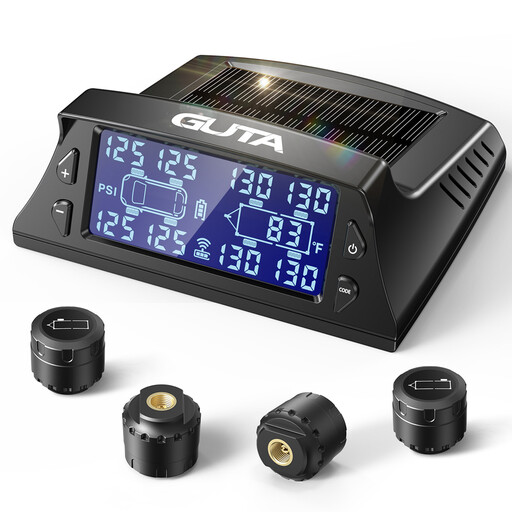
Why this system is a good fit: Ideal for owners of standard motorhomes without a trailer who are looking for a straightforward and reliable solution. The monitor's solar charging function adds convenience and reduces cable clutter in the cockpit.
This system offers a pressure range up to 13 BAR (approx. 188 PSI), making it suitable for the high demands of RV tires. It avoids the common pitfall of car-specific systems with an inadequate pressure range.
High pressure range for motorhomes; simple installation with external sensors; monitor with solar charging capability.
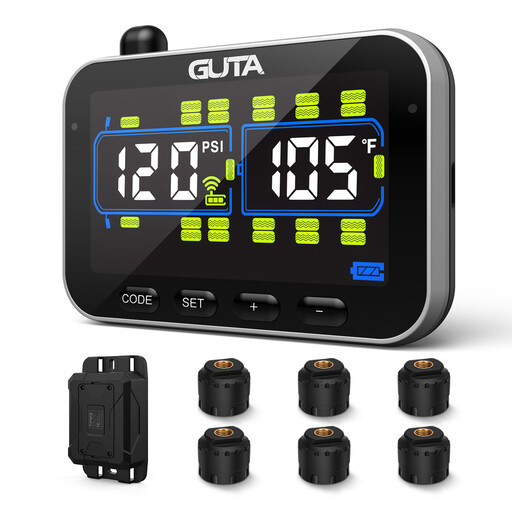
Why this system is a good fit: Designed for rigs combining a motorhome with a caravan or large trailer. The six sensors cover the towing vehicle and a single-axle trailer, while the repeater ensures a stable signal connection across the entire vehicle length.
This kit solves the problem of unstable signal transmission with its included repeater. This ensures that tire data from the trailer is also reliably sent to the monitor in the cockpit.
Includes a signal repeater for long vehicles; 6 sensors for vehicle-trailer combinations; expandable up to 24 tires.
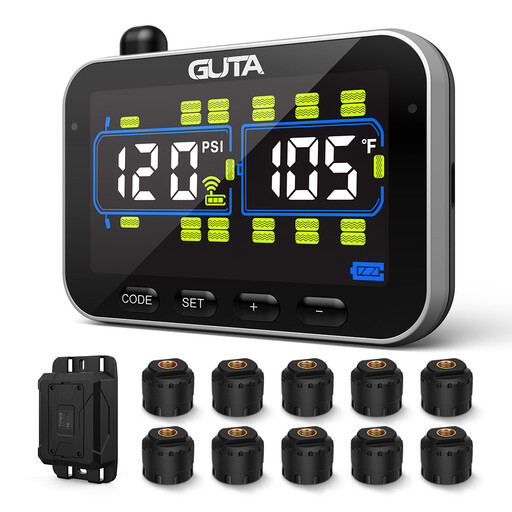
Why this system is a good fit: A complete solution for large configurations, such as a 3-axle motorhome with a dual-axle trailer. With 10 sensors included, even complex rigs can be monitored completely without needing to purchase additional sensors.
This kit is designed from the outset for a high number of tires, combining this with a high pressure range and a repeater. It therefore covers all the critical requirements for large and heavy vehicles.
Large set of 10 sensors included; repeater for maximum signal stability; highly expandable.
We have compiled a complete, real-time list of products that fully meet these strict selection criteria and safety regulations.
1. How easy is it to retrofit a TPMS with external sensors? Retrofitting is typically very simple and requires no special tools. The external sensors are screwed onto the tire valve stems in place of the valve caps. Most kits also include anti-theft lock nuts. The entire process often takes only a few minutes.
2. Do I need a TPMS with a repeater for my vehicle and trailer setup? As a rule of thumb, a repeater is strongly recommended for total vehicle lengths over 10 metres or when using a trailer. It captures the signal from the rear sensors and forwards it, amplified, to the monitor, ensuring a stable connection and reliable monitoring.
3. How long do the batteries in RV tire pressure sensors last? Battery life varies depending on the model and usage. For systems specifically designed for motorhomes, like the GUTA models featured here, CR2032 batteries are often used. According to the manufacturer, their lifespan can be up to four years. The batteries are typically user-replaceable.