
Lieferung heute & morgen

Qualitätsgarantie

Willkommens-Angebote freischalten: KOSTENLOSE Lieferung | Bis zu 80 % RABATT | Kostenlose 30-Tage-JoyPlus-Testphase
App herunterladen
A good salad bowl is more than just a container. It's a cornerstone of food preparation, a stylish vessel for serving, and sometimes even a standalone decorative object. However, the sheer variety of materials, sizes, and designs can be overwhelming. This guide is designed to help you make an informed decision by highlighting the key features of different bowl types and showcasing specific products that blend functionality with aesthetics.
The right bowl depends on your individual needs. Whether you regularly prepare large meals for guests, need a durable bowl for daily use, or want a visual centrepiece for your dining table, the following criteria will help guide your choice.
The material affects not only the look but also the handling and durability of your bowl.
Capacity is a crucial factor. Consider how many people you typically prepare food for.
Here is a selection of bowls that stand out for their material, design, or special functionality.

What makes it stand out: This bowl combines the clarity of glass with the warmth of a light wooden frame. The design is modern yet natural, allowing it to blend into various interior styles. With a diameter of 24 cm and a capacity of 2500 ml, it's well-suited for salads or as an elegant fruit bowl.
Advantages:
Who it's for: For hosts looking for an aesthetically pleasing serving bowl that makes a statement on the dining table while remaining practical to use.
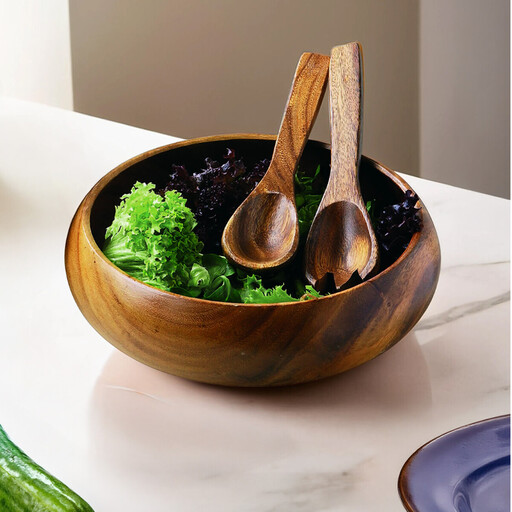
What makes it stand out: This large salad bowl is hand-carved from acacia wood and captivates with its natural grain featuring light and dark tones. With a diameter of 26 cm and a height of 8 cm, it offers ample space for large portions. Its traditional, rustic design makes it a decorative centrepiece.
Advantages:
Who it's for: For lovers of natural materials who want a functional yet decorative wooden salad bowl for daily use or as a stylish fruit bowl.
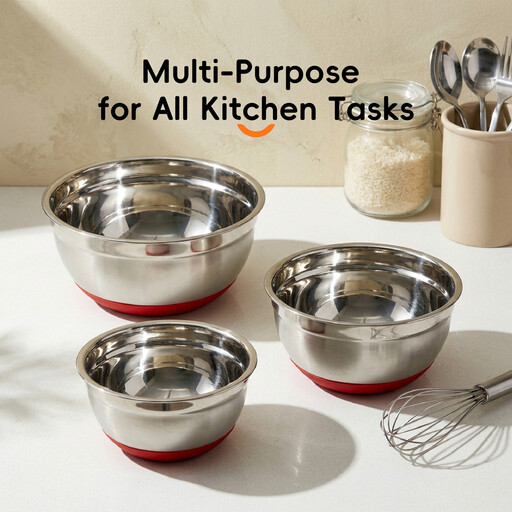
What makes it stand out: This salad bowl set is designed for maximum functionality in the kitchen. It includes three stainless steel bowls (18, 20, and 24 cm). The standout feature is the red silicone base, which makes the bowls non-slip. This ensures they remain stable on the work surface while you're stirring, kneading, or mixing.
Advantages:
Who it's for: For home cooks who need a durable and versatile bowl set for food preparation, where functionality and ease of use are the top priorities.
The perfect bowl is a personal choice. If the models presented here don't quite match what you're looking for, there are many more options to explore.
Discover more salad bowls in our collection here.
1. What is the best material for a salad bowl? There is no single "best" material; the choice depends on its intended use. Glass is elegant and easy to clean. Wood offers a warm aesthetic but requires hand washing. Stainless steel is extremely durable, hygienic, and ideal for food prep, especially as a mixing bowl.
2. How do you properly care for a wooden salad bowl? Clean a wooden bowl after use with a damp cloth and mild washing-up liquid. Dry it thoroughly immediately. Never soak the bowl in water or put it in the dishwasher. To protect the wood from drying out and to maintain its colour, you can occasionally rub it with a food-safe mineral oil or beeswax.
3. How large should a salad bowl be for 4 people? For four people, a bowl with a diameter of about 24 to 28 cm is recommended. This provides enough space to thoroughly mix a generous amount of salad and dressing without ingredients falling out. A capacity of 2.5 to 4 litres is a good benchmark here.