
Lieferung heute & morgen

Qualitätsgarantie

Willkommens-Angebote freischalten: KOSTENLOSE Lieferung | Bis zu 80 % RABATT | Kostenlose 30-Tage-JoyPlus-Testphase
App herunterladen
A suitable sander for walls, wood and corners needs to offer more than a high speed or an especially large number of sanding sheets listed on the packaging. For renovation work, the practical value mainly depends on having the right sanding surface, controllable handling and sensible dust protection.
Many poor purchases result from three common marketing traps:
Checking these points before buying makes it easier to match a wall sander set, detail sander or manual hand sander to your particular work area.
The shape of the sanding plate determines where the tool can be used effectively:
A sander for renovation work should therefore be selected not only according to motor power, but also according to the actual geometry of the surface to be worked on.
Grit is commonly specified as P80, P120 or P240. A lower number indicates coarser sanding paper and therefore usually more aggressive material removal. Higher grits are used for finer surfaces.
Depending on the substrate, a practical sequence might look like this:
The material used for the abrasive is also relevant. The sets listed use aluminium oxide sanding paper. For everyday use, the attachment should be as even as possible. Hook-and-loop systems allow for quick changes, while clamps can be used with manual wall and corner sanders without special accessories.
A sanding machine with dust extraction can reduce dust levels in the working area. What matters is whether it includes a dust container, a vacuum adapter or both. With a drywall sander with extraction, you should also check whether the connection is compatible with your existing vacuum cleaner.
For electrical tools, the following specifications are useful:
A high speed, such as 13,000 or 14,000 OPM, is not automatically suitable for detailed work. For small areas, controlled handling, low weight and an easily accessible on/off switch are often more important.
The following products cover different applications, from manual wall preparation and precise internal edges to electrical work on wood and metal.
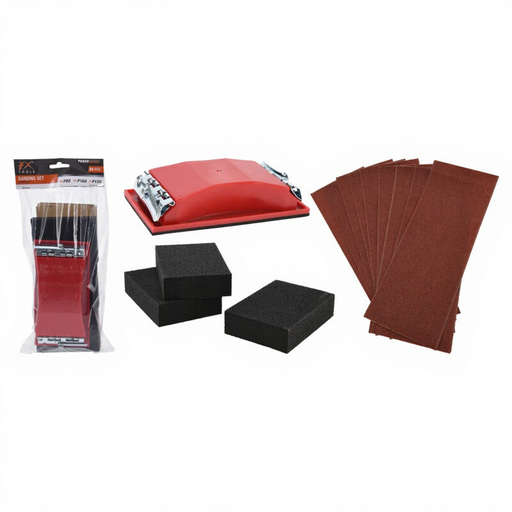
Why this product suits this profile: For occasional repairs and smaller renovation jobs, a manual sanding block without a power connection is all you need.
Use does not depend on motor power or battery life. The surface can be worked with even pressure.
165 × 85 mm sanding block, ergonomic handle and 24 sanding sheets in P80, P100 and P120.
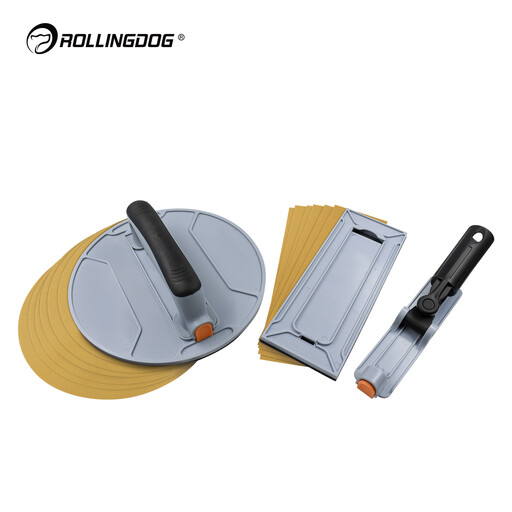
Why this product suits this profile: This set is aimed at renovators who want to work on large wall areas and detailed sections with one system.
Two sanders cover different geometries: a round 220 mm sander and a rectangular sander measuring 225 × 85 mm.
16-piece set with 12 aluminium oxide sanding sheets in P80, P120 and P240, plus a handle with push button and telescopic-pole attachment.
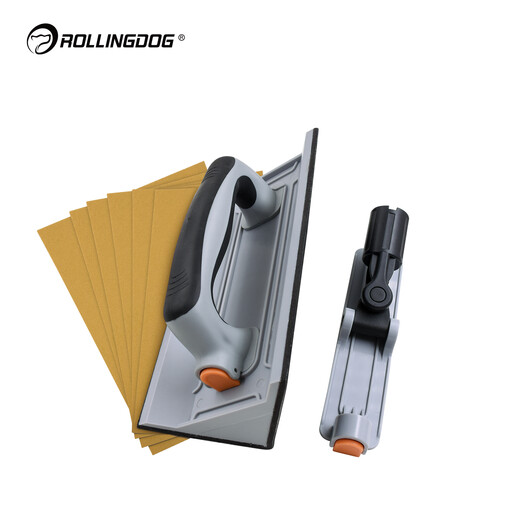
Why this product suits this profile: For dryliners, painters and renovators working on numerous internal edges on walls or ceilings, its specialised shape is designed for precisely this task.
The internal-corner design reduces the need to finish corners with unsuitable round discs or loose sanding paper.
225 × 170 mm corner-sander base, six sanding sheets in P80, P120 and P240, plus hand or pole operation.
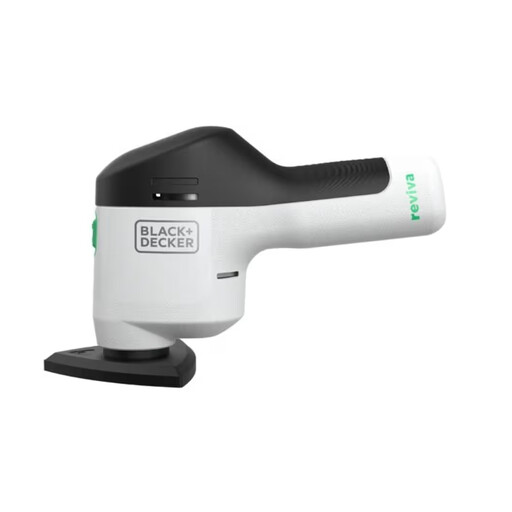
Why this product suits this profile: The cordless design is suitable for smaller woodworking jobs, furniture, mouldings and areas without a nearby socket.
The triangular sanding plate is designed for tight angles and detailed surfaces, rather than trying to replace a large wall plate.
12-V-MAX battery operation, integrated battery, triangular base and, according to the product description, more than 30 minutes of runtime per full charge.
We have put together a complete, regularly updated list of products that fully meet these strict selection criteria and the safety regulations applicable in the EU.
Before starting, the substrate should be dry, firm and free from loose material. For walls and drywall, it is advisable to test the tool on an inconspicuous area first. Guide the tool without applying heavy pressure so that the sanding plate does not tilt and create indentations.
When working with wood, pay attention to the direction of the grain. For painted surfaces or metal, a suitable sanding-paper set with several grits can be useful. Rust and old layers of paint should be removed gradually; paper that is too coarse can leave deep grooves.
When dust is produced, plan to use safety goggles, suitable respiratory protection and good ventilation. The relevant manufacturer’s information and the operating instructions take precedence. After use, clean the sanding plate, ventilation openings, dust container and connection. Store consumables in a dry place.
For larger wall and ceiling areas, a wall sander with a large round or rectangular sanding surface is a practical choice. A model with an extension option can make overhead work easier. When dealing with drywall dust, check that the vacuum connection is compatible.
Depending on the abrasive used, a detail sander can be used on wood, plastic and certain metal applications. The manufacturer’s specifications, the correct grit and a low load on delicate surfaces are all important. However, the small triangular plate makes it more time-consuming to work on large areas.
Its lifespan depends on the material, pressure, contamination and grit. On heavily coated or metallic surfaces, the paper can become clogged more quickly. It should be replaced as soon as the abrasive grains are visibly worn or the sheet removes very little material despite being guided evenly.