
Lieferung heute & morgen

Qualitätsgarantie

Willkommens-Angebote freischalten: KOSTENLOSE Lieferung | Bis zu 80 % RABATT | Kostenlose 30-Tage-JoyPlus-Testphase
App herunterladen
A good Santoku knife is the heart of the kitchen for many home chefs. As a versatile Japanese chef's knife, it masterfully handles slicing vegetables, fish, and meat with precision. However, the market is overwhelming and filled with marketing promises that often cost more than they deliver. Before you make a decision, it's crucial to understand the most common pitfalls that can lead to a poor purchase.
As your Joybuy Product Recommendation Officer, I'll help you find objective criteria for your choice and show you what truly matters.
Many buyers focus on visual features or vague advertising claims that disappoint in practice. These three points are especially critical:
To avoid a poor purchase, focus on verifiable technical features. These three aspects are fundamental to a Santoku knife's performance.
The steel is the most important component for a sharp knife. Instead of trusting marketing terms, pay attention to the specifications:
The typical shape of a Santoku knife is responsible for its versatility. One feature that offers a real practical benefit is the Santoku knife with a granton edge.
A good handle ensures safety and control. Pay attention to the material and construction:
Based on these objective criteria, we have compiled a few models for different needs.
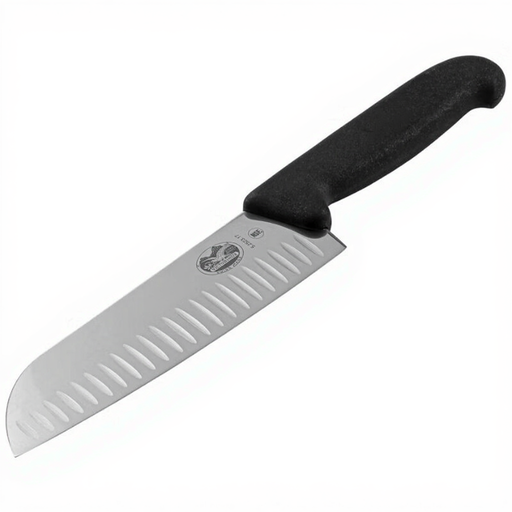
Why it's a match: Ideal for anyone seeking a reliable and low-maintenance workhorse for daily use. It offers high functionality without unnecessary frills and is known for its excellent price-to-performance ratio.
This knife forgoes a misleading appearance and focuses on performance. The ergonomic Fibrox handle and balanced blade prevent fatigue, rather than disappointing with an unbalanced design.
The non-slip handle provides a secure grip even when wet. According to the manufacturer, the knife is dishwasher-safe, which significantly simplifies daily cleanup.
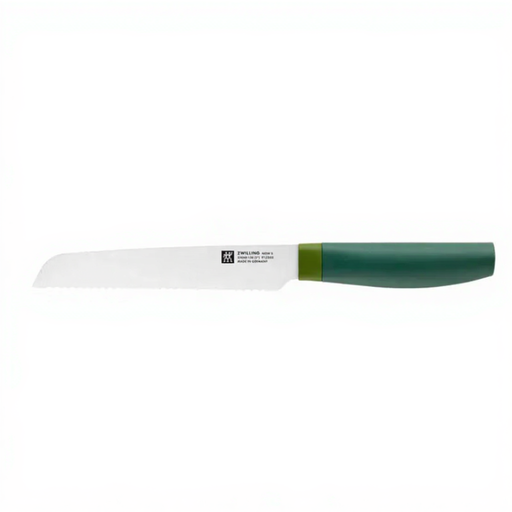
Why it's a match: For users looking for a long-term investment who value proven German brand quality. A forged knife like this is designed for intensive, long-lasting use.
This knife uses a precisely specified, ice-hardened stainless steel for demonstrable edge retention. The full-tang construction ensures excellent balance, which is often lacking in more affordable models.
The blade, forged from a single piece of steel, offers high stability. The granton edge effectively reduces food from sticking, making work easier.
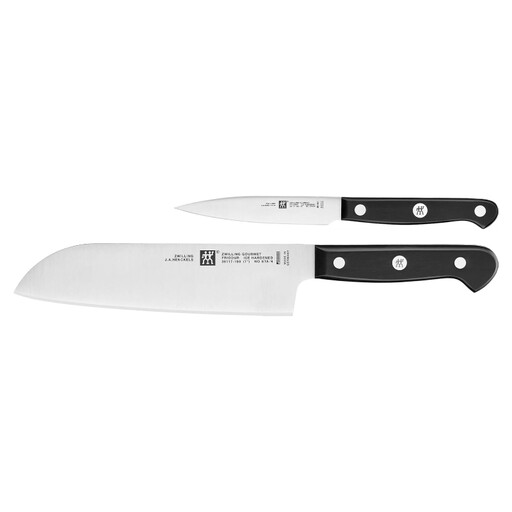
Why it's a match: This knife set is ideal for users looking to expand their kitchen arsenal. It combines the versatile Santoku with a smaller knife for precise detail work like peeling or garnishing.
Instead of relying on a single, overpriced knife with questionable features, this set offers two highly functional knives made in Solingen. The focus is on practical utility and the proven FRIODUR blade technology.
Provides a versatile foundation for most cutting tasks in the kitchen. Both knives are made from ice-hardened steel, ensuring long-lasting edge retention and corrosion resistance.
We have compiled a complete, up-to-date list of products that fully meet these strict selection criteria and German safety regulations.
The main difference lies in the blade shape and the associated cutting technique. A Santoku knife has a wider blade, a blunter tip (a sheep's foot shape), and a relatively straight cutting edge. It is excellent for chopping and pulling cuts. A European chef's knife has a pointier tip and a more curved edge, which facilitates a rocking cutting motion.
The granton edge does not affect the sharpening process. The hollows are on the face of the blade, not the cutting edge itself. You can sharpen the knife just like any other, using a whetstone, honing steel, or a knife sharpener. Focus exclusively on the actual cutting edge.
Genuine Damascus steel, where dozens or hundreds of layers of steel are forged together, can offer exceptional sharpness and edge retention. However, for most home users, a high-quality knife made from modern mono-steel (like the alloys used by Zwilling Santoku knives or WMF Santoku knives) already provides excellent performance that is more than sufficient for all everyday tasks. In contrast, a cheap "Damascus look" is a purely aesthetic feature with no practical added value.