
Lieferung heute & morgen

Qualitätsgarantie

Willkommens-Angebote freischalten: KOSTENLOSE Lieferung | Bis zu 80 % RABATT | Kostenlose 30-Tage-JoyPlus-Testphase
App herunterladen
A science kit is often more than just a toy—it's a gateway to new worlds, sparking curiosity and making complex concepts tangible. But the selection is vast, and not every kit delivers on the promise of its colourful packaging. As a Joybuy Product Recommendation Officer, I'm here to help you navigate the common pitfalls and make a choice that will truly light up your child's eyes, instead of just gathering dust in a corner.
Before we dive into the selection criteria, let's look at the three most common issues that lead to frustration for parents and children alike:
To avoid these traps, you should check three core aspects before buying. These will help you objectively assess the value of a kit.
Not every child is fascinated by chemistry. Observe your child's interests: Are they captivated by animals and nature? A kit for crystal growing or hatching prehistoric creatures might be a perfect fit. Is their passion more for technology and logic? Then a robotics kit for kids is the right choice. Aligning the kit with your child's natural inclinations is the most important factor for long-lasting engagement and turns a simple toy into a true STEM toy.
A good instruction manual is the heart of any science kit. It should not only list the steps but also explain the scientific principles behind them in a child-friendly way. Pay attention to the following:
Check the product description carefully: What's included in the box, and what else is needed? A good kit lists this transparently. Also, consider reusability. A microscope, an electronics kit, or a high-quality robotics kit offer countless opportunities for independent discovery far beyond the included instructions. This fosters creativity and provides significantly better value for money.
Based on these criteria, we've identified a few products that are well-suited for different interests and age groups.
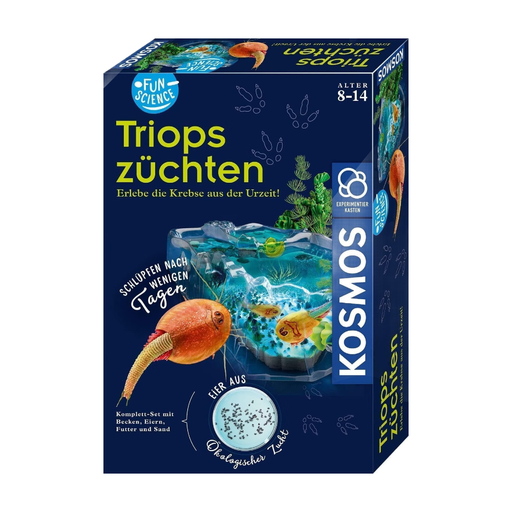
Why This Fits Their Persona: Ideal for children interested in animals and life cycles. The kit provides a tangible way to learn responsibility for living creatures and makes biological processes—from egg to adult—directly observable.
This kit avoids the "single-use" trap. Children observe a complete life cycle over days and weeks. The manual also explains how to harvest new eggs for another breeding cycle.
A complete set for an immediate start (only water is needed). The illustrated guide provides clear instructions for hatching, feeding, and care.
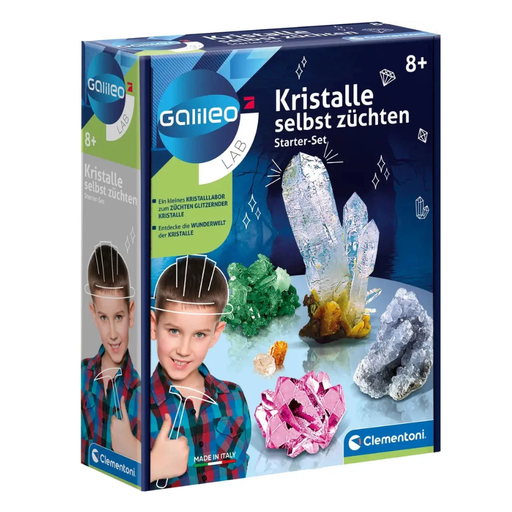
Why This Fits Their Persona: Perfect for patient observers and children with an eye for aesthetics. The kit combines chemical reactions with a visually stunning result. It's a classic gift for curious kids that merges science and creativity.
This set avoids the trap of an inaccurate age rating. The process is clearly structured and requires more patience than complex fine motor skills, making it a great educational toy for ages 8 and up.
The all-in-one set includes all necessary chemicals and containers. The illustrated manual explains the basics of chemistry and geology in a simple way.
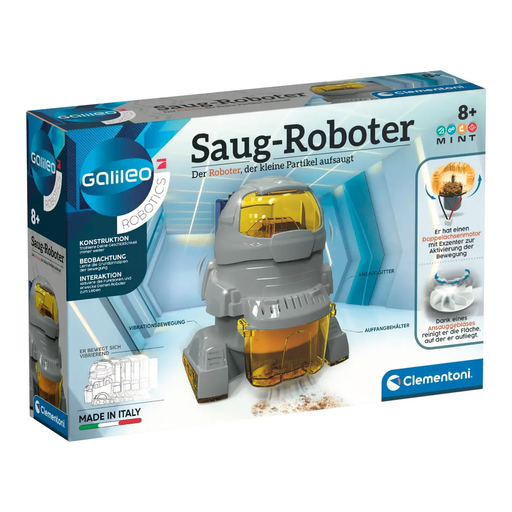
Why This Fits Their Persona: For tech-savvy kids who love to build, tinker, and understand how things work. This robotics kit playfully introduces the fundamentals of mechanics and electronics.
This set avoids the "deceptive kit" trap. Apart from batteries, all components for the fully functional robot are included. The result is a reusable toy with a real function.
Promotes fine motor skills, logical thinking, and technical understanding. The illustrated manual explains the assembly and the function of the suction mechanism.
The world of science kits is diverse. If you want to explore more sets for different interests and age groups, you can find a wider selection here.
The manufacturer's age rating is a guideline. More important are your child's individual abilities: Can they follow instructions with text and pictures? What is their frustration tolerance when something doesn't work right away? For an introduction to science for kids, kits for the 8+ age group are often a good compromise between safety and complexity, but they usually still require parental supervision.
Yes, this is a common issue. Reputable manufacturers will list exactly which common household items (e.g., water, scissors, batteries) are needed on the packaging or in the online product description. A quick look at this list before buying can save you from disappointment on the big day.
The most important rule is adult supervision, especially with kits involving chemicals, sharp tools, or small parts. Read the safety instructions together, prepare the workspace (a wipeable surface, good ventilation), and also clean up together after the experiment. This teaches responsible handling of scientific materials from the very beginning.