
Lieferung heute & morgen

Qualitätsgarantie

Willkommens-Angebote freischalten: KOSTENLOSE Lieferung | Bis zu 80 % RABATT | Kostenlose 30-Tage-JoyPlus-Testphase
App herunterladen
As a Joybuy Product Recommendation Officer, I see countless products every day. My job is to separate the wheat from the chaff and give you practical advice so you can make an informed decision. A science kit for kids can spark curiosity and makes a wonderful gift for school-aged children. But the market is flooded with sets that promise more than they deliver. Before you invest, you should know the common pitfalls.
Many parents report three recurring problems:
A good science kit should foster curiosity, not dampen it. Below, I'll show you which objective criteria to look for to choose a suitable and meaningful set.
To avoid a bad purchase, you should check three core aspects. These will help you objectively assess the educational value and longevity of a product.
The manufacturer's age recommendation is more than just a rough guideline; it's a crucial indicator of the tasks' complexity. An educational toy for ages 6 and up is tailored to the cognitive abilities and fine motor skills of first-graders. The instructions are often picture-based, and the experiments deliver quick, visible results. A set for ten-year-olds, on the other hand, may require more patience, abstract thinking, and precise work. Choosing an age-appropriate set is the foundation for a positive experience and prevents children from being underwhelmed or overwhelmed.
The thematic variety is vast, ranging from chemistry and biology to physics and engineering. Observe the child's interests: if they are excited about dinosaurs, an excavation kit for kids is a great choice. If they are fascinated by sparkling stones, a crystal growing kit could be just the thing.
At the same time, you should consider reusability:
A look at the list of materials and safety certificates is essential. Look for the CE mark, which confirms that the product meets EU safety requirements. For chemical experiments, clear warnings (e.g., "Use under the direct supervision of an adult") and the quality of protective materials like safety goggles are crucial. A good explorer kit includes sturdy tools made for children's hands that won't break immediately. Sets from established brands like Kosmos experiments often place a high value on detailed, tested instructions and high-quality components.
Based on the criteria above, we have identified some products that are suitable for different profiles and interests of children.
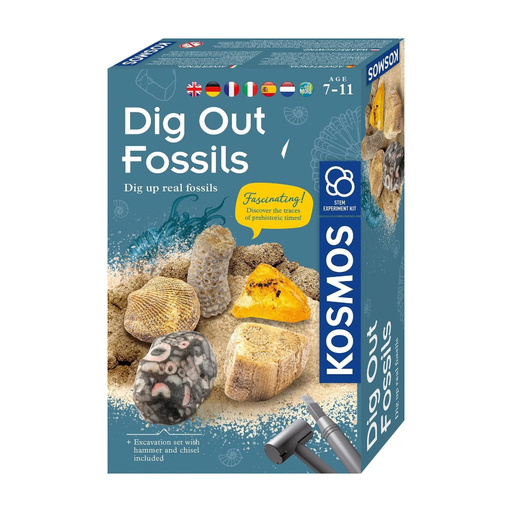
Why This Fits Their Persona: Ideal for children who are fascinated by dinosaurs and Earth's history. The kit provides a hands-on experience where kids can work like real palaeontologists, using a hammer and chisel to uncover genuine fossils.
Although it's a single-use project, its value lies in its authenticity. The child excavates real fossils, creating an unforgettable sense of achievement and bypassing the 'one-and-done' trap with high sentimental value.
According to the manufacturer, it contains real fossils (ammonite, stony coral) and an accompanying booklet that teaches about palaeontology. The tools are designed for children's hands.

Why This Fits Their Persona: Perfect for kids who love to build and be creative. This set combines magnetic tiles with a marble run, offering long-lasting fun thanks to its high piece count and reusability.
This set is the opposite of a single-use product. The 126 pieces allow for countless constructions. The intuitive, magnetic building principle works without complex instructions, thus preventing the frustration trap.
Promotes spatial reasoning, logic, and fine motor skills. The combination of building and a functional marble run with light effects provides a high level of engagement.
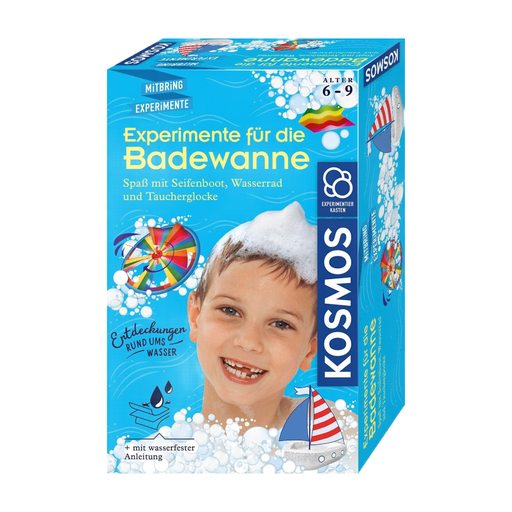
Why This Fits Their Persona: An ideal introduction to the world of science for children aged 6 and up. It turns everyday bath time into an exciting laboratory, using a familiar environment for initial physics discoveries.
According to the manufacturer, the instructions are waterproof and fully illustrated, so no reading skills are required. This directly counteracts the frustration trap. The experiments use water and therefore do not rely on additional household items.
Provides an accessible entry into science for children. Playfully explains phenomena like buoyancy and water pressure. The experiments are safe and designed for the bathtub.
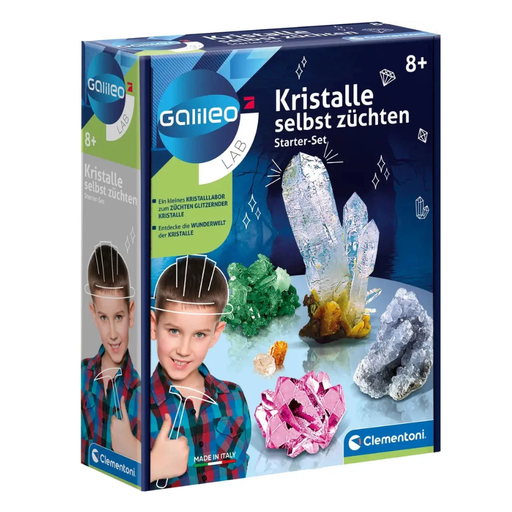
Why This Fits Their Persona: For children who are fascinated by chemical reactions and visible results. Growing crystals is a classic experiment that teaches patience and rewards them with an impressive, self-created object.
The set is delivered as a complete starter kit containing all the necessary chemicals and containers, thus avoiding the 'hidden costs' trap. The illustrated instructions guide you step-by-step through the process.
Introduces children to basic concepts of chemistry and geology. The crystal growth process can be observed over several days, which encourages longer-term engagement.
We have compiled a complete, up-to-date list of products that fully meet these strict selection criteria and EU safety regulations.
Always check if the product has a CE mark. For sets with chemicals, like a crystal growing kit, it's important that the chemicals are packaged in a child-safe manner and that safety goggles are included. Read the warning labels on the packaging carefully. The instruction "Use under the direct supervision of an adult" should always be followed.
The easiest way is to observe your child's play habits. Do they enjoy building with blocks? Then a technical or construction-based STEM toy might be a good fit. Do they spend a lot of time outdoors collecting rocks and leaves? Then sets focused on biology, geology, or an excavation kit for kids are a great choice. Sometimes, simply asking which topic the child would find most exciting can help.
This largely depends on the type of set. Excavation and plaster-casting sets are designed for single use. Chemical experiments consume the included substances. In contrast, electronics kits, robotics sets, or magnetic tiles are designed for long-term, repeated use and thus offer high replay value.