
Lieferung heute & morgen

Qualitätsgarantie

Willkommens-Angebote freischalten: KOSTENLOSE Lieferung | Bis zu 80 % RABATT | Kostenlose 30-Tage-JoyPlus-Testphase
App herunterladen
The selection of science kits for kids is vast, and so are the promises made by manufacturers. But not every set designed to spark curiosity actually ignites a true spirit of discovery. Often, the initial excitement ends in frustration—for both the child and the parents. As your Joybuy Product Recommendation Officer, I'm here to help you recognise the common pitfalls and make an informed decision.
Many buyers fall into recurring traps that significantly diminish the play value:
To avoid these disappointments, it's crucial to check a few key parameters before you buy.
A good science kit is more than just a collection of materials. It's a well-designed educational tool. Look for the following three features to identify a suitable STEM toy.
The manufacturer's age recommendation is the most important first clue. An educational toy for primary schoolers should include large, easy-to-grip parts and, above all, picture-based instructions. For older children aged 8 or 10, the experiments for kids ages 8+ can become more complex and require finer motor skills, such as when assembling a robotics kit.
Pay attention to safety warnings like "To be used under the direct supervision of an adult". This is not a flaw but a quality feature, indicating that the manufacturer takes potential risks seriously (e.g., small parts, sharp tools in a kids' excavation kit, or handling batteries). All toys sold in Germany must comply with the DIN EN 71 standard.
What is the child truly interested in? The thematic diversity is enormous:
A good science kit for kids not only explains the "how" but also the "why," placing the experiments in a larger scientific context.
Check exactly what's included in the set. A high-quality kit provides all the essential, specialised components. The need to add common household items like water, salt, or scissors is normal. It becomes critical when hard-to-find items are required.
Another point is reusability. Does the set offer instructions for multiple, sequential experiments? Can the core components (e.g., a microscope, a motor, or a solar cell) also be used for the child's own, free-form explorations? Such sets offer significantly more sustainable play and learning value.
Based on the criteria above, we have identified several products suitable for different interests and age groups.
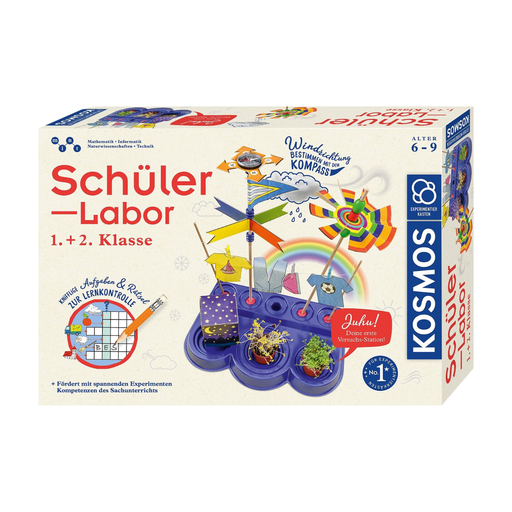
Why This Fits Their Persona: Ideal for entering the world of science. The experiments are directly aligned with the curriculum of the first years of primary school, covering topics like air, water, light, and the senses, making school subjects tangible.
The step-by-step, illustrated instructions bypass the hurdle of incomprehensible explanations. With over 50 experiments, it also counteracts the "one-time experience" trap.
A broad spectrum of topics that directs curiosity in many directions. Promotes independent learning through simple, safe experiment setups.
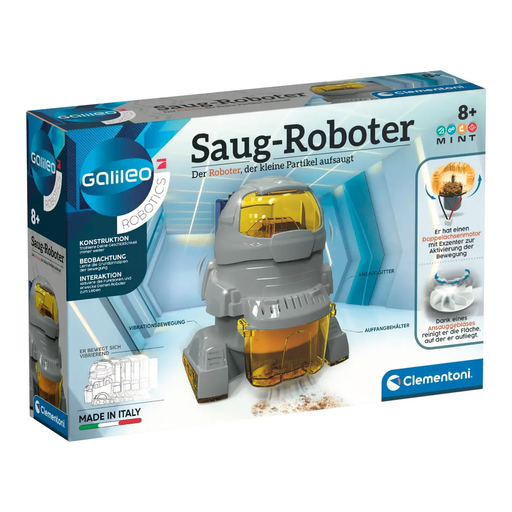
Why This Fits Their Persona: Perfect for kids who don't just want to watch, but want to build something that works. The assembly process provides practical knowledge in mechanics and electronics, and the result is a robot with a real function.
Since the robot can be used as a toy after construction, it escapes the "one-time experience" trap. The illustrated manual simplifies the complex assembly and prevents frustration.
Promotes fine motor skills, logical thinking, and problem-solving abilities. The functional suction mechanism provides a high level of motivation and reward.
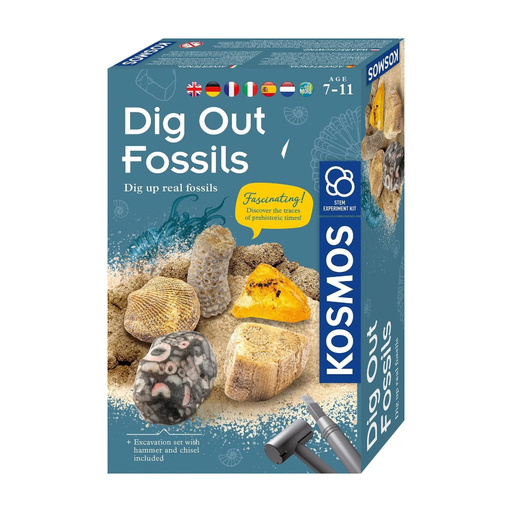
Why This Fits Their Persona: For kids fascinated by dinosaurs and prehistoric times. This set offers the exciting opportunity to unearth real, millions-of-years-old fossils with a hammer and chisel. The moment of discovery is the central, unforgettable experience here.
Although it is a "one-time experience," its value lies in authenticity. The result—a real fossil—is a permanent collector's item, not a disposable product. The set includes all the necessary tools.
Contains real fossils (ammonite, stony coral, etc.) according to the manufacturer. Promotes patience and concentration and teaches the basics of palaeontology.
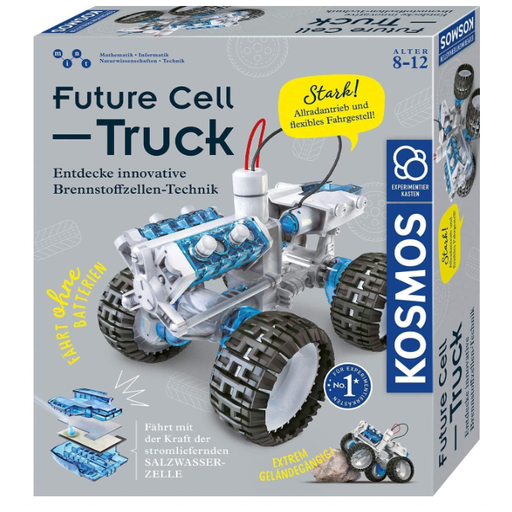
Why This Fits Their Persona: This set combines the fun of building an off-road vehicle with a highly relevant topic: alternative energy. Kids learn the principle of a fuel cell in a playful way, powered only by saltwater—no batteries required.
After assembly, the truck is a fully functional, all-terrain vehicle, ensuring long-lasting fun. The innovative technology itself is the core of the learning experience, not just a single experiment.
Teaches knowledge about a forward-thinking, zero-emission technology. The all-wheel drive and flexible chassis ensure high off-road capability and play value.
We've compiled a full, up-to-date list of products that fully meet these strict selection criteria and German safety regulations.
This heavily depends on the child and the specific set. Simple kits focused on observation (e.g., plant growing) can be suitable for children as young as 5-6. Complex kits like a Kosmos science kit for chemistry or electronics are usually aimed at children aged 8 or 10 and up, as they require better reading comprehension and finer motor skills. The manufacturer's age recommendation is a reliable guide.
The level of supervision required varies. For sets aimed at younger children or for experiments involving heat, sharp tools, or certain chemicals, direct adult supervision is essential. The instructions usually provide clear guidance on this. The goal should be to allow the child as much independence as possible, but always be present within a safe framework to provide support and answer questions when needed.
Yes, science kits sold in Germany and the EU are subject to strict safety regulations (especially the Toy Safety Directive and the DIN EN 71 standard). The quantities and concentrations included are measured so that there is no danger to the child when used correctly. Nevertheless, it is important to follow the safety instructions carefully, not to swallow the substances, and to clean the workspace after the experiments.