
Lieferung heute & morgen

Qualitätsgarantie

Willkommens-Angebote freischalten: KOSTENLOSE Lieferung | Bis zu 80 % RABATT | Kostenlose 30-Tage-JoyPlus-Testphase
App herunterladen
Finding the right sea bass rod is a common challenge for many avid spinning anglers. The goal is to find a model that not only withstands the powerful runs of a sea bass but also offers the sensitivity needed for precise lure control. Furthermore, many anglers expect a degree of versatility, allowing the rod to be used in freshwater for species like zander.
This guide serves as a point of reference. It highlights the key features of a high-performance spinning rod for sea bass and presents a selection of models that are well-suited for this purpose based on their technical specifications. Our aim is to provide you with a factual basis for your purchasing decision.
Before making a decision, you should consider three key technical aspects. These factors are crucial in determining the performance and application range of your future saltwater rod.
The choice of rod length depends directly on your preferred fishing spot.
The casting weight should be matched to the lures you use. For sea bass fishing, a range of approximately 15 g to 60 g has become standard. This covers most common soft plastics, wobblers, and jigs. A rod with a suitable casting weight will load up optimally during the cast and provide the necessary feedback.
Modern sea bass rods are typically carbon fishing rods. Carbon fibre blanks are lightweight, fast, and transmit bites very directly. Pay attention to the quality of the other components:
The action describes how the rod bends under load. For spin fishing for sea bass, rods with a fast or extra-fast action (Fast/Extra-Fast Taper) are very popular. These rods have a sensitive tip for bite detection and a strong backbone to set the hook securely and control the fish during the fight.
For transport, a 2-piece rod is the established standard. It combines a seamless action, close to that of a one-piece rod, with a convenient transport length.
Based on the criteria above, we have compiled a selection of rods that are distinguished by their specifications for targeted sea bass fishing.
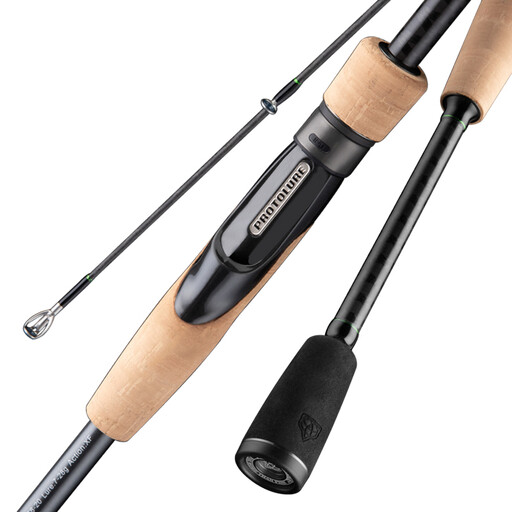
Why It Stands Out: This ECOODA fishing rod model is engineered with a length and casting weight profile designed for maximum casting distance from the shore. The carbon blank is constructed to load up powerfully during the cast, launching the lure far out.
Pros:
Who It's For: Anglers who primarily fish from the coast, piers, or breakwaters and need to present their lures at long range.
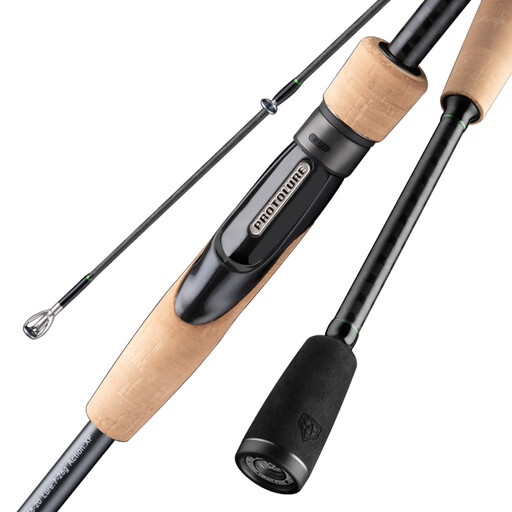
Why It Stands Out: This shorter version of the Protolure series is optimised for handling and sensitivity. It is ideal for fishing from a boat or in spots where extreme casting distance is not required, but precise lure control is paramount.
Pros:
Who It's For: Boat anglers and shore anglers who fish with soft plastics and jigs at short to medium distances and require maximum lure feedback.
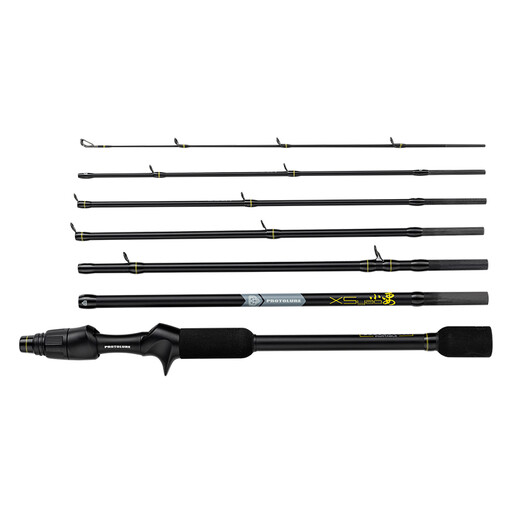
Why It Stands Out: This sea bass fishing rod is designed as a robust all-rounder. It covers a wide range of lures and situations and its construction makes it suitable for both saltwater and freshwater predator fishing.
Pros:
Who It's For: Anglers looking for a single, reliable rod that can be used successfully for sea bass on the coast as well as for pike and zander in freshwater.
The models presented are optimised for saltwater use but are also highly effective in freshwater. However, if your focus is exclusively on fishing in lakes and rivers, specialised rods for zander, perch, or pike could be an interesting alternative.
? Discover our selection of rods for freshwater fish.
1. What is the ideal casting weight for a sea bass rod? A casting weight between 15 g and 60 g covers most situations. Lighter models (up to approx. 40 g) are well-suited for smaller wobblers and soft plastics in calm conditions. Heavier models (up to approx. 60 g) are better for large lures, deep water, and stronger currents or wind.
2. Can you use a sea bass rod for zander? Yes, absolutely. A fast sea bass rod with a stiff blank and a sensitive tip is often an excellent choice for jigging for zander. The characteristics needed for bite detection and setting the hook in saltwater are very similar to those required for zander fishing.