
Lieferung heute & morgen

Qualitätsgarantie

Willkommens-Angebote freischalten: KOSTENLOSE Lieferung | Bis zu 80 % RABATT | Kostenlose 30-Tage-JoyPlus-Testphase
App herunterladen
As a Joybuy Product Recommendation Officer, I see cat owners searching for solutions to their pets' digestive issues every day. The selection of food is vast, and marketing promises are often confusing. If your cat has a sensitive stomach, the wrong choice isn't just a waste of money—it can also worsen your pet's discomfort. Before you make a decision, you need to know the most common pitfalls.
Pitfall 1: The Vague "Sensitive" Promise Many products are labelled "Sensitive" without clearly defining what makes them suitable for sensitive cats. Often, this is purely a marketing claim without an adapted formula that relies on easily digestible ingredients or the omission of known irritants.
Pitfall 2: The "Grain-Free" Myth as a Cure-All A grain-free food is not automatically the solution for every cat with digestive problems. While some cats are sensitive to grains, the cause can just as easily be the type of protein (e.g., beef instead of poultry) or other additives. Focusing solely on "grain-free" can lead to overlooking other, more relevant factors.
To make an informed decision that promotes your cat's well-being, you should focus on verifiable criteria rather than advertising slogans.
The most important factor for easily digestible cat food is the protein source. Look for a clearly declared type of meat or fish (e.g., "chicken," "turkey," "salmon") as the main ingredient. Formulations like "meat and animal derivatives" without specifying the animal species can indicate a mixture of lower-quality and potentially harder-to-digest proteins. A mono-protein formula, which uses only a single animal protein source, can be particularly helpful in identifying intolerances.
A good food for sensitive digestion should do more than just avoid irritants. It should actively support gut health. Look for the following ingredients:
A good gentle diet for your cat is characterised by a short and understandable ingredient list. Avoid products with:
Based on these objective criteria, we have identified some products that are suitable for different requirements and owner profiles.
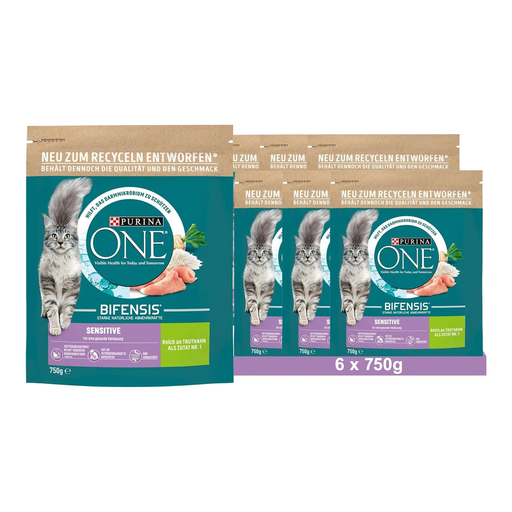
Why This Fits Their Persona: This food is designed for owners looking for a science-backed dry food option. It combines an easily digestible protein source (turkey) with gut-supporting additives, making it a practical all-in-one solution for daily feeding.
It goes beyond a vague "sensitive" label by including, according to the manufacturer, prebiotics (chicory) to promote a healthy gut flora and the BIFENSIS formula with lactobacilli.
Specifically formulated for sensitive digestion; contains omega fatty acids to support skin and coat; no added artificial colours.
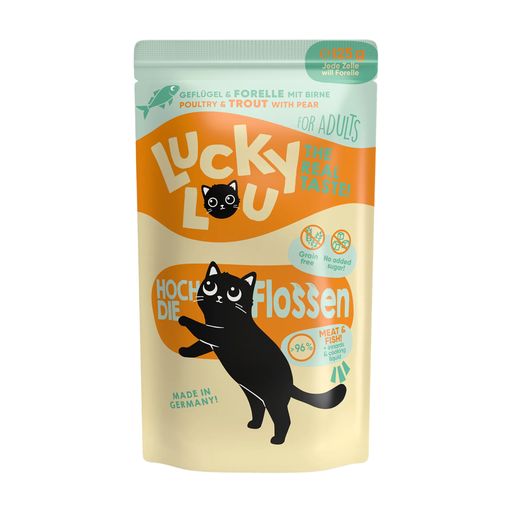
Why This Fits Their Persona: Ideal for cat owners who prefer a species-appropriate diet with maximum meat content and a transparent, short ingredient list. It is an excellent choice as an easily digestible, gentle diet.
This food avoids the trap of hidden fillers by featuring, according to the manufacturer, a meat/fish content of over 94% (incl. broth) and consistently avoiding grains, gluten, and added sugar.
Very high meat and fish content; grain-free and gluten-free recipe; clear declaration of ingredients; made in Germany.
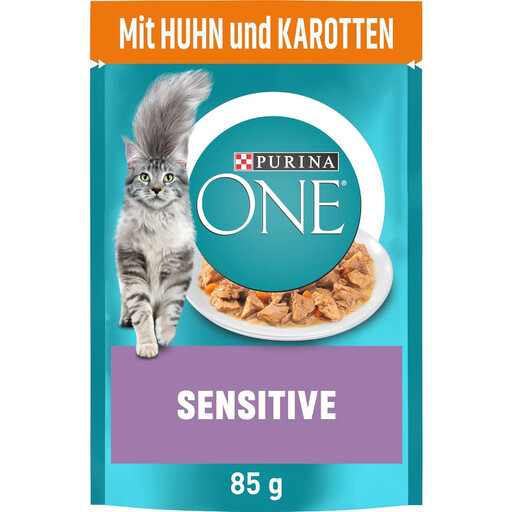
Why This Fits Their Persona: This wet food is a great choice for owners whose sensitive cat is also a picky eater. The texture of tender pieces in sauce promotes acceptance, while the formula is specifically designed for high digestibility.
It provides a clear functional benefit with the addition of prebiotics (inulin) to support the digestive tract and, according to the manufacturer, omits artificial colours, making it a transparent choice.
High acceptance due to appealing texture; specially developed for sensitive digestion; contains Omega-3 & -6 fatty acids for skin and coat.
We have compiled a complete, up-to-date list of products that fully meet these strict selection criteria and current regulations.
A food transition should always be done slowly, especially for cats with sensitive digestion. Plan for a period of 7 to 10 days. Start by mixing a small amount of the new food (about 25%) with the usual food. Gradually increase the proportion of the new food every two to three days until you have completely switched over at the end of the period.
Both types of food can be suitable for sensitive cats, as long as the formula is right. Wet food for sensitive cats has the advantage of supporting hydration and is often perceived as more palatable. Dry food is convenient to handle and can support dental health. Sometimes, mixed feeding with both varieties is a good solution to combine the benefits.
Look for signs such as vomiting, diarrhoea, soft stools, flatulence, or a sudden refusal to eat. Skin problems like itching or a dull coat can also indicate an intolerance. If such symptoms appear after a food change, return to the old food and consult a veterinarian if the problems persist.