
Lieferung heute & morgen

Qualitätsgarantie

Willkommens-Angebote freischalten: KOSTENLOSE Lieferung | Bis zu 80 % RABATT | Kostenlose 30-Tage-JoyPlus-Testphase
App herunterladen
A good setting powder can be the difference between makeup that lasts all day and a look that turns shiny or patchy after just a few hours. But the market is saturated with products whose marketing claims often create more confusion than clarity. Many users invest in powders that don't suit their skin type or leave behind unwanted effects like an ashy cast or visible powder particles.
Before you make a purchase, it helps to understand the three most common pitfalls that lead to disappointment:
To avoid these problems, you should focus on objective criteria. Instead of being swayed by marketing slogans, evaluate the following three aspects to find the right product for your needs.
The choice between loose and pressed powder depends on your application needs.
The finish determines the final look of your skin. The descriptions can be traced back to the particles they contain.
A look at the ingredient list is crucial. Users with dry skin will benefit from powders with hydrating additives like hyaluronic acid or botanical oils, which prevent dryness. Those with sensitive skin should look for fragrance-free formulas. For oily skin, powders with oil-absorbing properties are the right choice to extend the wear of your makeup.
Here are some options tailored to different needs and skin types.
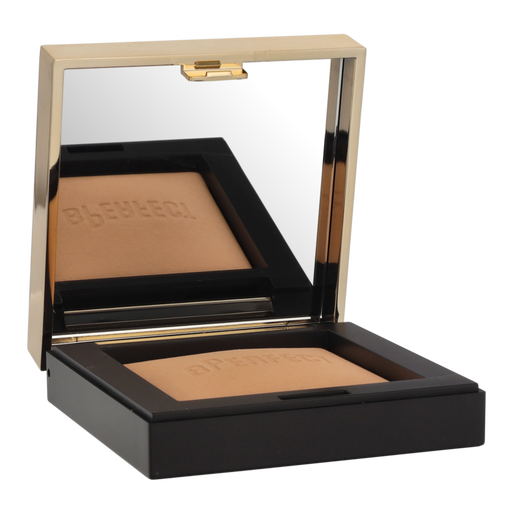
Why This Fits Their Persona: This powder is formulated for long-lasting oil control and a velvety-matte finish. It's ideal for those who tend to get shiny throughout the day and need reliable mattifying power without frequent touch-ups.
Its ultra-fine texture prevents the "cakey" effect by blending seamlessly into the skin. The formula is also designed to be flashback-proof, making it perfect for photos.
Powerful oil control for a long-lasting matte finish; soft-focus effect that visually minimises pores and imperfections.
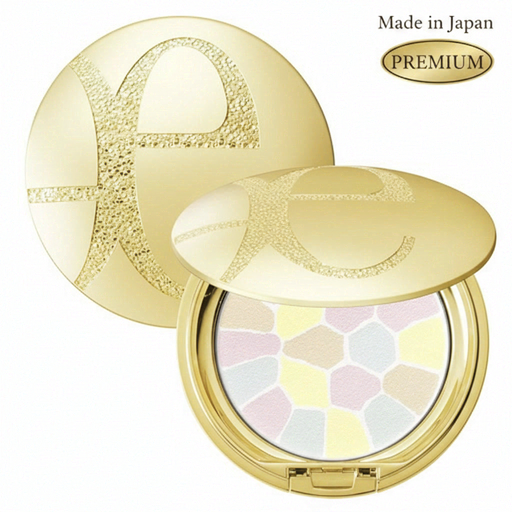
Why This Fits Their Persona: Perfect for users who find a matte finish too flat and prefer a subtle, natural luminosity instead. This powder is designed to brighten the complexion and give it a polished, translucent appearance.
It avoids the trap of misleading finish descriptions by explicitly promising a luminous, clear complexion rather than a flat matte result. Its fine texture also prevents it from settling into pores.
Five complementary pastel shades that blend together on application to visually brighten the complexion; provides a refined, luminous finish without coarse glitter.
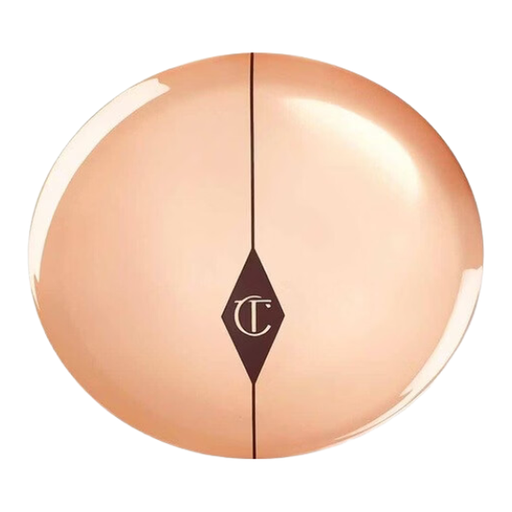
Why This Fits Their Persona: For users aiming for a flawless, soft-focus complexion. This powder is renowned for its ability to visually smooth pores and fine lines, creating an "airbrushed" effect.
The micro-fine powder technology prevents the "cakey" effect by not settling into lines. The formula contains nourishing ingredients like rose wax and almond oil to counteract skin dryness.
Powerful soft-focus effect for a poreless appearance; controls shine without making the skin look dull, ensuring a radiant finish.
We've compiled a complete, real-time updated list of products that fully meet these strict selection criteria and comply with current safety regulations.
The key is the amount and the tool. Use a large, fluffy powder brush instead of a puff for a lighter application. Pick up a small amount of powder, tap off the excess on the back of your hand, and gently press or roll the brush onto the skin rather than swiping. Focus on the T-zone and other areas prone to shine.
A setting powder is primarily used to set liquid or cream products like foundation and concealer, extend their wear time, and control shine. A finishing powder is applied as the final step to visually perfect the skin's texture. It often has a soft-focus effect that minimises pores and fine lines. Some products combine both functions.
Yes, you can. A translucent or lightly tinted face powder can be used on bare skin to reduce shine and slightly even out the complexion. This provides a very natural, mattified look without the coverage of a foundation.