
Lieferung heute & morgen

Qualitätsgarantie

Willkommens-Angebote freischalten: KOSTENLOSE Lieferung | Bis zu 80 % RABATT | Kostenlose 30-Tage-JoyPlus-Testphase
App herunterladen
A shelving unit should provide storage, stand securely and fit the space you have. In practice, unclear load limits, unsuitable dimensions or missing safety features can often lead to the wrong purchase. Whether you’re looking for a bookcase, freestanding shelving unit, corner shelf or heavy-duty shelving unit, looks aren’t the only consideration: the right choice depends on where you’ll use it, as well as its material, dimensions and load capacity.
A figure such as ‘875 kg load capacity’ doesn’t automatically mean that each shelf can hold that weight. Check the load limit for each level, make sure the weight is distributed evenly and find out what conditions apply to the stated capacity. For example, the load capacity of a metal shelving unit may depend on whether it’s used with adjustable feet or castors.
A shelving unit that’s 30 cm deep may fit into an alcove, but could get in the way of doors, skirting boards or walkways. Before you buy, measure its width, depth and height, allowing for any necessary clearance from the wall. If you’re choosing a tall space-saving shelving unit, also check that there’s enough room for it at the intended assembly location, including clearance from the ceiling.
A slim bookcase or cube shelving unit may look stable when empty, but could still tip if the weight is unevenly distributed. That’s why an anti-tip kit, non-slip feet or adjustable feet are useful safety features. If you have children or pets, you should always secure a freestanding shelving unit to the wall as instructed by the manufacturer.
First, measure the available space and allow a little extra room for assembly and cleaning. Ring binders, toolboxes and drinks crates need more clearance between shelves than decorations or paperbacks. A 6-cube shelving unit offers a handy way to organise your belongings, while an adjustable shelving unit can adapt more easily to changing storage needs.
Also check:
MDF and coated wood-based materials are often suitable for living rooms, bedrooms and home offices. Unless the manufacturer states otherwise, a bookcase made from these materials should be kept away from moisture. Powder-coated steel is a good option for a garage shelving unit, cellar or workshop, as its finish can be durable and easy to wipe clean under normal conditions.
Don’t assume that ‘rustproof’ or ‘moisture-resistant’ automatically means a product is suitable for permanently wet environments. In the bathroom, make sure the room is well ventilated, keep the shelving unit on a dry surface and follow the manufacturer’s care instructions. Regularly check the surface of a kitchen shelving unit or bathroom shelving unit for moisture and damage.
The maximum load usually applies when the weight is distributed evenly. Place heavier items on lower shelves and lighter ones higher up. Check whether the stated capacity applies to a single shelf, the whole unit or a specific configuration. A shelving unit with castors often has a lower load capacity than one used with fixed feet.
For wall fixing, make sure the wall type, wall plugs and screws are compatible. The anti-tip kit supplied with the unit is an important safety feature, but you should still check that the fixings are suitable for your particular wall.
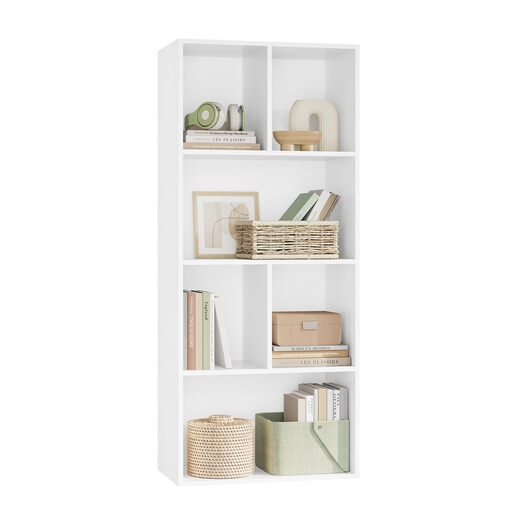
Why it suits this profile: This compact cube shelving unit has six open compartments for books, plants, decorations and storage boxes in living rooms, bedrooms or home offices.
The product details state a load capacity of up to 15 kg per compartment, along with non-slip feet and an anti-tip kit. This makes it easier to plan how to use the unit than relying on a total load figure alone.
Can be set up vertically or horizontally; measures 29 × 50 × 121 cm and has a reinforced back panel.
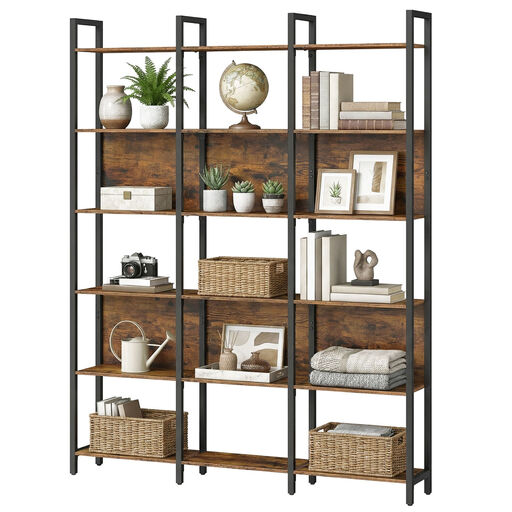
Why it suits this profile: This freestanding shelving unit combines a metal frame with wood-based shelves, making it a good fit for a living room, kitchen, home office or bedroom.
The stated capacity of 23 kg per shelf and 138 kg in total makes it easier to plan how to load the unit. Adjustable feet and wall fixings also help keep it stable.
Six shelves; measures 24 × 128 × 187.1 cm and combines materials for an industrial-inspired look.
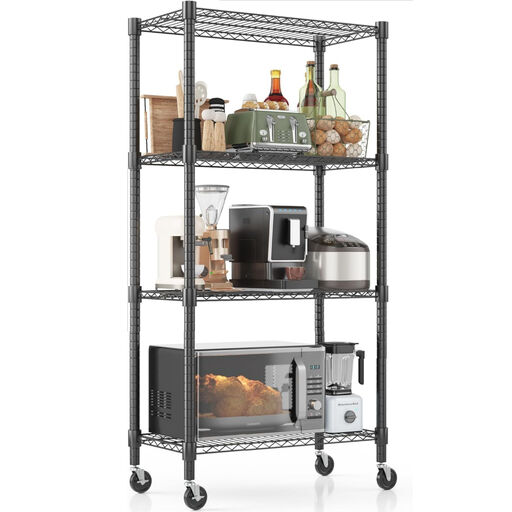
Why it suits this profile: This heavy-duty shelving unit is designed for garages, larders, kitchens or workshops where you need adjustable shelves and the option to move items around.
The product description gives different load limits: 816 kg with adjustable feet and 272 kg on castors. Bear this difference in mind when deciding how you’ll use the unit.
Height-adjustable shelves, four castors, adjustable feet and open wire shelves for easy visibility and ventilation.
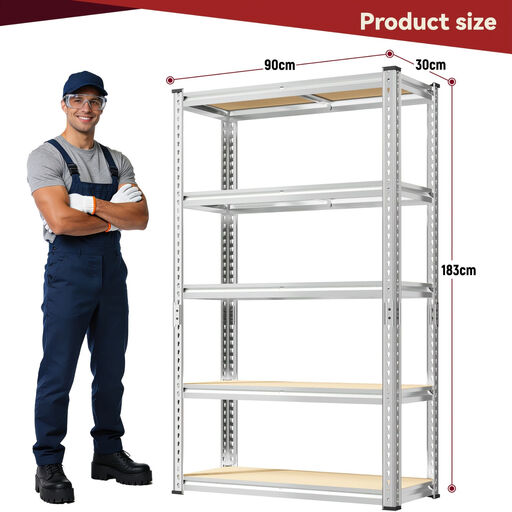
Why it suits this profile: This metal shelving unit is designed for workshops, cellars and garages, with adjustable shelves and a modular design.
The product details list five adjustable shelves, three reinforcing ribs and a maximum total load capacity of 900 kg. Wall fixing is still important when using the unit.
Rivet construction, slot-together assembly and a modular 3+2 configuration that can include a work surface.
We’ve put together a complete, regularly updated list of products that meet these strict selection criteria and fully comply with the safety regulations in force in the EU.
Use fixings that are suitable for your type of wall. Concrete, masonry, plasterboard and wood all have different requirements. Make sure the shelving unit is level, load it evenly and fit the anti-tip kit as instructed. Heavier items should go on the lower shelves.
Its lifespan depends on the material, load, moisture, assembly and how it’s used. Keep wood-based shelving dry and don’t overload it. Check damaged coatings on metal shelving promptly, especially in cellars, garages or workshops. It can also be worth regularly tightening the fixings on models that are screwed together.
The price depends on factors such as size, material, number of shelves, load capacity, castors and accessories. A basic bookcase or cube shelving unit may be suitable for lighter items. For tools, supplies or heavy boxes, a heavy-duty shelving unit with a clearly stated load capacity per shelf is usually a better choice. Above all, make sure the features suit how you’ll use it, rather than choosing solely on the basis of the lowest purchase price.