
Lieferung heute & morgen

Qualitätsgarantie

Willkommens-Angebote freischalten: KOSTENLOSE Lieferung | Bis zu 80 % RABATT | Kostenlose 30-Tage-JoyPlus-Testphase
App herunterladen
A cluttered entryway with shoes blocking the path is a common annoyance. The right shoe storage can remedy this, not only creating order but also visually enhancing your hallway. However, with a wide variety of models available—from simple shoe racks to multifunctional shoe benches—making the right choice isn't always easy.
This article serves as your guide. We'll introduce different types of shoe storage and provide you with objective criteria to help you make an informed decision that suits your needs and living space.
Before you decide on a model, there are a few fundamental aspects to consider. The right solution depends on your available space, the number of shoes you own, and your aesthetic preferences.
The choice between an open and a closed system is a fundamental one.
Carefully measure the intended space for the shoe cabinet for the hallway or dressing room (width, height, depth). Also, consider the clearance needed to open doors or drawers. Next, estimate the number of shoe pairs you need to store. Ideally, plan for a little extra room for future purchases. Capacity is often stated in pairs but can vary depending on shoe size and type (e.g., boots vs. sandals).
Modern shoe storage solutions often offer more than just a place for shoes. A shoe bench or a shoe cabinet with a seat is especially practical, providing a comfortable spot to put on and take off your shoes. Models with additional drawers or shelves, often referred to as a shoe chest, create extra storage for accessories like keys, gloves, or shoe care products.
Here is a selection of different models, each suited for various needs due to their specific features.
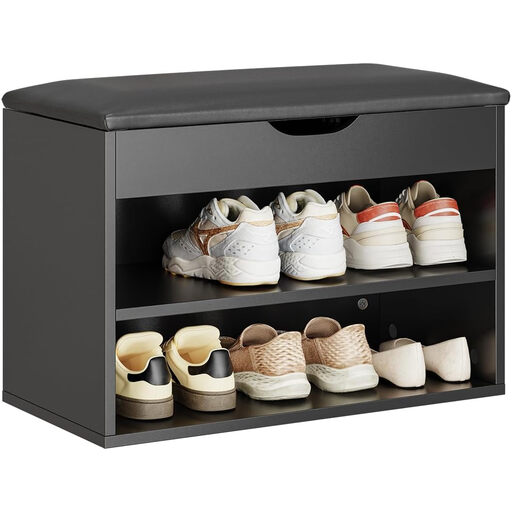
Why it stands out: This model combines three functions in a minimal footprint: it's a seat, an open shoe rack, and hidden storage all in one. Its compact dimensions make it an excellent choice for narrow entryways.
Advantages:
Who is it for? Ideal for individuals or couples in smaller apartments who are looking for a compact, functional solution for their entryway and value having an integrated seat.
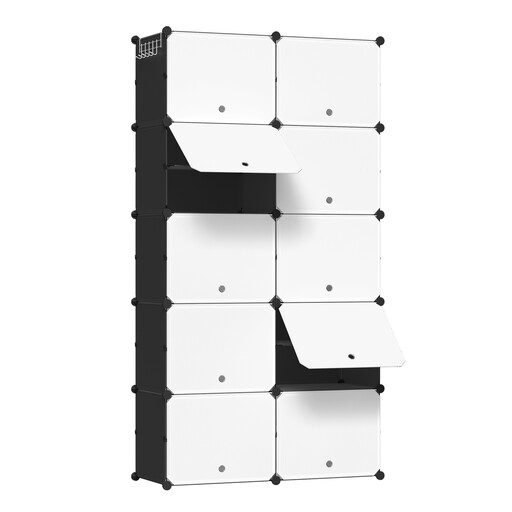
Why it stands out: This modular interlocking shelf system offers maximum flexibility and a very high capacity. It can be assembled in various configurations depending on your needs and available space.
Advantages:
Who is it for? Perfect for families, shoe collectors, or anyone needing an adaptable and expandable storage solution with a very large capacity.

Why it stands out: This cabinet combines high capacity with an elegant, modern design. The closed front, featuring subtle gold accents and a diamond pattern, creates a tidy and stylish look.
Advantages:
Who is it for? For anyone who wants to store a large number of shoes out of sight and places a high value on an appealing and modern piece of furniture.
The products featured here cover a broad spectrum. However, if you prefer a lighter, more flexible solution that still offers protection from dust, a fabric shoe rack with cover could be an interesting alternative. Discover more models in our corresponding category.
Capacity varies greatly by model. Compact tip-out cabinets often hold 6-12 pairs, while larger cabinets or shelving systems can offer space for 20, 40, or more pairs. The actual number also depends on the type and size of the shoes—boots require more space than flat sandals.
Ventilate the cabinet regularly by leaving the doors open for a while. Ensure that only completely dry shoes are stored inside. Some models feature integrated ventilation slits on the back panel to promote air circulation.
Although the terms are sometimes used interchangeably, a shoe chest typically refers to a lower, wider piece of furniture resembling a classic chest of drawers, often with drawers or doors. A shoe cabinet is often taller and narrower and may include special features like tip-out compartments or slanted shelves for space-saving shoe storage.