A tidy entryway creates an organized first impression. Shoes scattered in the hallway can not only disrupt the aesthetic but also pose a tripping hazard. A shoe cabinet is a functional solution for establishing order. The choice of the right model depends on several factors: the available space, the number of shoes to be stored, and specific requirements for material and design. This guide analyzes the technical criteria relevant to selecting the ideal shoe storage solution.
What to Look for When Choosing a Shoe Cabinet
The decision for a piece of furniture should be based on an analysis of its functional properties. For shoe cabinets, the key parameters are construction, material, dimensions, and ventilation.
Types of Construction: Tip-Out, Rack, or Cabinet
The design significantly determines the efficiency of space utilization and the method of storage.
- Tip-Out Shoe Cabinet: This model is characterized by its shallow depth, often under 25 cm. Shoes are stored vertically or at an angle in tilting compartments (tip-out drawers). A tip-out shoe cabinet is a space-saving solution, ideal for a slim shoe cabinet in the hallway. The closed front ensures a clean, uniform look.
- Shoe Rack: An open shoe rack offers direct access to all shoes and promotes good air circulation, which can prevent odour build-up. It is suitable for spaces where quick retrieval is desired, such as utility rooms or walk-in closets.
- Shoe Cabinet: As a classic enclosed shoe cabinet with doors or drawers, a shoe cabinet offers the most comprehensive protection against dust and light. The top surface can also be used for decoration or everyday items. This variant often integrates seamlessly into existing interior design concepts.
Materials and Craftsmanship
The material influences durability, maintenance, and appearance.
- Engineered Wood (MDF/Particleboard): These materials are widely used as they offer high dimensional stability and a variety of surface finishes (veneer, lacquer, melamine resin coating). They provide an excellent balance of cost and performance.
- Solid Wood: Furniture made from solid wood is robust and durable. Each piece is unique due to its individual grain pattern. Wood is breathable, which can have a positive effect on the climate inside the cabinet.
- Metal: Metal frames or cabinets often have a minimalist and modern look. They are very stable and easy to clean. Powder-coated surfaces also provide high protection against corrosion.
- Plastic: Plastic models are lightweight, often have a modular design, and are easy to clean. Their resistance to moisture makes them a viable option for basements or garages.
Dimensions and Capacity
Before purchasing, it is essential to precisely measure the intended location. Depth is a critical factor, especially in narrow hallways. Capacity is usually indicated by the number of shoe pairs it can accommodate. This figure is a guideline, as the actual number depends on the shoe size and type (e.g., boots vs. flat shoes). Models with adjustable shelves or dividers offer more flexibility.
Our Top Shoe Cabinet Picks for 2026
Based on an analysis of product specifications and functional design, we present a few models that meet different requirements.
1. UEV Shoe Cabinet with 2 Tip-Out Drawers and 1 Drawer
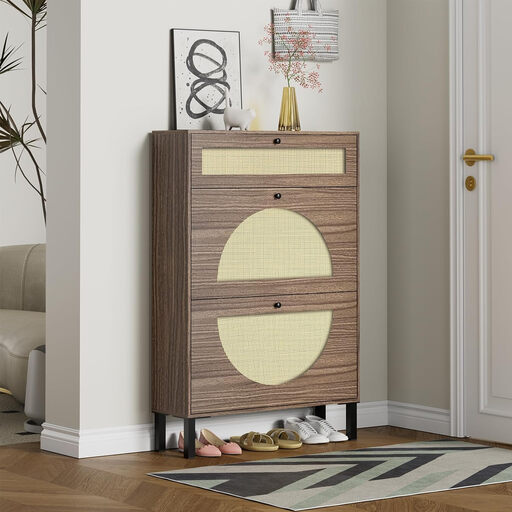
- Why we recommend this product: This model combines the space-saving design of a tip-out cabinet with a thoughtful choice of materials. The rattan fronts are not just a design feature; they also ensure excellent air circulation, which reduces the build-up of moisture and odours inside. With a depth of only 24 cm, the cabinet is designed for narrow entryways.
- Pros:
- Optimal ventilation through rattan weave
- Shallow depth of 24 cm, ideal for tight spaces
- Adjustable and removable dividers for flexible shoe storage
- Additional storage space with a top drawer and surface
- Raised design (15 cm clearance) protects from floor moisture and makes cleaning easier
- Best for: Individuals looking for a functional and slim shoe cabinet for the hallway who value a design that blends natural materials with modern functionality.
2. Caldion Tip-Out Shoe Cabinet with 3 Drawers
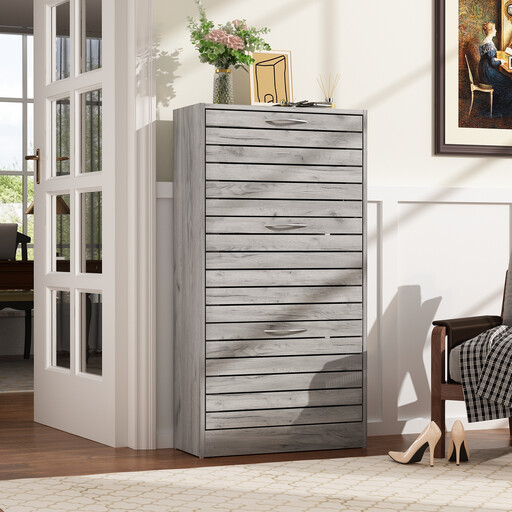
- Why we recommend this product: The Caldion tip-out cabinet makes optimal use of vertical space to achieve high storage capacity on a small footprint (54 cm width x 24 cm depth). The three separate tip-out compartments, each with two levels, allow for the systematic organization of up to 12 pairs of shoes. The closed design with horizontal decorative grooves creates a calm and uncluttered look.
- Pros:
- High storage capacity on a small footprint
- Very shallow depth of 24 cm
- Three separate compartments for organizing different shoe types
- Closed front for a uniform appearance
- Best for: Households with limited space that need an efficient and discreet solution for storing a medium number of shoes.
3. Tribesigns 2-Door, 5-Tier Shoe Cabinet
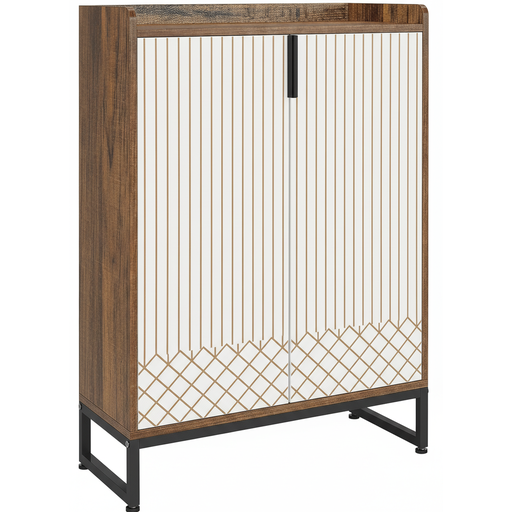
- Why we recommend this product: This model is designed for high capacity, holding up to 25 pairs of shoes according to the manufacturer. It is a shoe cabinet with five tiers behind two doors, completely protecting the contents from dust. An open compartment at the bottom provides space for frequently used shoes. The sturdy metal frame and adjustable feet ensure a secure stance.
- Pros:
- Very high capacity for approx. 22–25 pairs of shoes
- Fully enclosed storage protects from dust
- Combination of closed and open storage
- Robust construction with a metal frame and E1-grade MDF boards
- Includes an anti-tip kit for enhanced safety
- Best for: Families or individuals with an extensive shoe collection who are looking for durable and spacious shoe storage with a modern design aesthetic.
Other Models and Alternatives
The market offers a wide variety of designs beyond the examples presented here. From minimalist shelving systems to multifunctional hall trees with integrated shoe storage, solutions exist for nearly every need and interior style.
For a broader overview of designs and sizes, you can find more options in our Shoe Cabinet category.
Frequently Asked Questions (FAQ)
1. How deep should a shoe cabinet be for a narrow hallway? For narrow hallways, models with a depth of less than 30 cm are recommended. Tip-out cabinets are often the first choice here, as they typically have a depth of only 17 to 25 cm while still offering good capacity by storing shoes vertically.
2. What is better: an open shoe rack or a closed shoe cabinet? The decision depends on your priorities. An open shoe rack allows for better ventilation and quick access. A closed shoe cabinet protects shoes from dust and creates a visually calmer, more organized atmosphere in the room. For the entryway, a closed version is often preferred.
3. How many shoes fit in a standard shoe cabinet? There is no standard size. Capacity varies greatly depending on the model, width, height, and type of construction. Manufacturers usually state the capacity as a range of shoe pairs. It is advisable to check the internal dimensions of the compartments, especially if you plan to store larger shoes or boots.
Written by: Joybuy Product Recommendation Officer

