
Lieferung heute & morgen

Qualitätsgarantie

Willkommens-Angebote freischalten: KOSTENLOSE Lieferung | Bis zu 80 % RABATT | Kostenlose 30-Tage-JoyPlus-Testphase
App herunterladen
A cluttered entryway, overflowing piles of shoes in the hall, or a disorganized wardrobe—it's a familiar problem for many. The right shoe rack promises a solution, but the selection is vast, and not every product delivers on its promise. Before you make a decision, it's helpful to know the common pitfalls that can quickly turn a supposed organizational tool into a bad buy.
As your Joybuy Product Recommendation Officer, I'm here to help you separate the wheat from the chaff. We'll look at what really matters so you can find a functional and durable solution for your home.
Many products look practical at first glance but only reveal their flaws in daily use. Pay special attention to these two points to avoid disappointment:
To prevent these problems, you should check three core parameters before buying. These will help you find a model that perfectly matches your needs and your space.
The material is a key factor in the durability and stability of your shoe storage.
Always check the manufacturer's specified maximum load capacity per shelf. This is an objective indicator of stability.
The choice of design depends on where and how you want to store your shoes.
The most important rule is: carefully measure the available space (width, height, depth) before you order. Also, consider any nearby doors that need to open or drawers that need to be pulled out. Count your pairs of shoes and plan for a little buffer for future purchases. Also, check the internal dimensions of the compartments to ensure that larger shoes or boots will fit.
Here are some recommendations tailored to specific living situations and needs.
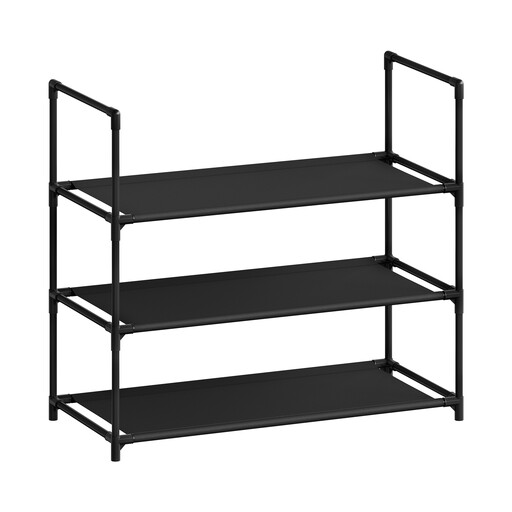
Why it's a great fit: With a depth of just 28 cm, this space-saving shoe storage is ideal for tight corridors. It utilizes height instead of width, so it doesn't block walkways, yet still offers space for up to 9 pairs of shoes.
It solves the problem of impractical dimensions for narrow spaces. The sturdy metal frame with plastic connectors also prevents the wobbling and sagging often found in cheaper models.
Tool-free assembly; shelves can be removed for taller shoes; each tier supports up to 5 kg according to the manufacturer.
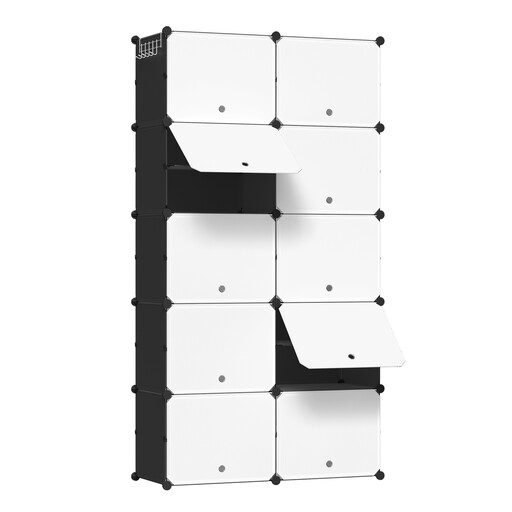
Why it's a great fit: This modular shelving system is incredibly adaptable. It can be assembled as a tall tower, a wide sideboard, or split into several smaller units. It's perfect for anyone whose shoe collection is growing or for those who move frequently and need an adaptable solution.
It bypasses the problem of rigid, inflexible dimensions. By removing dividers, you can create larger compartments for boots. The construction of PP panels, metal frames, and ABS connectors ensures a stable structure.
High capacity (up to 40 pairs); flexible DIY assembly; waterproof and easy-to-clean panels; doors protect from dust.
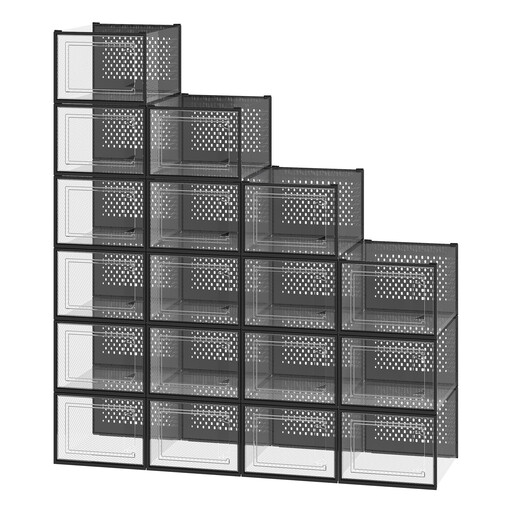
Why it's a great fit: For sneakerheads or owners of delicate shoes, these stackable shoe boxes are an excellent solution. Each pair is individually protected from dust and dirt, yet remains visible and quickly accessible through the transparent front door.
Unlike open racks that offer no protection, these boxes keep shoes safe and secure. The sturdy, stackable design avoids wobbly constructions and makes optimal use of vertical space in a wardrobe or alcove.
Dust protection and a clear view of your shoes; ventilation holes to prevent odours; flexible arrangement and expandability.
We've compiled a complete, up-to-date list of products that fully meet these strict selection criteria and relevant safety regulations.
The load capacity varies greatly depending on the model and material. A crucial value is the maximum load capacity per tier, which should be specified in the product data. Racks with a Schuhregal Metall-frame or reinforced plastic panels are typically much more robust than simple fabric racks. For heavy hiking boots or multiple pairs of shoes per shelf, you should choose a model with a load capacity of at least 5 kg per tier.
Yes, when assembled correctly, high-quality modular systems are very stable. Their stability comes from the interplay of the individual components: metal frames within the panels, robust ABS plastic connectors, and the precise fit of the parts. During assembly, it's important to ensure that all panels click audibly into the connectors to create a firm and resilient structure.
Care is generally straightforward. Surfaces made of coated metal or plastic (PP) can be easily wiped down with a damp cloth. Since these materials are water-resistant, even wet or dirty shoes won't cause permanent damage. Avoid using aggressive or abrasive cleaning agents to prevent damaging the surfaces.